

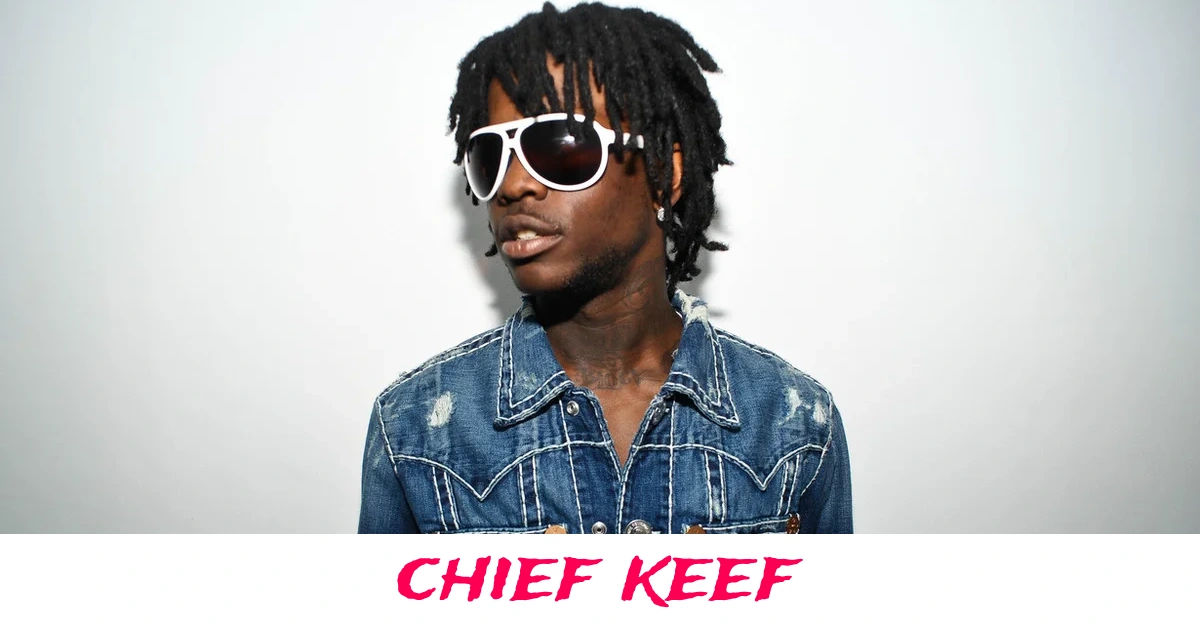
Chief Keef, born Keith Farrelle Cozart on August 15, 1995, is an American rapper and producer who popularized drill music for mainstream audiences. His 2012 single “I Don’t Like” became a local Chicago hit and led to a major label deal with Interscope Records. “Love Sosa” received quintuple platinum certification, cementing his status as drill’s most influential figure.
The Origins of Chief Keef
Keith Farrelle Cozart was born in Chicago, Illinois, on August 15, 1995. He lived at the Parkway Garden Homes in the Washington Park neighborhood on Chicago’s South Side. Life wasn’t easy for the young Cozart. His legal guardian was his grandmother, Margaret Carter, who worked as a school bus driver.
He began rapping as a five-year-old using his mother’s karaoke machine and tapes to record his music. By age 15, he dropped out of Dyett High School to focus entirely on his music career. Chief Keef started rapping in 2008 and released his debut mixtape, UF Overload, in 2009.
The name “Chief Keef” came from his family. He is named after his deceased uncle, Keith Carter, who was known as Big Keef. The “Sosa” nickname he frequently uses references Alejandro Sosa from the movie Scarface.
How Chief Keef Became Famous
In 2011, he first attracted local attention from Chicago’s South Side community with his mixtapes, The Glory Road and Bang. But his path to fame took an unexpected turn. In December 2011, he was arrested for firing a gun from his car in Chicago’s Washington Park neighborhood and was placed under house arrest at his grandmother’s residence.
While under house arrest, he posted several videos to his YouTube account, forerunners to Chicago’s hip hop subgenre, drill. This turned out to be a defining moment. The constraints of house arrest didn’t stop him—they amplified his reach.
When Chief Keef’s house arrest ended on January 2, 2012, WorldStarHipHop posted a video of a young child in a hysterical fit of excitement, bounding around a room and rapping along to “Bang.” The video went viral. People across the country started asking: “Who the hell is Chief Keef?”
The “I Don’t Like” Breakthrough
Keef’s song “I Don’t Like” became a hit in Chicago. The track captured something raw and authentic. It caught Kanye West’s attention, and he remixed the song with rappers Pusha T, Jadakiss and Big Sean. This remix changed everything.
In the summer of 2012, Chief Keef was the subject of a bidding war among record labels wishing to sign him. He signed with Interscope Records in a deal worth $6,000,000 over a three album layout, with an additional $440,000 advance to establish GBE (Glory Boyz Entertainment).
The Finally Rich Era
Chief Keef’s debut album Finally Rich was released on December 18, 2012. Propelled by huge singles like “Love Sosa” and “Hate Bein’ Sober,” Finally Rich shot to #29 on the Billboard 200, selling over 50,000 copies in its first week.
“Love Sosa” is often regarded as Keef’s signature song. The track defined an era. Drake praised the song on Twitter, saying he played it 130 times in three days. Rolling Stone stated that the song “shook the foundation of hip hop”.
The production style was groundbreaking. Finally Rich created a grim, claustrophobic atmosphere with booming 808s, frantic hi-hat patterns, mournful piano melodies and layered synth textures. Producer Young Chop became synonymous with the drill sound through his work on these tracks.
What Is Drill Music?
Drill music is a subgenre of hip-hop that originated in Chicago in the early 2010s. It is sonically similar to the trap subgenre and lyrically similar to the gangsta rap subgenre. Drill music is characterised by its aggressive and confrontational lyrics, which often focus on gang violence, drugs, and other social issues.
The songs became known as drill music, a genre characterized by its dark synths, booming 808 drums, seemingly off-beat, mumbled verses and war-cry choral chants. The sound was raw, unfiltered, and unapologetically real.
The genre garnered mainstream attention in 2012 following the success of pioneering Chicago rappers like Chief Keef, Lil Durk, Lil Reese, Fredo Santana, G Herbo, Lil Bibby, and King Louie. But Chief Keef became its most recognizable face.
Chief Keef’s Revolutionary Impact on Hip-Hop
His melodic style of rapping and his characteristically slurred delivery of lyrics has been called the catalyst for the success of Chicago drill and mumble rap, and an influence on fellow rappers such as 21 Savage, YoungBoy Never Broke Again, Lil Uzi Vert, Playboi Carti, Lil Pump, and XXXTentacion.
Chief Keef’s unique slang and mumbled, melodic rapping style have sparked drill youth movements in places as far away as Australia, London and Ghana. The global spread of drill music traces directly back to his innovations.
Pioneering Digital Distribution
At the time, drill music was still one of the only music scenes to exist almost exclusively on YouTube and free streaming sites like SoundCloud and DatPiff.com – a form of DIY distribution that circumvented the traditional gatekeepers of the rap music industry.
His willingness to give away music for free paved the way for the “SoundCloud era,” in which artists like Chance the Rapper, Lil Pump and Doja Cat gained huge followings not through record deals, but through releasing tracks on SoundCloud. Chief Keef essentially wrote the blueprint for independent digital-first music careers.
Cultural Contributions Beyond Music
Chief Keef is credited with popularizing the phrases “glow up” and “smoking [opps]”. Additionally, Chief Keef popularized the slang term “thot”. These terms became embedded in hip-hop vocabulary and spread into mainstream culture.
His dreadlocks, face tattoos, and minimalist style inspired a new wave of fashion trends. The visual aesthetic he created became as influential as his sound.
The UK Drill Connection
By late 2012, rappers from other scenes and hip hop stars like Kanye West, Drake and Rick Ross were collaborating with drill musicians. But the movement didn’t stop in America.
Despite the warm critique, “Finally Rich” sold an underwhelming 50,000 units in the first week, which resulted in record labels subsequently overreacting, deeming it a “fad.” While Chicago drill rap saw a decline in mainstream popularity after 2012, a new scene was emerging in the UK and by the late-2010s was gaining mainstream popularity.
In London, artists like Skepta and Central Cee have embraced the drill sound. In Brooklyn, rappers like Pop Smoke took inspiration from Chief Keef to create a new wave of drill music. The sound Chief Keef created in Chicago became a global phenomenon.
Chief Keef’s Later Career and Independence
After his initial success, Chief Keef’s relationship with major labels became complicated. In October 2014, Chief Keef was dropped by Interscope Records. Rather than viewing this as a setback, he embraced independence.
Chief Keef began experimenting with producing his music in 2014. This gave him complete creative control. Between 2015 and 2018, he released numerous mixtapes, including The Cozart, Bang 3, Thot Breaker, and multiple volumes of The GloFiles series.
In 2021, he released the album 4NEM, followed by collaborative singles in 2022. On June 6, 2022, through a partnership with RBC Records and BMG Rights Management, Chief Keef announced the founding of 43B, otherwise known as Forget Everybody, and its first signee, Lil Gnar. He’s now helping the next generation of artists navigate the industry.
Controversy and Criticism
Chief Keef’s career hasn’t been without controversy. For more than a decade, city leaders helped to prevent Chicago drill rapper Chief Keef from performing in his hometown. In 2015, then-Mayor Rahm Emanuel felt so strongly that Keef was an “unacceptable role model” whose music “promotes violence” that he wouldn’t even let him perform via hologram.
Media coverage of drill often focused on its controversies, like the killings of its artists or rappers’ public rivalries. City leaders responded by politically scapegoating drill, quickly designating the music a “public safety risk.”
But this criticism misses a crucial point. The drill scene did not incite violence. Instead, they wrote a blueprint for artists in hip-hop’s streaming era. The music reflected reality rather than creating it.
Chief Keef in 2025
Chief Keef is scheduled to perform at ONE MusicFest in Atlanta on October 25-26, 2025. He maintains an active Instagram presence with 10M followers. His influence remains undeniable.
Rolling Stone referred to him as someone who “personified Chicago drill”, while Stereogum described him as a “modern rap folk hero”. More than a decade after his breakthrough, his impact on hip-hop continues to expand.
In 2023, boxer Gervonta Davis walked out with Chief Keef to his song “Love Sosa” for his fight against Ryan Garcia. The song remains a cultural touchstone, introduced to new audiences year after year.
The Academic Perspective
Journalism and mass communications professor Jabari Evans writes that drill subculture arose out of the ways Chicago’s Black youth navigate violence and poverty by innovating within social media.
Denied full access to resources that might have helped them overcome their trauma and avoid gang lifestyles, Chief Keef and his peers used social media to persevere and make careers for themselves in music. This perspective reframes the narrative from criticism to understanding innovation born from necessity.
FAQs
Who is Chief Keef and why is he famous?
Chief Keef is an American rapper born Keith Cozart who popularized drill music through his 2012 hit “I Don’t Like” and follow-up “Love Sosa.” He became famous at 16 while under house arrest, posting YouTube videos that went viral.
What is Chief Keef’s most popular song?
“Love Sosa” is often regarded as Keef’s signature song. The music video has amassed 362 million views on YouTube as of July 2025. The track received quintuple platinum certification from the RIAA.
How did Chief Keef influence modern rap?
His melodic style and slurred delivery influenced rappers including 21 Savage, Lil Uzi Vert, Playboi Carti, and XXXTentacion. He pioneered DIY digital distribution and helped create the SoundCloud rap era.
Is Chief Keef still making music in 2025?
Yes. Chief Keef is scheduled to perform at ONE MusicFest in October 2025 and continues releasing music through his label 43B (Forget Everybody).
What does “Sosa” mean in Chief Keef’s nickname?
The nickname “Sosa” is a reference to Alejandro Sosa, the drug kingpin in the movie Scarface. Fans and peers commonly refer to him as “Sosa” or “Chief Sosa.”
Where is Chief Keef from?
Chief Keef is from Chicago’s South Side, specifically the Washington Park neighborhood where he lived at Parkway Garden Homes. This area became central to the drill music movement.
The Lasting Legacy
Chief Keef’s story represents more than music success. It shows how a teenager from Chicago’s South Side used limited resources and social media to create a global movement. His influence extends beyond drill music into fashion, language, and how artists approach their careers in the digital age.
Over a decade since first emerging, Chief Keef remains one of the most influential rappers of the 2010s. He pioneered a hip hop subgenre and molded the “Chicago drill sound” we know today.
Whether you view him through the lens of controversy or innovation, one fact remains clear: Keith “Chief Keef” Cozart fundamentally changed hip-hop. His blueprint for digital-first music careers continues guiding artists today. The drill sound he created echoes across continents. And his influence on a generation of rappers proves undeniable.
The teenager who posted videos from house arrest became one of music’s most important figures. That’s the Chief Keef story—raw, authentic, and transformative.