

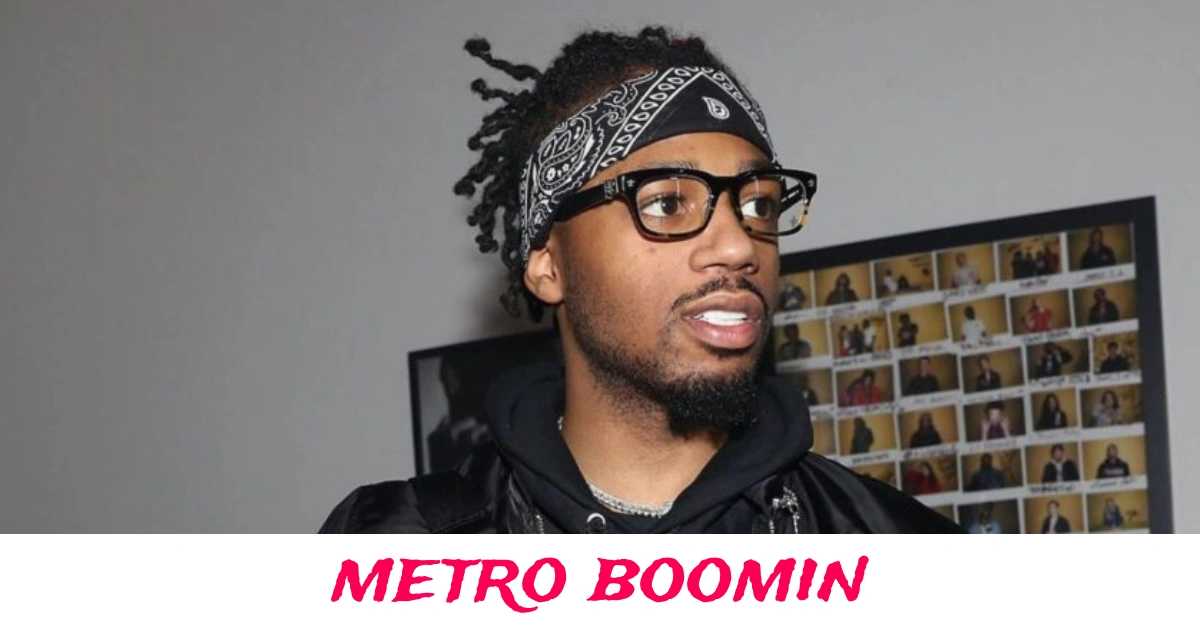
Metro Boomin (born Leland Tyler Wayne on September 16, 1993) is a Grammy-nominated record producer, songwriter, and DJ from St. Louis, Missouri, known for his work with Drake, Future, 21 Savage, and the Migos.
Metro Boomin has become one of hip-hop’s most recognizable names, transforming from a teenage beatmaker in St. Louis to the architect of modern trap music. He became one of the most in-demand producers on the contemporary hip-hop scene before he even reached 30 years old, with a client list that reads like a who’s who of rap royalty.
Who Is Metro Boomin? Understanding the Producer Behind the Hits
Leland Tyler Wayne, better known by his stage name Metro Boomin, is a highly successful record producer, record executive, songwriter, and DJ. Born on September 16, 1993, in St. Louis, Missouri, Wayne began his career in music production while still in high school.
Unlike many producers who remain behind the scenes, Metro has built a brand that rivals the artists he works with. His signature tag “Metro Boomin want some more” has become as recognizable as any hook in modern rap. With 11 million Instagram followers, he’s achieved the rare feat of becoming a celebrity producer in his own right.
The producer’s rise represents a shift in hip-hop where beatmakers have evolved from anonymous contributors to star players. Metro’s journey from bedroom producer to Grammy nominee illustrates how dedication, networking, and an ear for hits can transform a passion into an empire.
Metro Boomin’s Early Life and Musical Origins
Raised in St. Louis, Missouri, Wayne began his career in music production in 2009 at the age of 16. His path to production started earlier than most realize. After a brief stint playing bass guitar in his middle school band, he turned to making beats in the seventh grade at age 13. This happened when his mother bought him a laptop and he got a copy of the music production software FruityLoops.
Metro’s work ethic was apparent from the beginning. In high school, Metro churned out five beats a day. This relentless production schedule would become his trademark approach throughout his career.
The young producer’s early influences came from Atlanta’s trap scene, particularly the work of producers like Lex Luger and Southside. He studied their drum patterns, 808 selections, and overall sonic aesthetics, developing his own variation on the dark, atmospheric trap sound that would later define his career.
His mother played a crucial role in his early development, not just buying him equipment but supporting his musical ambitions when many parents might have pushed for more traditional career paths. This family support would prove essential as Metro navigated the challenging early years of establishing himself in the music industry.
The Atlanta Move That Changed Everything
He relocated to Atlanta to attend Morehouse College in 2012, during which he worked extensively with Atlanta-based artists including Future, Young Thug, 21 Savage, Gucci Mane, and Migos.
The decision to attend college in Atlanta was strategic, even if Metro might not have realized it at the time. Atlanta had become the epicenter of trap music, and being physically present in the city allowed him to build relationships with emerging artists who would soon dominate rap music.
During his college years, Metro balanced academics with an increasingly demanding production schedule. He would attend classes during the day and spend nights in studios, often working until sunrise. This period established the work patterns that would define his career – complete dedication to the craft, regardless of the personal cost.
The Atlanta scene provided Metro with something St. Louis couldn’t: access to artists who were hungry for beats and had the connections to turn those beats into hits. Young Thug, Future, and 21 Savage were all building their careers during this period, creating a perfect storm of talent and timing.
His college experience also taught him business skills that many producers lack. Understanding contracts, publishing, and the business side of music would prove crucial as his career took off. While he would eventually leave college to focus on music full-time, the foundation he built during those years was invaluable.
Metro Boomin’s Signature Sound and Production Style
Metro Boomin’s production style is instantly recognizable, characterized by dark, atmospheric beats built around heavy 808 drums and haunting melodies. His approach to trap music goes beyond simple drum patterns – he creates complete sonic landscapes that complement the mood and energy of each track.
The producer’s signature elements include:
Dark, Minor-Key Melodies: Metro frequently uses minor scales and diminished chords to create an ominous atmosphere. His melodies often feature simple but effective progressions that leave space for vocals while maintaining emotional weight.
Layered 808 Drums: Rather than using single 808 samples, Metro often layers multiple bass sounds to create fuller, more complex low-end. This technique gives his beats extra punch and helps them translate well across different sound systems.
Strategic Use of Space: Metro understands when to pull elements back, creating dynamics that keep listeners engaged. His arrangements breathe, with instruments entering and leaving at strategic moments.
Vocal Sample Integration: Many of his biggest hits incorporate vocal samples, often processed and manipulated to fit the track’s mood. These samples add texture and help create hooks that stick in listeners’ minds.
His technical approach involves extensive use of side-chain compression, parallel processing, and creative effects chains. However, the technical aspects never overshadow the musical content – Metro’s beats always serve the song first.
Career Breakthrough and Major Collaborations
Metro’s breakthrough came through his work with Future, an artist who was also rising through Atlanta’s rap scene. Their collaboration created a template for modern trap music that countless producers have since followed. Future’s melodic approach to rap provided the perfect complement to Metro’s dark, atmospheric production style.
The producer’s relationship with 21 Savage proved equally important. Their collaborative projects, including “Savage Mode” and “Savage Mode II,” showcased Metro’s ability to create cohesive album experiences rather than just individual beats. These projects elevated both artists and demonstrated Metro’s growth as an executive producer.
His Rolodex of frequent collaborators includes 21 Savage – with whom he made joint album ‘Savage Mode II’ – as well as Future, Young Thug, Offset, Drake, Travis Scott, representing a who’s who of contemporary rap.
Working with Drake marked another career milestone. Drake’s global reach exposed Metro’s production to mainstream audiences who might never have heard trap music otherwise. Their collaborations proved that Metro could adapt his sound for different artists while maintaining his distinctive aesthetic.
The Migos partnership was particularly significant because it coincided with trap music’s mainstream breakthrough. Songs like “Bad and Boujee” helped bring trap production techniques into pop music, influencing producers across genres.
Albums and Major Projects
On December 2, 2022, Metro released his second studio album, Heroes & Villains. The album debuted and peaked atop the Billboard 200, giving Metro his third chart-topping project, that too in a row.
Heroes & Villains represented a new phase in Metro’s career – the transition from behind-the-scenes producer to front-and-center artist. It produced two top-10 singles, “Creepin'”, a collaboration with the Weeknd and 21 Savage, and “Superhero (Heroes & Villains)”, a collaboration with Future and Chris Brown; the songs debuted at numbers three and seven on the Billboard Hot 100, respectively.
The album showcased Metro’s growth as a curator and artistic director. Rather than simply collecting beats with different rappers, Heroes & Villains felt like a cohesive artistic statement. The project explored themes of morality and redemption through the lens of superhero mythology, with Metro positioning himself as both hero and villain in hip-hop’s ongoing narrative.
On June 2, 2023, Metro released his first soundtrack album, which was for the film Spider-Man: Across the Spider-Verse. This project marked another career milestone, demonstrating Metro’s ability to work within the constraints of film while maintaining his artistic identity.
In December 2022, Metro announced that he was creating music for the soundtrack of Spider-Man: Across the Spider-Verse. Film screenwriters Phil Lord and Christopher Miller also confirmed that Metro would be involved with the sequel. In May 2023, Metro was announced as the soundtrack’s executive producer.
The Spider-Verse soundtrack allowed Metro to experiment with different genres and collaborate with artists outside his usual hip-hop sphere. The project’s success proved that his production skills translate beyond rap music, opening doors for future multimedia projects.
Awards and Industry Recognition
Producer Of The Year nominee Metro Boomin has expanded appreciation for Southern trap via big-name collabs, soundtracked ‘Spider-Man: Across the Spider-Verse’ and received a nomination for his own ‘Heroes & Villains.’
Metro’s Grammy nominations represent industry recognition for his artistic contributions beyond commercial success. The Producer of the Year nomination particularly validates his role in shaping contemporary hip-hop’s sound.
Metro Boomin, who has been named Variety’s Hitmakers producer of 2023, talks about his chart-topping albums ‘Heroes & Villains’ and ‘Spider-Verse.’ This recognition from Variety highlights his impact across the broader entertainment industry, not just music.
His awards and nominations reflect a career that has consistently pushed boundaries while achieving commercial success. Metro has proven that artistic integrity and mainstream appeal aren’t mutually exclusive – a lesson many producers struggle to learn.
The industry recognition also validates his approach to collaboration. Rather than simply making beats for other artists, Metro has positioned himself as a creative partner, contributing to the overall artistic vision of projects he works on.
Metro Boomin’s Impact on Modern Hip-Hop
Metro Boomin’s influence on contemporary hip-hop extends far beyond the beats he’s produced. He’s helped define the sound of trap music for a generation of listeners and inspired countless producers to pursue their own careers.
His dark, atmospheric approach to production has become the template for modern trap music. Producers worldwide study his techniques, from his drum programming to his melody construction. Music production courses now teach “Metro-style” beats as a standard part of trap production education.
Metro’s success has also changed how producers approach their careers. His transition from anonymous beatmaker to branded artist has inspired other producers to develop their own public personas. Producer tags, once rare, are now standard practice, largely due to Metro’s success with “Metro Boomin want some more.”
The collaborative model he developed with artists like 21 Savage and Future has become the new standard for producer-artist partnerships. Rather than simply purchasing beats, artists now seek long-term creative relationships with producers who understand their artistic vision.
His influence extends into pop music as well. Artists like Post Malone, The Weeknd, and others have incorporated trap production elements that Metro helped popularize. This cross-genre influence has made trap one of the most dominant sounds in contemporary music.
Business Ventures and Entrepreneurship
Beyond music production, Metro has built a business empire that includes publishing, label services, and brand partnerships. His company, Freebandz Productions, handles business affairs for his production work while also developing new talent.
Metro’s approach to business reflects lessons learned during his college years and early career struggles. He maintains ownership of his masters whenever possible and has structured his deals to maximize long-term revenue rather than short-term payouts.
His brand partnerships extend beyond music into fashion and technology. Metro has worked with major brands to develop signature products and has been featured in advertising campaigns that leverage his cultural influence.
The producer has also invested in music technology companies, recognizing how tools and platforms shape the creative process. These investments position him to benefit from industry changes while supporting innovation in music production.
His business acumen has made him a model for other producers looking to build sustainable careers. Metro demonstrates that success in music production requires both creative and business skills – a combination that too many producers neglect.
Social Media Presence and Cultural Influence
With 11 million Instagram followers, Metro has built one of the largest social media followings of any music producer. His posts often go viral, demonstrating his influence beyond just music circles.
Metro’s social media strategy combines behind-the-scenes content with lifestyle posts that give fans insight into his creative process and personality. He regularly shares studio footage, giving aspiring producers glimpses into his workflow and creative decisions.
His cultural influence extends into memes and internet culture. Metro’s producer tag has become a cultural touchstone, referenced in everything from comedy sketches to other songs. This kind of cultural penetration is rare for producers and speaks to his brand’s strength.
The producer uses his platform to support emerging artists and fellow producers. His co-signs can significantly impact an artist’s career, and he regularly shares music from up-and-coming talent with his massive audience.
His influence on fashion and lifestyle trends is also notable. Young producers and hip-hop fans often emulate Metro’s style, from his clothing choices to his studio setup. This cultural influence extends his brand beyond music into broader lifestyle categories.
Future Projects and What’s Next
Metro Boomin continues to evolve as both producer and artist. His recent projects suggest a trajectory toward even greater creative control and artistic experimentation. The success of Heroes & Villains and the Spider-Verse soundtrack has positioned him for projects that might have seemed impossible earlier in his career.
Industry insiders suggest Metro is developing projects that will further blur the lines between producer and artist. His ability to curate complete experiences, rather than just individual songs, makes him valuable for album projects, soundtracks, and multimedia experiences.
The producer is also mentoring the next generation of beatmakers through various programs and initiatives. His success has made him a role model for aspiring producers, and he seems committed to giving back to the community that supported his rise.
Technology continues to play a role in Metro’s evolution. He’s expressed interest in virtual reality experiences, AI-assisted production tools, and other emerging technologies that could reshape how music is created and experienced.
His business interests are expanding beyond music into film, television, and digital media. Metro’s brand has grown strong enough to support ventures in entertainment sectors where music producers traditionally haven’t had success.
FAQs
What is Metro Boomin’s real name?
Metro Boomin’s real name is Leland Tyler Wayne, born on September 16, 1993, in St. Louis, Missouri.
How did Metro Boomin get started in music production?
Metro began making beats in seventh grade at age 13 when his mother bought him a laptop with FruityLoops music production software.
What is Metro Boomin’s most successful album?
Heroes & Villains (2022) debuted at number one on the Billboard 200 and produced two top-10 Billboard Hot 100 singles.
Which artists does Metro Boomin work with most?
Metro frequently collaborates with Future, Young Thug, 21 Savage, Gucci Mane, Migos, Drake, and Travis Scott.
Has Metro Boomin won any Grammy Awards?
Metro Boomin received a Producer of the Year Grammy nomination and nominations for his Heroes & Villains album.
What makes Metro Boomin’s production style unique?
Metro’s signature sound features dark, atmospheric beats with heavy 808 drums, minor-key melodies, and strategic use of space and vocal samples.
Metro Boomin’s journey from teenage producer to industry mogul represents everything possible in modern music. His combination of artistic vision, business acumen, and cultural awareness has created a blueprint that countless producers now follow. Whether you’re an aspiring beatmaker or simply a fan of great music, Metro’s story offers insights into creativity, persistence, and the power of authentic artistic expression.
The producer’s continued evolution suggests his biggest achievements may still lie ahead. As hip-hop continues to dominate global music culture, Metro Boomin remains at the forefront, shaping sounds that will influence artists and audiences for years to come.