


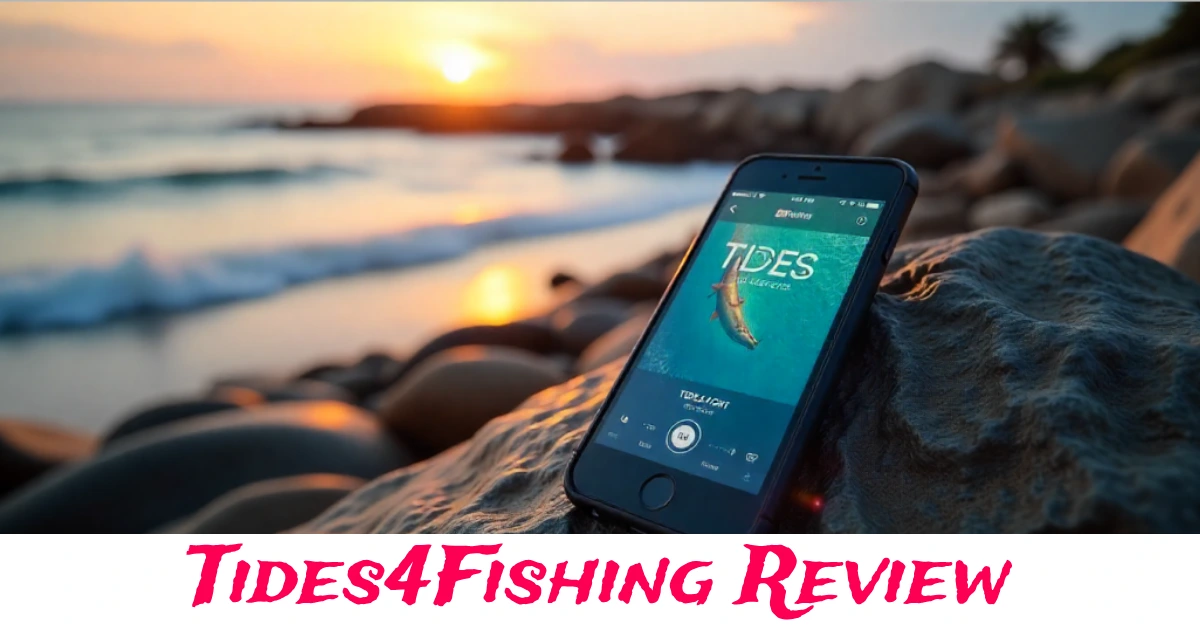
Tides4Fishing is a fishing forecast platform that combines tide predictions with solunar theory to estimate peak fish activity periods. The tool provides tide tables, moon phases, and weather data for fishing locations worldwide, helping anglers plan trips around optimal feeding times based on celestial positioning.
Every angler knows the frustration of perfect weather, the right gear, and zero bites. You’ve picked your spot carefully, used proven techniques, yet the fish simply aren’t cooperating. What if the problem isn’t your skill or equipment, but your timing?
This is where Tides4Fishing enters the conversation. This platform promises to unlock better fishing by predicting when fish are most likely to feed based on tides, moon phases, and something called solunar theory. But does it actually work, or is it just another fishing myth wrapped in scientific-sounding language?
After analyzing user experiences, examining the science behind the predictions, and comparing it with real-world fishing results, here’s what you need to know about Tides4Fishing and whether it deserves a spot in your fishing planning toolkit.
What Is Tides4Fishing and How Does It Work?
Tides4Fishing is a web-based platform and mobile app that provides fishing forecasts for coastal and freshwater locations around the world. Unlike basic tide charts that only show water levels, this tool attempts to predict fish behavior by combining multiple environmental factors.
The platform displays several key data points for any location you select. You’ll see high and low tide times with precise heights, sunrise and sunset information, moon rise and set times, current lunar phase, and most distinctively, color-coded ratings for fishing quality throughout each day.
The fishing ratings operate on a simple system. Days marked with three stars indicate excellent fishing conditions, two stars suggest good opportunities, and one star represents average conditions. Within each day, you’ll notice major and minor periods highlighted as the optimal windows for fish activity.
What sets Tides4Fishing apart from standard tide charts is its foundation in solunar theory. This concept, developed by John Alden Knight in 1926, proposes that fish and wildlife activity peaks during specific times related to the moon’s position relative to Earth. When the moon is directly overhead or underfoot at your location, these “major periods” supposedly trigger increased feeding behavior lasting about two hours. “Minor periods” occur during moonrise and moonset, with shorter activity windows of roughly one hour.
The platform incorporates this theory alongside actual tide data from governmental sources, creating a composite forecast that claims to show when fish will be most active. You can access this information for free through their website or download the Nautide app for mobile convenience.
The Science Behind Solunar Predictions
Understanding whether Tides4Fishing works requires examining the scientific basis of its core methodology. Solunar theory isn’t random speculation, it emerged from observed patterns in animal behavior and fishing success rates across different times and moon phases.
John Alden Knight developed his theory after noticing that his best fishing days seemed to correlate with specific moon positions. He collected data from anglers, studied wildlife activity patterns, and identified relationships between lunar cycles and feeding behavior. His work gained enough credibility that major outdoor publications adopted solunar tables for decades.
The gravitational influence of the moon on Earth is undeniable. We see it most obviously in ocean tides, where the moon’s pull creates predictable patterns of water movement twice daily. This same gravitational force affects all water on the planet, including lakes, rivers, and even the fluids within living organisms.
Some research supports elements of solunar theory. A study involving oysters demonstrated that even when removed from tidal waters and placed in controlled laboratory conditions, they continued opening and closing their shells in rhythm with what would have been high and low tides in their original location. This suggested they were responding to lunar gravitational forces rather than just learned tidal patterns.
However, the scientific community remains divided on how strongly these forces affect fish feeding behavior. Critics point out that many factors influence when fish feed, including water temperature, barometric pressure changes, prey availability, seasonal patterns, and local weather conditions. The moon’s position might play a role, but it’s far from the only variable.
Most marine biologists acknowledge that tidal movement matters tremendously for saltwater fishing. Moving water brings food, creates current breaks where fish ambush prey, and changes oxygen levels. But whether the moon’s overhead position specifically triggers feeding in the way solunar theory suggests remains debatable.
The theory works better as a general guideline than a precise prediction. Many experienced anglers report that fishing around major periods sometimes produces excellent results, but just as often, factors like a sudden weather front or water clarity changes prove more influential than the solunar forecast.
Tides4Fishing Accuracy: What Real Anglers Experience
The platform’s tide data generally receives high marks for accuracy since it pulls from the same governmental sources that agencies like NOAA use for official predictions. When Tides4Fishing tells you high tide occurs at 3:47 PM with a height of 6.2 feet, you can typically trust that information.
The solunar predictions, however, generate mixed feedback from the fishing community. Some anglers swear by the major and minor periods, planning entire trips around three-star days and reporting noticeably better catches when fishing during predicted peak times.
Others remain skeptical, noting that excellent fishing often happens on one-star days while three-star predictions sometimes produce disappointing results. Forum discussions reveal a pattern: the predictions seem to work more consistently in certain conditions and for specific types of fishing.
Coastal saltwater anglers often find value in the tool because tidal movement genuinely affects fish behavior in these environments. When Tides4Fishing predicts good fishing during an incoming tide at dawn, multiple factors align favorably regardless of solunar theory. The combination of moving water, low light conditions, and a positive moon phase creates genuinely productive conditions.
Freshwater anglers report more variable results. Without significant tidal influence, the predictions rely more heavily on solunar theory alone. Success rates appear more dependent on other factors like seasonal patterns, weather stability, and water temperature.
The timing predictions face a fundamental challenge: they treat all locations and species identically. A three-star day suggests excellent fishing everywhere, but this ignores countless local variables. A cold front passing through can shut down a bass bite completely, regardless of moon position. Migratory patterns might mean your target species isn’t even in the area during supposedly optimal periods.
Many experienced anglers use Tides4Fishing as one factor among several rather than a definitive guide. They check the forecast, but also monitor weather conditions, water temperatures, recent catch reports, and seasonal expectations. This balanced approach seems to produce better results than blindly following any single prediction method.
One practical limitation involves the precision of timing. Major periods supposedly last about two hours, but fish don’t follow schedules. If the forecast says peak activity runs from 2:00 to 4:00 PM, fish might start feeding at 1:30 or not until 4:15. The windows provide general guidance rather than exact guarantees.
Key Features and How to Use Them Effectively
Tides4Fishing offers several tools beyond basic tide times that can genuinely help your fishing planning when used correctly. Understanding what each feature provides and its limitations helps you make better decisions.
The tide chart displays high and low tide times with heights, which matters tremendously for saltwater fishing. Fish often feed more actively during moving water, particularly during the first two hours of an incoming or outgoing tide. Use these times to plan your fishing windows, focusing on periods when water movement coincides with dawn or dusk for even better opportunities.
The solunar calendar shows major and minor periods marked clearly on each day. Rather than treating these as absolute truth, consider them suggestions for when to focus your efforts if you have flexibility in timing. If you can only fish on weekends, knowing which weekend day rates higher helps you choose between Saturday or Sunday.
Weather integration provides temperature, wind speed, cloud cover, and barometric pressure at your location. This information often proves more immediately relevant than solunar predictions. Stable or rising barometric pressure generally improves fishing, while rapidly falling pressure before a storm can shut down activity despite favorable moon phases.
The lunar phase display helps you understand broader patterns. Full and new moons typically correlate with more extreme tides and often better fishing, particularly in saltwater. The days immediately before and after these phases frequently produce strong results.
For practical use, start by selecting your specific fishing location rather than a nearby city. Tide times and heights can vary significantly even within a few miles of coastline. The more precise your location, the more accurate the tide predictions.
Check the forecast several days in advance to identify the best possible windows within your available time. If you notice a three-star day with a major period coinciding with dawn or dusk during moving tide, that combination suggests genuinely favorable conditions worth prioritizing.
However, always verify current weather conditions before committing to a trip. A perfect solunar forecast becomes meaningless if thunderstorms roll through or a cold front drops water temperatures suddenly. The tool works best when combined with weather awareness and local knowledge.
Don’t abandon proven fishing spots or techniques just because the forecast rates a day poorly. Local factors often override general predictions. If you know a particular structure consistently produces during specific tide stages, trust that experience over a one-star rating.
Use the historical data feature if available to review past predictions alongside your actual fishing results. Over time, you’ll develop a sense of how well the forecasts align with your local conditions and target species. Some anglers discover strong correlations, while others find minimal predictive value.
The mobile app version provides convenience for checking conditions while already on the water or making last-minute timing adjustments. However, remember that cell service often becomes spotty in remote fishing locations, so capture the key information before you lose connectivity.
Tides4Fishing vs Alternative Tools
Several other platforms provide tide predictions and fishing forecasts, each with different strengths and approaches. Understanding these alternatives helps you choose the right tool for your needs.
NOAA Tides and Currents offers official government tide predictions with exceptional accuracy for tidal data. The platform provides detailed information about water levels, currents, and historical trends. However, it doesn’t attempt solunar predictions or fishing-specific forecasts, focusing purely on oceanographic data. If you want the most reliable tide information without opinion about fish activity, NOAA remains the gold standard.
Tideschart.com provides a simpler interface focusing primarily on tide times and heights with weather integration. The site displays information clearly without the solunar theory layer, making it straightforward for anglers who just need basic tide data. It covers global locations and updates regularly, though it lacks the fishing-specific predictions that Tides4Fishing emphasizes.
Nautide, the mobile app version of Tides4Fishing, offers the same core functionality with enhanced mobile convenience. You can save favorite locations, receive notifications about upcoming major periods, and access information offline after downloading it. The app costs money for full features, while the website remains free with advertising.
Local fishing report services and apps often provide more valuable insights than any tide prediction tool. Platforms where anglers share recent catch reports, current conditions, and proven techniques for your specific area incorporate real-time information that no algorithm can match. Combining these reports with tide data creates a more complete picture than relying on predictions alone.
Some anglers prefer using basic tide charts from local bait shops or marine supply stores, trusting their own experience to determine when fish will feed. These free resources provide the essential tidal information without attempting to predict activity levels, leaving those judgments to the angler’s knowledge.
The choice between these tools depends on your fishing style and experience level. Beginners often benefit from the guidance that Tides4Fishing provides, even if imperfect, because it helps them start understanding patterns. Experienced anglers frequently prefer raw data from sources like NOAA, applying their own knowledge to interpret conditions.
When Solunar Predictions Work Best
Certain conditions and fishing scenarios tend to produce better alignment between Tides4Fishing predictions and actual results. Recognizing these situations helps you know when to pay closer attention to the forecast.
Saltwater coastal fishing shows the strongest correlation with predictions because tidal movement genuinely affects fish behavior in these environments. Species like redfish, speckled trout, and flounder respond noticeably to moving water and often feed more actively during the periods Tides4Fishing highlights as optimal.
Fishing around full and new moons typically produces better results regardless of solunar theory because these lunar phases create more extreme tides. Stronger water movement brings more food into play and concentrates fish in predictable locations. When Tides4Fishing rates these days highly, multiple factors support improved fishing beyond just moon position.
Stable weather conditions allow solunar patterns to emerge more clearly. When barometric pressure remains steady, water temperatures hold consistent, and no fronts disrupt conditions, the subtle influences of lunar positioning might actually affect fish behavior noticeably. Volatile weather, however, overwhelms these subtler patterns.
Structure fishing benefits more from tide predictions than open water techniques. Fish using current breaks, channel edges, or depth changes respond to tidal movement patterns. Knowing when water movement peaks helps you position yourself at these structures during optimal times.
Species that feed actively throughout the day rather than having narrow feeding windows show better correlation with major and minor periods. Predatory fish that hunt opportunistically often increase activity during predicted times, while species with more specific feeding patterns based on prey availability might not respond as predictably.
Early morning and late evening fishing naturally produces better results for many species, and when major periods coincide with these times, success rates typically increase. Whether this results from solunar forces or simply the combination of low light and good timing remains debatable, but the practical outcome benefits anglers.
Limitations and What the Predictions Can’t Tell You
No prediction tool accounts for every variable affecting fishing success, and understanding these limitations prevents frustration and helps set realistic expectations.
Weather changes override most other factors. A rapidly falling barometer before a storm, sudden temperature drops, or high winds can shut down fish activity completely regardless of how highly Tides4Fishing rates the conditions. Always prioritize current weather data over solunar predictions.
Local water conditions matter tremendously. Muddy water after heavy rain, algae blooms, water temperature extremes, or low dissolved oxygen levels can make fishing difficult even during theoretically perfect periods. The platform doesn’t account for these water quality variables.
Seasonal patterns and fish migrations follow their own schedules independent of lunar phases. If your target species hasn’t arrived in the area yet or has already moved on to spawning grounds, moon position becomes irrelevant. Understanding annual patterns for your species provides more value than daily forecasts.
Fishing pressure affects fish behavior significantly. A heavily fished location might produce poor results regardless of tides or moon phases simply because fish have become conditioned to avoid the area during peak angling times. Remote spots with less pressure often outperform popular locations despite lower solunar ratings.
The predictions treat all species identically, but different fish have distinct behavioral patterns. Bottom feeders, pelagic predators, and sight feeders respond to different environmental cues. A forecast that works well for one species might prove irrelevant for another.
Human factors remain the biggest variable in fishing success. Your skill level, knowledge of techniques, ability to read water, equipment choices, and patience all influence results more than any external prediction tool. An experienced angler will typically outfish a novice on a one-star day just as easily as on a three-star day.
The platform also can’t predict unexpected opportunities. Sometimes baitfish schools move into an area unpredictably, triggering feeding frenzies regardless of tides or moon position. Staying aware of what’s happening around you often reveals better opportunities than following a predetermined forecast.
Practical Tips for Better Results
Combining Tides4Fishing with other information sources and sound fishing principles produces the best outcomes. Here’s how to maximize its value while avoiding common pitfalls.
Treat forecasts as guidelines rather than gospel. When the platform predicts excellent conditions, be ready to capitalize on them, but don’t cancel trips just because of mediocre ratings. Some of your best fishing might happen on days the algorithm rates poorly.
Focus most attention on tide times and weather data, which have proven reliability. Use the solunar predictions as secondary information that might help you refine timing within a broader fishing plan based on tides and weather.
Keep a fishing log noting the conditions, tide stages, moon phases, and your results. Over several months, patterns may emerge showing which factors correlate best with your success in your specific locations. Your personal data beats any generalized prediction algorithm.
Plan your fishing around moving water whenever possible in tidal areas. Regardless of solunar theory, fish typically feed more actively when current brings food and creates ambush opportunities. Incoming tides often produce better results than slack water periods even on highly rated days.
Pay attention to transitions. Dawn and dusk remain prime fishing times for many species regardless of moon position. When major periods align with these natural transition times, you’re stacking multiple favorable factors together.
Don’t let predictions dictate your spot selection. If you know a particular location consistently produces fish during specific conditions, trust that knowledge over a general forecast. Local experience trumps algorithm predictions.
Use the tool to educate yourself about patterns over time rather than depending on daily predictions. Understanding how lunar phases affect tides, when major tidal swings occur, and how these relate to seasons helps you become a better angler independent of any app.
Stay flexible and observant while fishing. If fish aren’t responding during a predicted major period, don’t waste the entire window forcing it. Adapt your approach, change locations, or switch techniques based on what you observe rather than stubbornly following the forecast.
Combine Tides4Fishing with local fishing reports, current weather radar, and knowledge from other anglers in your area. The tool provides one piece of useful information, but comprehensive awareness of all conditions produces the best results.
Final Verdict: Should You Use Tides4Fishing?
Tides4Fishing offers genuine value as a free tool that consolidates useful information in one place. The tide predictions prove reliable, the weather integration helps planning, and the lunar data provides context for understanding broader patterns.
The solunar predictions represent the controversial element. They work well enough for some anglers in some situations to generate loyal followers, but inconsistently enough that many experienced fishermen remain skeptical. The truth likely falls somewhere in the middle, with lunar positioning contributing as one minor factor among many more significant influences on fish behavior.
For beginners, the platform provides helpful structure and helps develop awareness of how environmental factors affect fishing. Learning to check tides, weather, and moon phases before trips builds good habits even if the specific predictions don’t always prove accurate.
Experienced anglers might find the basic tide and weather data useful while taking solunar ratings with skepticism informed by their own knowledge. The tool works best as a convenient reference rather than a decision-making authority.
The platform shines most when you have flexibility in timing and can choose between several possible fishing days. If weekend warrior constraints mean you’re fishing Saturday regardless of conditions, the forecast provides less practical value. But if you can select between several potential days or adjust your launch time within a given day, the predictions help optimize those choices.
Ultimately, Tides4Fishing functions best as one input among several in your fishing planning process. Check the forecast, but also monitor weather patterns, consult local reports, consider seasonal patterns, and trust your accumulated experience. When multiple factors align positively, your chances for success increase significantly. When they conflict, let weather, water conditions, and proven local knowledge guide your decisions over solunar predictions.
The tool costs nothing to try, so experimenting with it risks nothing but a bit of time. Test the predictions against your own results, develop your own sense of how well it works in your fishing situations, and use it accordingly. For some anglers, it becomes an indispensable planning tool. For others, it remains an interesting curiosity with occasional utility.
The most successful approach involves staying open-minded about all fishing information while maintaining healthy skepticism about any single source claiming to predict the unpredictable nature of fishing.
FAQs
Is Tides4Fishing accurate for predicting when fish will bite?
The tide data proves highly accurate, but fish activity predictions show mixed results. Saltwater anglers fishing around moving tides often find the forecasts helpful, while freshwater success rates vary more significantly. Many factors beyond moon position affect feeding behavior, so treat predictions as suggestions rather than guarantees.
How does Tides4Fishing differ from basic tide charts?
Standard tide charts show only water level changes and times. Tides4Fishing adds solunar theory predictions, weather data, moon phases, and color-coded fishing quality ratings. It attempts to predict fish activity levels rather than just providing tidal information.
Can you use Tides4Fishing for freshwater fishing?
Yes, though results tend to be less consistent than saltwater applications. Without significant tidal influence, the predictions rely primarily on solunar theory alone. Some freshwater anglers report good correlation with predictions, while others find minimal value compared to weather and seasonal factors.
What are major and minor periods in fishing?
Major periods occur when the moon is directly overhead or underfoot at your location, supposedly lasting about two hours and triggering peak fish activity. Minor periods happen during moonrise and moonset, lasting roughly one hour with moderate feeding increases. These concepts come from solunar theory.
Do professional fishing guides use Tides4Fishing?
Some guides incorporate it as one tool among many, while others rely primarily on personal experience and local knowledge. Most professional anglers prioritize tidal movement, weather conditions, and seasonal patterns over solunar predictions, using moon phase data as supplementary information rather than primary guidance.
Is the Tides4Fishing app worth paying for?
The website provides most features free. The paid app offers convenience, offline access, and notifications about upcoming major periods. Whether this justifies the cost depends on how frequently you fish and value mobile convenience. Many anglers find the free website sufficient for their needs.