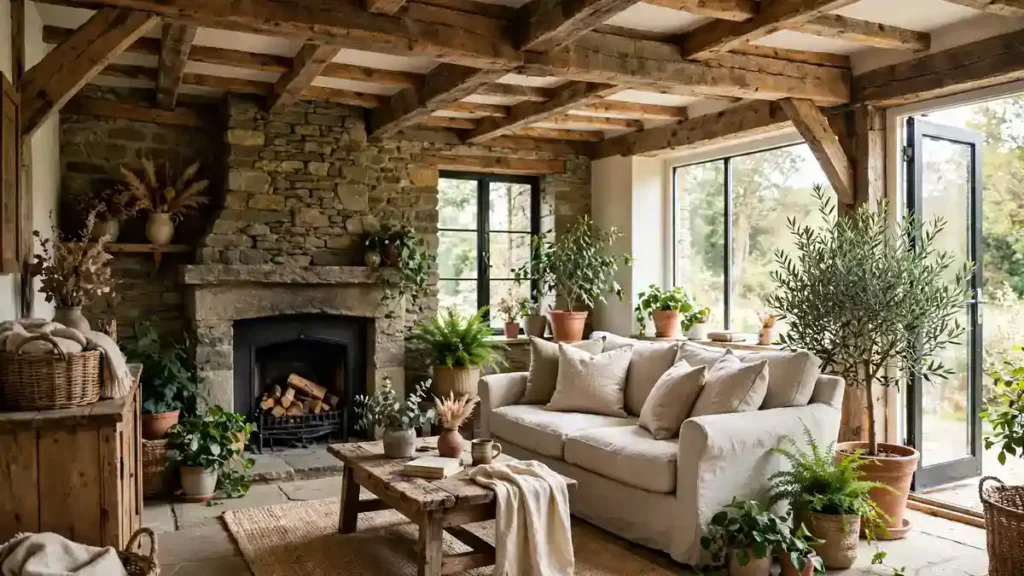
A cottage room can feel warm and lived in without a full rebuild. Rustic farmhouse cottage interiors UK use wood, stone, linen and soft colour to make a small or older home feel calm and easy to use. This guide shows how to plan one room at a time, choose materials that suit an older cottage, and make simple repairs that keep the character of the house.
Quick Answer: For rustic farmhouse cottage interiors UK, start with one room, not the whole house. Keep the wood, stone and beams that suit the cottage, paint walls in a soft warm white or sage, add linen and wool for texture, and use second-hand wooden furniture where it fits. Fix draughts, loose handles and scuffed paint first, and leave electrical, gas, structural and damp work to a qualified tradesperson.
Rustic farmhouse cottage interiors UK: what to keep, what to change
Rustic farmhouse cottage interiors UK start from what is already there, because a cottage already has much of its charm in place, so look at what is there before you buy anything new. Original beams, a stone fireplace, wooden floors and solid doors give a room its cottage feel, and they are hard to replace once they are covered or removed. Paint, lighting, curtains, layout and worn handles are easier to change, and they often make the biggest difference for a modest spend.
- Keep: beams, stone, wooden floors, original doors, and a fireplace that is safe and in use.
- Change: wall colour, lighting, curtains, room layout, and worn handles or hinges.
Take photos before you start, and leave any historic, damaged or unsafe feature alone until a qualified person has checked it.
What colours and materials suit a farmhouse cottage?
Soft warm whites, sage green, dusty blue and warm grey suit a farmhouse cottage, with wood, stone, linen, wool and cotton for texture. Keep the palette to two main colours and one accent, so the room feels calm rather than busy. Test paint in daylight and at night before you paint a full wall.
For rustic farmhouse cottage interiors UK, natural materials work better than shiny or very smooth finishes. Farmhouse cottage decor UK uses these materials in small amounts, so the room stays calm. Use linen curtains that let daylight through, wool throws for a chair or sofa, cotton bedding in a bedroom, and wooden baskets or boxes for storage. Second-hand wooden furniture often suits a cottage better than a matching new set, because older wood looks at home next to older walls and floors.
If your cottage has lime plaster, ask a specialist before you use a modern sealed paint.
How do you plan one room at a time?
Plan one room at a time by measuring first, listing what stays, and setting a cap for spending. Clear the room, test the layout for a week, then buy only what the room still needs. This stops impulse buys and keeps each room calm, useful and true to the cottage.
- Measure the room, doorways, windows and the main wall, and note plug sockets, radiators and door swings.
- List what stays, what can be repaired, and what should go, and take photos of each piece.
- Clear the room, try the new layout, and live with it for a few days before you fix shelves or paint a full wall.
- Paint a test patch, check it in daylight and at night, and only then paint the full wall.
- Add furniture and textiles last, one piece at a time, so the room stays calm and uncluttered.
This order matters in a cottage, because rooms are small and walls are not always straight. A sofa that looks right in a shop can block a door or radiator at home, so measurements will save a return trip.
A rustic cottage living room plan that works
Rustic farmhouse cottage interiors UK work best in a living room when the largest seat faces the main focus of the room, walkways stay clear, and storage sits low or against a wall. If you have a safe fireplace in use, it often makes a natural focus, with the sofa facing it and a lamp near the seat you use most.
- Put the largest piece first, then add smaller pieces around it.
- Keep one clear path through the room, wide enough to walk with a mug in hand.
- Use low storage under a window or against a wall, rather than a tall unit that blocks light.
- Place a warm lamp near the seat you use most, and keep curtains light so daylight can reach the room.
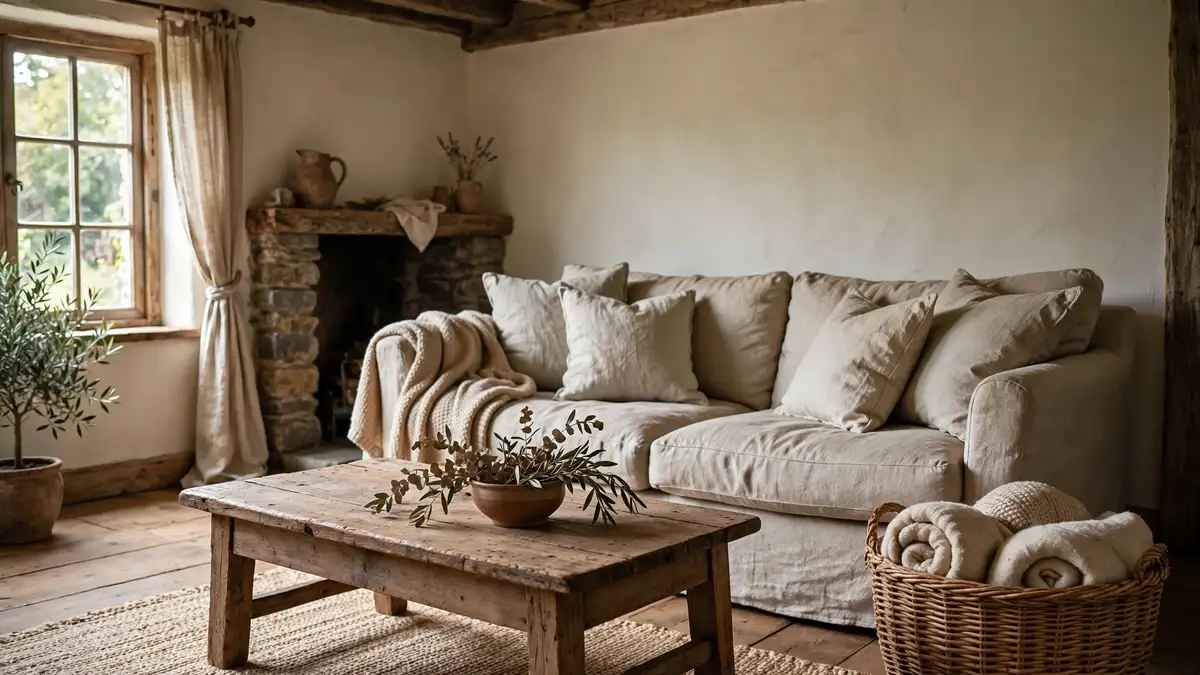
For rustic cottage living room UK and cottage style home decor UK, texture does much of the work. A linen sofa cover, a wool throw, a woven basket and a wooden coffee table can make a plain room feel like a cottage room. Keep the floor clear, and give every daily item a home.
Storage, light and texture without clutter
For rustic farmhouse cottage interiors UK, storage helps a small room more than extra furniture does. A lidded basket by the sofa and a wooden box for books can hold daily items without filling the floor. Sort first, and give away what you do not use.
Light matters too in a cottage with small windows. Use a warm lamp near the seat you use most, keep curtains light, and avoid a bare bulb at eye level. For texture, repeat two main colours and one accent in cushions, a throw and a print.
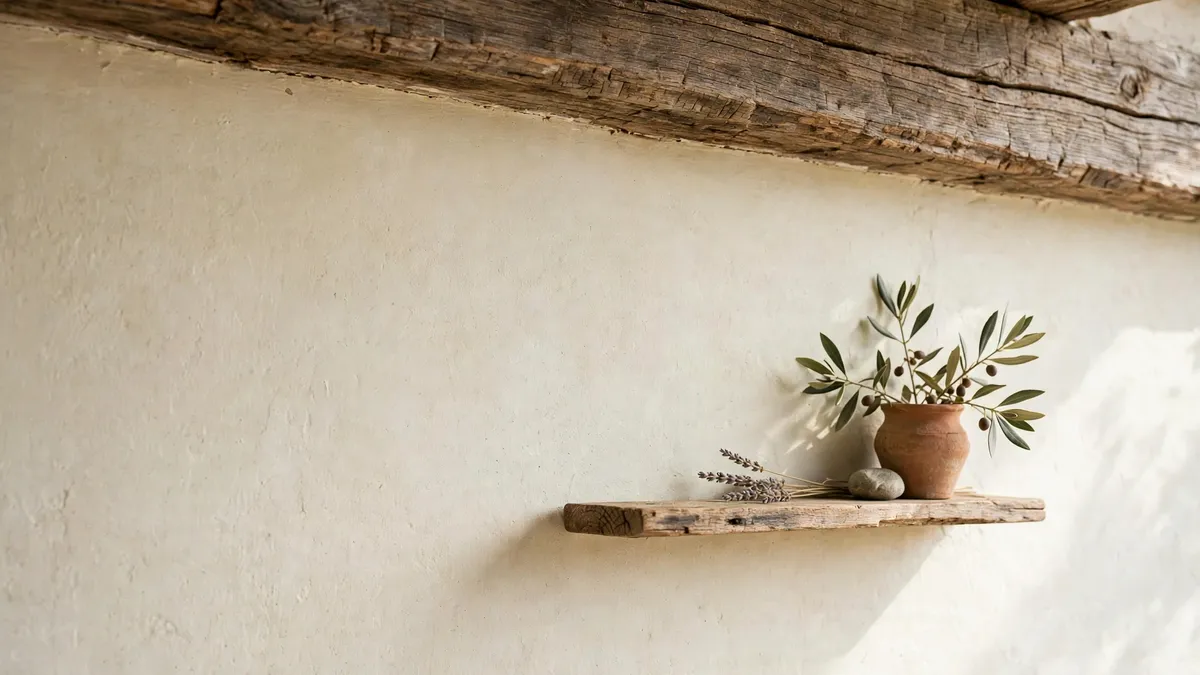
Wall shelves need the right fixings for your wall type, so if you are unsure, use a freestanding shelf instead.
Simple repairs and care for older cottage features
For rustic farmhouse cottage interiors UK, simple repairs can lift a room for very little money, if you start with cleaning and small fixes. Vacuum fabric slowly, including seams and under cushions, wipe wood with a damp cloth and dry it straight away, and test any cleaner on a hidden patch first. Tighten loose screws and handles, add a small felt pad under a leg that rocks, and use a matching wood marker or a dab of furniture oil on a cloth for a light scratch. For a tired side table, furniture paint can help when the wood is clean, dry and lightly sanded, and each coat dries fully in fresh air.
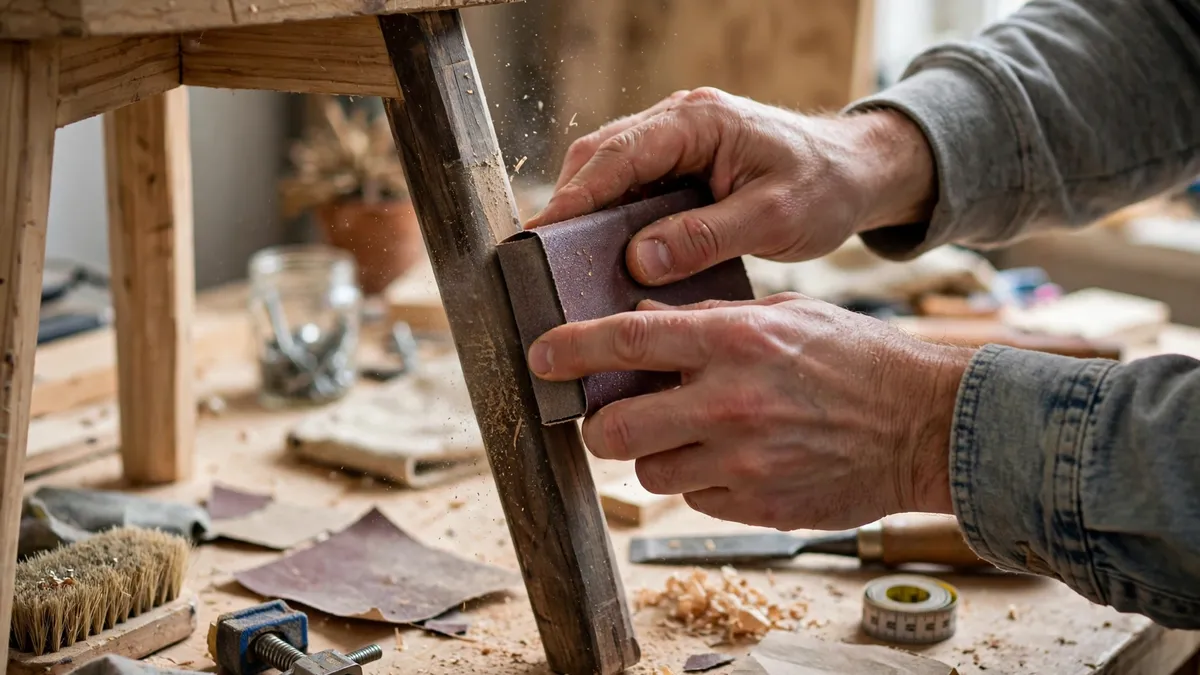
Do not cover damp with paint. If you see damp, mould that keeps coming back, a cracked wall or a sagging floor, stop and ask a qualified person to look first, because paint will not fix the cause. Leave wiring and gas work alone, and hire a qualified tradesperson for any electrical, gas, structural or damp work in a UK home.
A weekend plan and rough costs
For rustic farmhouse cottage interiors UK, one weekend is enough for a first pass on one room, with one shopping trip and one cleaning session. Work in this order: measure, clear, clean, repair, paint a test patch, then place furniture and textiles.
| Task | Time | Rough cost | Difficulty |
|---|---|---|---|
| Measure and clear the room | 1 hour | No cost, tape measure only | Easy |
| Paint one wall or touch-ups | Half a day | £25 to £60, approximate | Easy to medium |
| Second-hand wooden piece, clean and repair | Half a day | £40 to £150, approximate | Easy to medium |
| Add curtains, cushions and a lamp | 2 hours | £30 to £120, approximate | Easy |
| Fix handles, holes and scuffs | 2 hours | Under £20, approximate | Easy |
| Total, one room refresh | One weekend | £150 to £600, approximate | Easy to medium |
Costs here are rough ranges only, not quotes, and they will vary by shop, town and condition. The lower end assumes you already own much of what you need, while the higher end allows for a second-hand piece, paint and new textiles. You may need a tape measure, a pencil, a screwdriver set, a paintbrush and roller, filler, sandpaper in a fine grade, a damp cloth and gloves. Borrow tools where you can, and work in fresh air when you paint or sand.
When should you hire a tradesperson?
For rustic farmhouse cottage interiors UK, hire a qualified electrician for new sockets, moving sockets or new circuits. In England and Wales, certain electrical work in homes falls under Part P of the Building Regulations, and a qualified person should assess it. Do not wire a socket yourself. For gas, only a Gas Safe registered engineer should work on gas pipes and appliances.
Hire a builder or surveyor for structural work, a damp specialist for persistent damp, and a qualified person for work on a shared wall or a sagging ceiling. If your cottage is listed, or in a conservation area, check with your local council before you change historic features, alter windows, doors or an exterior, because extra rules can apply. This guide is general advice only, not legal advice for your home. For rented homes, tell your landlord about damp or structural issues in writing, and ask in writing before you drill or paint.
Frequently asked questions
Can I use farmhouse style in a small cottage?
Yes, rustic farmhouse cottage interiors UK often suit a small cottage, because they use a small palette, natural materials and low storage. Keep the largest piece first, leave one clear path through the room, and use light curtains and a warm lamp so the room does not feel dark. Add texture with linen and wool, rather than adding more furniture.
Do I need to strip paint from wooden beams?
No, in rustic farmhouse cottage interiors UK, you do not need to strip paint from wooden beams. Clean the beams, check for damage, and leave historic paint or finishes alone if you are unsure. If the cottage is listed, or the beams look historic, ask a specialist or your local council before you strip, sand or repaint them.
What paint suits an older cottage wall?
A soft warm white, sage or dusty blue often suits an older cottage wall, but the finish matters as much as the colour. Test a small patch in daylight and at night, and check how it looks next to wood and stone. If the wall has lime plaster, ask a specialist about a breathable finish before you use a modern sealed paint.
How much should I budget for one room?
For rustic farmhouse cottage interiors UK, a first pass on one room can often stay in a rough range of £150 to £600, if you buy one second-hand piece and use what you own for the rest. Costs vary by town, shop and condition, so treat any figure as a rough range, not a quote. Set a clear cap before you shop, and stop when you reach it.
Can I mix second-hand furniture with new pieces?
Yes, mixing second-hand and new pieces often works well in rustic farmhouse cottage interiors UK, because it stops the room looking like a shop display. Start with one main second-hand wooden piece that fits, then add new textiles such as curtains, cushions or a lamp. Keep the palette small, so old and new pieces sit well together.
Rustic farmhouse cottage interiors UK work when you keep what suits the cottage, plan one room at a time, and fix small problems before you buy new things. A soft palette, natural materials, clear walkways and warm light will do more than new furniture. Your next step is simple: measure one room today, list what stays and what can be repaired, and take that list to a second-hand shop.