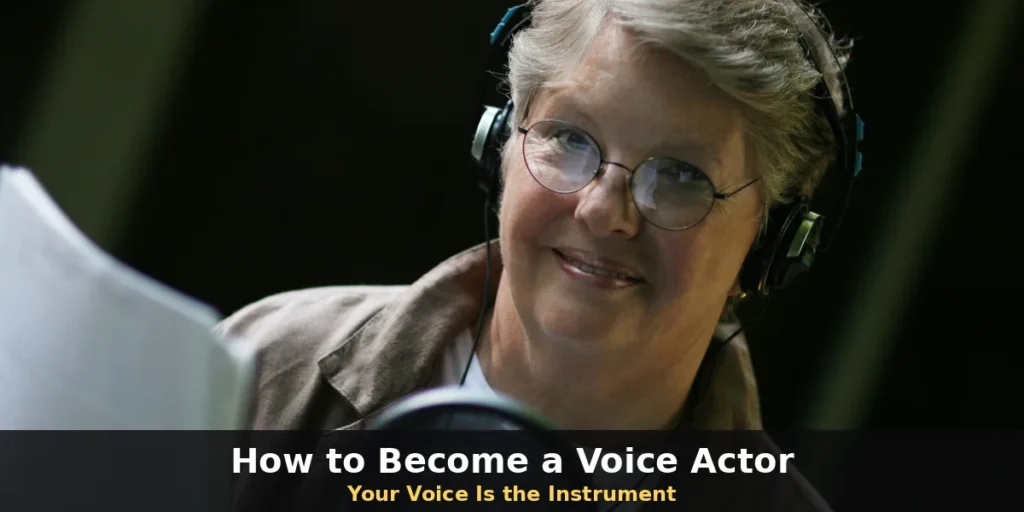
You become a voice actor by training your voice like an instrument. A short professional demo and steady auditioning bring the paid work. No camera, costume or stage is involved. Casting happens through headphones, not headshots, in this branch.
The field suits patient, self-directed beginners everywhere in Britain. Most early work arrives through online casting platforms. Home recording turned a London-only trade into a national one. Your spare room can genuinely compete now.
Key Takeaways
- Treat the voice as a skill, not a gift.
- A one minute demo opens almost every door.
- Quiet recording space beats expensive microphones early on.
- Commercials and explainer videos pay most beginners first.
- Rates follow usage, so learn the pricing logic early.
What Voice Actors Actually Voice
The work stretches far beyond cartoons. Commercials form the largest paid segment nationally. Corporate training videos need calm, clear narration daily. Explainer videos hire friendly voices by the thousand.
Audiobooks grow larger every single year. Video games cast hundreds of supporting characters. Phone systems, apps and e-learning all need voices. Animation is the glamorous tip of a big iceberg.
Each segment wants something slightly different. Commercials want energy compressed into thirty seconds. Narration rewards steadiness over long sessions. Character work demands range, stamina and imagination.
This path sits beside screen acting, not beneath it. Our guide to how to become famous maps the wider landscape. Voice work is its most accessible doorway today.
Train the Voice You Already Have
A pleasant voice alone does not book work. Control of pace, pitch and emphasis books work. Directors hire actors who take direction quickly. Read aloud daily for twenty focused minutes.
Record yourself and listen back honestly. Notice filler sounds, rushed endings and flat patches honestly. Fix one weakness per week, not ten. Small steady corrections compound surprisingly fast.
Acting training transfers directly into voice work. The microphone hears every false emotion clearly. Stage and screen classes both build truthful delivery. Improv sharpens the quick character choices auditions demand.
Look after the instrument physically too. Hydration, sleep and rest days protect it. Shouting over noise damages voices quietly. Warm up gently before long sessions, always, without exception.
Set Up a Home Recording Space
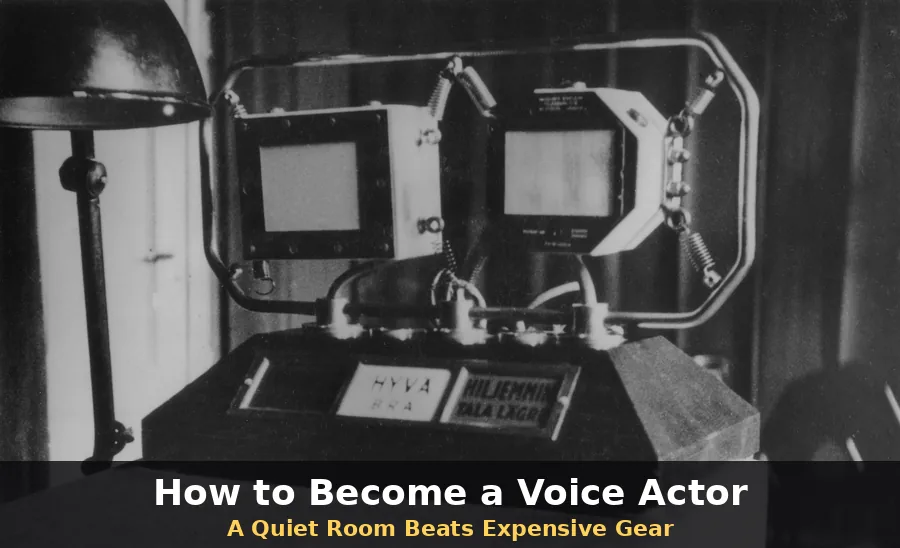
Sound quality decides auditions before talent does. Casting teams reject echoey, hissy recordings instantly. A wardrobe full of clothes absorbs echo beautifully. Many professionals started inside literal cupboards.
The basic starter chain stays simple:
- A USB or XLR condenser microphone
- Closed-back headphones for honest monitoring
- A laptop with free editing software
- Soft furnishings surrounding your recording corner
- A pop filter to tame harsh plosives
Upgrade only when paid work justifies it. Clients pay for clean, consistent audio files. They never ask which microphone you own. Consistency between sessions matters more than gear lists.
Anyone learning how to become a voice actor should test weekly. Record the same script monthly and compare. Progress you can hear keeps motivation honest. Studios notice reliable home setups when rebooking.
Record a Demo That Gets You Hired
Your demo reel is the entire shop window. Sixty seconds is the standard commercial length. Open with your natural voice at its best. Follow with two or three contrasting styles.
Produce it properly once money allows. A professional demo producer shapes scripts to you. Home-made demos work for the earliest applications only. Never fake accents or characters you cannot sustain.
Update the reel as your skills grow. Replace the weakest clip every few months. Keep files labelled clearly for fast sending. Agents and clients both judge organisation as professionalism.
Representation follows the same evidence rule as acting. Our guide to how to get an acting agent explains that logic. Voice agents exist too, with identical expectations. Credits and a strong demo unlock their doors.
Mistakes That Slow Beginners Down
Most guides on how to become a voice actor skip the failure patterns. The biggest is buying expensive equipment first. Studios reject noisy rooms, not modest microphones. Spend on treatment and training before hardware upgrades.
Underpricing comes a close second among beginners. Rock-bottom rates signal inexperience to serious buyers. They also trap you when usage renews later. Price like a professional from the first job.
Skipping practice during quiet months is third. Voices lose sharpness without regular use. Daily reading keeps the instrument audition-ready always. Bookings often arrive with very short notice.
Finding Work and Setting Rates
Online casting platforms list new jobs daily. Voice directories put your reel before buyers directly. Local radio and production companies hire regionally too. Apply widely while your credits are thin.
Pricing confuses almost every beginner at first. Fees combine a session payment plus usage. A local radio advert pays far less than national television. Usage length and territory change the total significantly.
Never quote before asking about usage. A cheap buyout can haunt a growing career. Spotlight lists voice work beside screen castings. Equity publishes guidance rates for UK voice work. Study them before your first negotiation.
Anyone serious about how to become a voice actor treats it as business. Keep a simple spreadsheet of every job. Note the client, fee, usage and renewal dates. Renewals quietly become a real income stream. Organisation turns scattered gigs into a business.
How to Become a Voice Actor FAQs
Do I need a special voice to start?
No, ordinary voices book most paid work. Commercials and narration want relatable, clear delivery. Unusual voices find character niches more slowly. What matters is control, not natural beauty. Training shapes any healthy voice into a tool. Directors cast authenticity over perfection almost always.
How much do voice actors earn in the UK?
Earnings vary enormously between beginners and established names. Single sessions might pay a few hundred pounds. National commercial usage can add several thousand more. Audiobooks usually pay per finished hour of audio. Most beginners build income slowly across several years. Treat early work as paid training and credits.
Can I do voice acting from home?
Yes, most voice work now records remotely. A quiet treated corner and decent microphone suffice. Studios direct sessions over internet connections routinely. Files travel digitally, so geography matters little. Some major animation still records in person. Home setups handle the majority of commercial work.
How long should a voice demo be?
About sixty seconds suits a commercial demo. Narration demos can run slightly longer comfortably. Character reels stay near one minute too. Open with your strongest, most natural read. Casting ears decide within the first ten seconds. Shorter and stronger beats longer and mixed.
Do voice actors need agents?
Not at the beginning of the journey. Platforms and directories supply early auditions directly. An agent helps once demand outgrows your diary. Voice-specific agents understand usage fees deeply. They also pitch you for unlisted castings. Earn credits first, then approach them properly.
What software do I need to record?
Free editors handle professional files perfectly well. You need clean recording, simple editing and exports. Learn noise control and consistent levels first. Studios care about the delivered audio quality. Fancy software cannot rescue a noisy room. Master the basics before buying anything extra.
A Simple First Month Plan
Week one belongs to listening and reading aloud. Study adverts and narrations you genuinely admire. Copy their pacing in practice, never in auditions. Build the daily habit before anything else.
Week two turns the cupboard into your studio. Test recordings at different times of day. Note when neighbours, traffic and boilers intrude. Choose your quiet hours and protect them.
Weeks three and four focus on the demo. Write or gather scripts matching your natural range. Record, compare and shortlist the strongest takes. By month two, applications can start going out.
The Microphone Rewards the Persistent
Voice acting removes many old barriers to entry. No stage, camera or London address is required. A trained voice and clean recordings compete nationally. The demo is your audition, portfolio and passport.
Knowing how to become a voice actor is only the map, not the journey. Start with twenty minutes of daily reading. Build the cupboard studio this month. Record the first demo when ready. Expect slow months between the early bookings. Every professional voice you admire survived that same stretch. Persistence, more than talent gaps, separates working actors later. The voices booking work next year are practising tonight. Explore the full fame ladder in our Celebrity section.