You can learn how to fix squeaky floorboards in one afternoon with basic tools. Most squeaks come from a loose board rubbing against a nail or joist. Start with dry lubricant for small movement between boards. Use screws into the joist when one board clearly lifts or rocks.
Work through the checks below before you drill anything. A pipe, cable or heating pipe may sit close under the boards. This guide follows the budget-first approach of our uk home improvement ideas on a budget pillar. Each fix below suits a different cause, so match the fix to the symptom.
Key Takeaways
- A squeak means movement, usually a loose board over a joist.
- Dry lubricant cures small rubbing noises between board edges.
- Screws into the joist give the lasting fix for loose floorboards.
- Learning how to fix squeaky floorboards takes one careful afternoon.
- Never drill blind where pipes, cables or heating may run.
Why Floorboards Start to Squeak
Timber floors move a little with heat, moisture and daily foot traffic. Boards shrink slightly in dry air and swell again in damp months. Old nails loosen as the timber around them wears wider. The board then rubs on the nail or its neighbour with every step.
Creaky floorboards often start near doors, stairs and busy walkways. Heavy furniture can also press one board lower than the rest. A board end that lost its joist support will flex and knock. Use the table below to match your noise to a likely cause.
| What you notice | Likely cause | First fix to try |
|---|---|---|
| Squeak in one small spot | Loose board over a joist | Screw the board into that joist |
| Creak along a board edge | Two boards rubbing together | Work dry lubricant into the gap |
| Several boards feel springy | Weak support or damaged joist | Stop and get the floor checked |
| Noise under carpet only | Loose board hidden by carpet | Lift one carpet edge and inspect |
| Creaking on the stairs | Loose tread or worn fixings | Screw the tread after safety checks |
Find the Exact Board That Moves
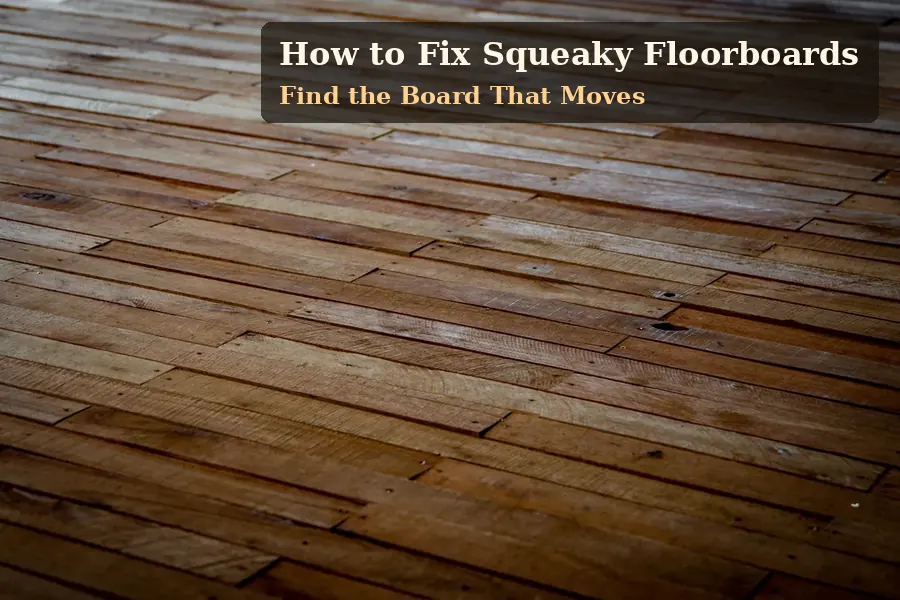
Walk the room slowly in socks during a quiet moment. Shift your weight from heel to toe across each board. Ask a helper to watch which board edge dips or lifts. Mark the noisy spot with painter’s tape before you start work.
Floor joists usually run under the shortest span of the room. Lines of old nail heads often reveal where each joist sits. Tap along the board and listen for a duller, solid sound. That duller note often means timber support directly below.
- Check the board ends first, since ends move most.
- Press near skirting boards where boards often lift.
- Note any musty smell, staining or soft patches.
Try a Dry Lubricant Before You Drill
Powdered graphite works well as a dry lubricant between board edges. Talcum powder can also quiet small rubbing noises for a while. Shake a little powder along the gap between the two boards. Walk over the spot repeatedly to work the powder down.
Brush away spare powder so it cannot mark shoes or rugs. Avoid oil sprays, which can stain timber and attract dust. A powder fix treats rubbing, but it cannot hold a loose board down. If the noise returns within days, the board needs a mechanical fix.
- Use powder only on bare timber or open board gaps.
- Keep powder away from pale carpets and fabrics.
- Retest the spot after twenty slow passes.
How to Fix Squeaky Floorboards From Above

Screws hold far better than the old nails they replace. Choose countersunk screws long enough to grip the joist firmly. The screw must pass through the board and bite into solid timber. Short screws in the board alone will loosen again.
- Drill a pilot hole through the board at the marked spot.
- Countersink the hole so the screw head sits below the surface.
- Drive the screw down until the board pulls tight.
- Add a second screw if the board still moves.
- Fill the hole with wood filler and let it dry.
- Sand the filler smooth once it has fully hardened.
Work in pairs of screws along the joist line for wide boards. Keep screws away from board edges to prevent splits. Test the floor with slow steps before you fill every hole. A quiet board under full weight means the fix has worked.
Fixing the Noise From Below the Floor
Some homes let you reach the underside of the floor easily. A cellar, garage or crawl space may give clear access below. From below, you can see the gap between board and joist. That view shows exactly where support is missing.
Access from below changes how to fix squeaky floorboards in older homes. Slide a thin timber shim into a small gap beside the joist. Add a little wood glue to the shim before you push it home. Never force a thick shim, since it can lift the board.
- Support the board, never jack it upward.
- Check for pipes before you reach into dark spaces.
- Leave structural repairs to a qualified carpenter.
- For bathroom floors above, plan alongside our statement tiles bathroom ideas guide.
Stay Safe Around Pipes, Cables and Heating
Boards can hide water pipes, heating pipes and electric cables. A pipe and cable detector helps, but it has real limits. The Energy Networks Association electrical safety guidance warns that detectors can miss some cables. Treat every hidden cable as live, even with the power off.
Detectors may also miss plastic water pipes under the floor. Underfloor heating rules out blind screwing altogether in that room. If you damage a cable, keep clear and dial 105 for help. That number reaches the local electricity network operator in Great Britain.
- Scan the exact spot twice before any drilling.
- Never assume pipes run in straight lines.
- Stop at once if you feel unexpected resistance.
Carpet, Laminate and Chipboard Floors
Carpeted floors hide the boards, so diagnosis takes longer. Lift one carpet edge rather than cutting through the pile. Screwing through carpet can twist fibres around the screw shaft. Relay the carpet carefully once the board sits quiet.
Laminate and engineered boards float over an underlay layer. Their squeaks often come from the subfloor or uneven underlay below. Chipboard sheets squeak where sheet edges meet over a joist. Those edges need screws into the joist, not powder between sheets.
- Photograph cable and pipe positions before relaying carpet.
- Check door thresholds where floating floors often rub.
- Note which sheet edge moves before you lift anything.
When a Squeak Signals a Bigger Problem
Some floors need more than powder or a few screws. A wide springy area can point to a damaged joist below. Soft, dark or crumbling boards may hold rot or woodworm damage. Stair treads that flex underfoot also need prompt attention.
Stop work if the board cracks, splits or drops suddenly. Keep people off the area until a carpenter checks it. Structural timber, gas pipes and wiring belong to qualified tradespeople. A short inspection now prevents a far costlier repair later.
A Quieter Floor Makes Every Room Feel Better
Start with the board that annoys you most each morning. Work through the checks in order and test after each fix. Most homes need powder in one spot and screws in another. You now know how to fix squeaky floorboards without guesswork or waste.
Browse the full Home Improvement archive for your next weekend project. Pair a quiet floor with the layout tricks in our small room guide. Small, careful fixes protect the timber your home stands on. They also make early mornings far less creaky for everyone.
Squeaky Floorboard Questions, Answered
Why do floorboards squeak more in winter?
Central heating dries the air and the timber in your floors. Boards shrink slightly and pull away from old nails and joists. That tiny gap lets the board move and rub underfoot. The noise often fades when humid spring air returns.
Does talcum powder really stop squeaks?
Talcum powder can quiet boards that rub along their edges. It works as a dry lubricant and needs no drilling at all. The fix lasts weeks or months, depending on foot traffic. Loose boards will squeak again until screws hold them down.
Can I fix a squeaky floor under carpet?
Yes, but lift one carpet edge before you drill or screw. A screw driven through pile can tear the carpet backing. Powder under carpet is messy and hard to control. The steps for how to fix squeaky floorboards stay the same under carpet.
How do I find a joist under the floor?
Look for lines of nail heads running across the boards. Joists usually sit under those lines at regular spacing. Press along the line and feel where boards sit firm. A detector can confirm timber, pipes or cables before drilling.
When should I call a professional?
Call a carpenter if several boards feel springy or soft. Rot, woodworm and damaged joists need proper structural repair. Call an electrician if you uncover damaged or exposed cables. Never bury a damaged cable back under the floor.