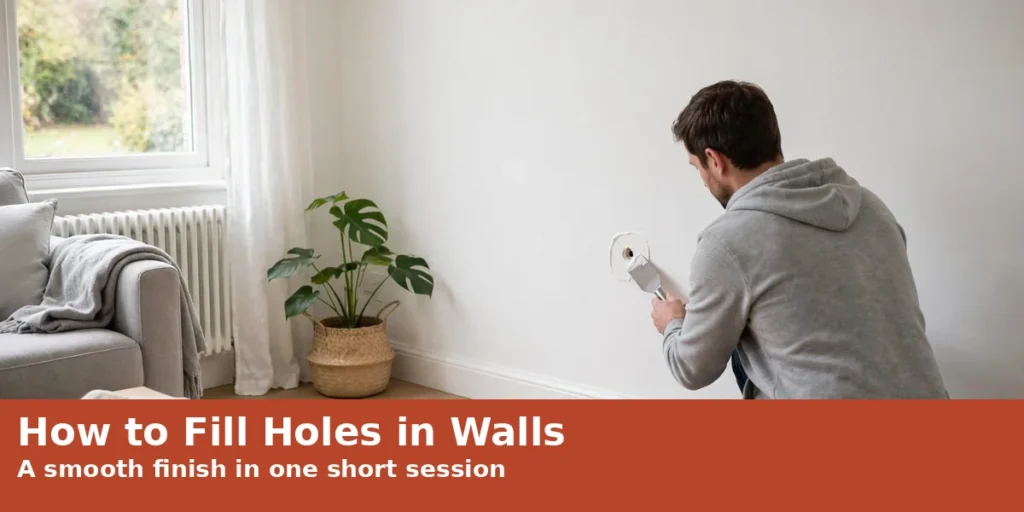
You can learn how to fill holes in walls in one short session at home. Clean the hole, press in filler, let it dry, then sand it flat and smooth. Most small holes need only a tub of ready mixed filler and a filling knife. This guide shows each size of hole, the right filler, and a clean paint finish.
At a Glance
| Hole size | Filler to use | Dry time guide |
|---|---|---|
| Small nail hole | Ready mixed filler | Often 1 to 2 hours |
| Hairline crack | Flexible filler | Often 1 to 2 hours |
| Large hole | Two part filler or patch | Up to 24 hours |
| Plasterboard hole | Patch kit or new board | Up to 24 hours |
Can You Fill Holes in Walls Yourself?
Yes, most wall holes are simple jobs for a careful home owner. Small holes, cracks and dents need only basic tools and a little patience. You can get a flat, neat finish if you work in thin layers.
Start with a small hole if you have never used filler before. You will learn how to fill holes in walls in one short test. Leave deep structural damage, damp walls and loose plaster to a skilled plasterer.
Check the wall type first, as plaster and plasterboard need care. Tap the wall gently, and look for a hollow sound or a firm thud. This quick check helps you pick the right filler for the job.
What You Need to Fill Holes in Walls
Gather your tools before you open the filler tub. A filling knife, sandpaper, a damp cloth and a dust mask cover most jobs. A vacuum or brush helps you clear dust from the hole first. See our budget home improvement ideas for more low cost jobs round the house.
The best filler for holes in walls depends on hole size and wall type. Ready mixed filler suits small holes and cracks in most homes. Two part filler sets hard and suits deep holes in solid walls. Flexible filler suits cracks that move a little with heat and cold.
- Filling knife in two sizes
- Sandpaper in 120 and 240 grit
- Dust mask and safety glasses
- Damp cloth and small brush
- Filler, primer and paint for the finish
| Type | Best for | Notes |
|---|---|---|
| Ready mixed filler | Small holes and cracks | Easy to use, sand when dry |
| Two part filler | Deep and large holes | Sets hard, mix in small amounts |
| Flexible filler | Hairline cracks | Moves with the wall, paint over it |
| Plasterboard patch kit | Holes in plasterboard | Gives a firm base for filler |
How to Fill Holes in Walls: Small Nail and Screw Holes
To fill small holes in walls, start by clearing dust from each hole. Push out loose bits with a small screwdriver and wipe the area clean. This step helps the filler grip the wall and stay in place.
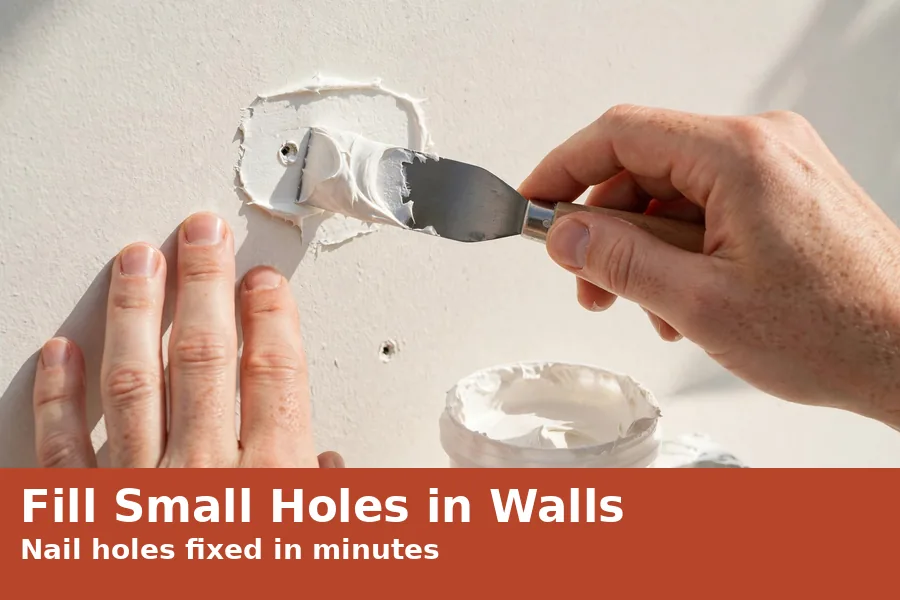
To fill nail holes in walls, press a small blob of filler into the hole. Draw the knife across the wall to leave a thin, flat layer. Let it dry fully, then add a second thin layer if it has shrunk. Once you know how to fill holes in walls, small jobs feel quick and neat.
Screw holes need the same method, but check for a wall plug first. Pull the plug out with pliers, or push it just below the face. Fill the gap in thin layers, and sand it flat when dry.
- Clean each hole and wipe away dust.
- Press filler into the hole with a filling knife.
- Scrape off the extra filler in one smooth pass.
- Let the filler dry, then sand it smooth.
How to Fill Hairline Cracks in Walls
To fill hairline cracks in walls, first check if the crack is stable. A thin crack that has not grown is safe to fill at home. A wide crack or one that keeps growing needs a closer look first.
Widen the crack a little with a scraper to give the filler a key. Brush out dust, then press flexible filler along the full length. Smooth it with a damp finger or knife, then let it dry fully.
Let the filler dry, then sand it back to a flat, smooth line. Prime the crack before you paint, or it may show through. Two thin coats of paint will hide the line in most rooms.
How to Fill Large Holes in Plaster Walls
To fill large holes in walls, you need a firm base behind the filler. Filler alone will sag and crack in a hole wider than a coin. Cut back loose plaster until you reach a sound edge all round.
To fill holes in plaster walls, damp the edge a little first. Press filler in layers, and let each layer dry before the next. Patching plaster works well here, as it sets firm and sands smooth.
Build the filler up just past the wall face, then scrape it flat. Do not rush a deep fill, or the centre may stay soft inside. Check the tin for dry times, and sand only when the fill feels hard.
How to Fill Holes in Plasterboard
To fill holes in plasterboard, first check for pipes and cables behind it. Switch off power at the fuse box if you plan to cut near a socket. Small dents need filler only, but a clean hole needs a patch.
A self adhesive patch kit gives a firm mesh base for filler. Stick it over the hole, then spread filler across the mesh in thin coats. Feather the edge out wide, so the patch does not show through paint. Once you know how to fill holes in walls, a plasterboard patch feels less daunting.
- Mark a neat square round the hole.
- Cut out the damaged board with a pad saw.
- Fit a timber batten behind the gap.
- Screw a new board piece to the batten.
- Tape the joints, then fill and sand.
How to Sand and Paint Over Filler
Sanding filler smooth is the step that makes the repair blend in. Wear a dust mask, and sand with light, even strokes. Start with 120 grit paper, then finish with 240 grit paper.
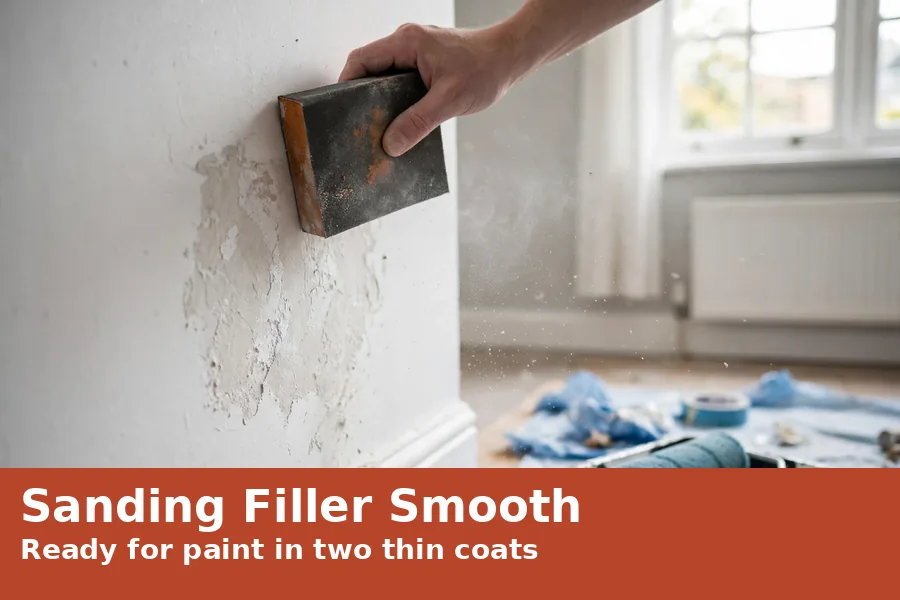
Wipe away dust with a damp cloth, and let the wall dry fully. If you want to know how to fill holes in walls before painting, prime first. A thin coat of primer stops the filler from showing through paint.
Paint the patch with a small roller, and feather the edge into old paint. Let the first coat dry, then add a second coat for an even tone. Two thin coats look far better than one thick coat. Dulux has a clear wall repair guide if you want more detail on prep.
Mistakes to Avoid When You Fill Holes in Walls
Most poor repairs come from rushing one simple step. A little care at each stage saves a second repair later. Check this list before you pick up the filling knife.
Thick filler shrinks, cracks and takes far longer to dry. Dust left in the hole stops filler from bonding to the wall. Paint on damp filler will peel, so wait until it feels hard.
A rushed job often needs a full redo, so slow down at each step. Good light helps you spot lumps and dips before you paint. Wipe the wall clean, and check the patch from the side.
- Filling a hole in one thick layer
- Skipping the dust clean before you start
- Sanding filler before it has dried fully
- Painting straight on to bare filler
- Using the wrong filler for the hole size
- Leaving a raised edge round the patch
- Filling damp plaster without fixing the damp first
- Cutting plasterboard without a check for cables
When to Call a Plasterer Instead
Call a plasterer if the damage covers a large wall area. Loose plaster, damp patches and cracks near doors need expert care. A pro can match the old plaster finish and save you time.
Get a quote first, and ask what the price covers. Ask to see past work, and check reviews from local home owners. Do not fill damp or loose plaster without fixing the cause first.
Browse more Home Improvement guides for simple jobs round the house. Each guide uses the same clear steps and plain words. You can plan your next job with skill and less waste.
Your Wall Can Look New Again
You now know how to fill holes in walls for each size and wall type. Pick the right filler, work in thin layers, and sand with care. A neat patch and two coats of paint will hide most small damage.
Start with the smallest hole in your home this week. You will gain skill fast, and each next repair will feel easier. Share this guide with a friend who has a wall to fix.
Questions About Filling Holes in Walls
How long does wall filler take to dry?
Small fills often dry in 1 to 2 hours in a warm, dry room. Deep fills can take up to 24 hours, so check the tin first. Do not sand or paint until the filler feels hard right through.
Can I fill holes in walls without sanding?
You can skip heavy sanding on a tiny nail hole in some cases. Most fills still need a light sand to sit flat with the wall. A quick sand takes a minute and gives a far neater paint finish.
What is the best filler for small nail holes?
Ready mixed filler is the simple pick for most small nail holes. It spreads smooth, dries fast, and sands to a flat finish. Keep the tub sealed, or the filler will dry out in the tub.
Can I paint straight over wall filler?
Wait until the filler is fully dry, then prime the patch first. Primer seals the filler and stops paint from soaking in patchy. Add two thin coats of paint for a tone that matches the wall.
How do I fill a hole in a plasterboard wall?
Use a patch kit for a clean hole, then fill over the mesh. Spread filler in thin coats, and feather the edge out wide. Sand it smooth, prime it, then paint with two thin coats.