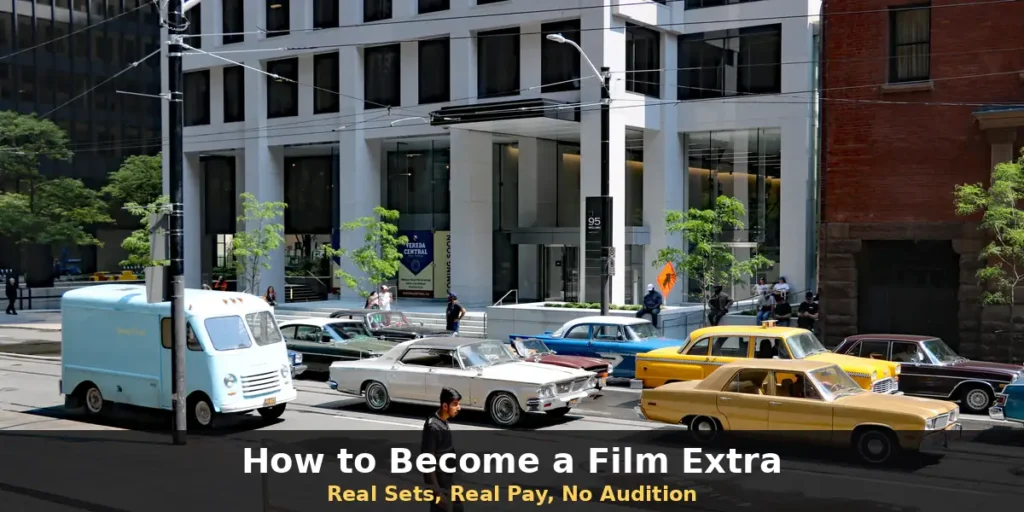
You become a film extra by registering with background casting agencies. You need no experience, no training and no audition. Agencies book you from your photos and measurements. Pay usually runs from about £100 to £150 a day.
The job has a formal name in Britain. Extras are called supporting artistes. They fill streets, cafes and courtrooms behind the main actors. This guide covers the steps, the real pay and the traps.
Key Takeaways
- Agencies, not auditions, are how extras get booked. Learning how to become a film extra starts there.
- You must be over 16 with the right to work here.
- Union pay schemes set most daily rates on real productions.
- Standard days pay roughly £100 to £150, sometimes more.
- Commission from earnings is normal; big upfront fees are not.
What Does a Film Extra Actually Do?
A supporting artiste gives a scene its life. You walk, sit, chat silently or cross a street. The camera sees a world, not a performance. Speaking lines are not part of the job.
Continuity is the hidden skill involved. You repeat the same movement across many takes. Your cup, seat and pace must match each time. Assistant directors notice the people who manage this calmly.
Most of the day is waiting, honestly. Extras gather in a holding area between setups. Books, cards and patience fill the gaps. The working minutes are short; the days are long.
Period productions add one more twist. Dramas set in past decades need period faces. Modern hairstyles, visible tattoos and piercings can rule you out. Agencies flag these details on your profile. A plain, adaptable look books the widest range.
Who Can Register as an Extra?
Agencies ask for three basics at sign up. You need the right to work in the UK. You need a National Insurance number. You must also be over 16 years old.
There is no maximum age at the top end. Casting Collective registers artistes in their eighties and nineties. Productions need grandparents as much as teenagers. Real life comes in every age and shape.
One honest limit matters, though. Bookings often land at very short notice. Dates move, and call times sit before dawn. Rigid jobs and heavy caring duties clash with that pattern.
How to Become a Film Extra, Step by Step
The route for how to become a film extra has four moves. Start with honest photographs of yourself. Agencies want clear, current, natural pictures. One headshot and one full length shot usually suffice. Filters and glamour retouching work against you here.
Next, record your measurements accurately. Height, chest, waist, dress size and shoe size. Costume departments dress hundreds of people from these numbers. Wrong sizes mean wrong costumes and wasted mornings.
Then register with two or three reputable agencies. Big names include Casting Collective and Uni-versal Extras. The Casting Collective help pages explain their process clearly. You may join several agencies at once.
Finally, keep your diary and profile current. Update photos when your hair or weight changes. Reply to availability checks fast, even to decline. Reliable responders get booked again and again.
How Much Do Film Extras Get Paid?
Everyone asking how to become a film extra asks about money next. Most film and television work pays under union schemes. The FAA and PACT agreements set the rates. A standard background day commonly pays around £100 to £150. Night shoots, overtime and fittings add extra fees.
Commercials pay better than most drama days. Uni-versal Extras publishes guideline rates for commercial work. An extra earns £150 for a standard day there. Walk-on roles pay £250, and featured roles £350.
| Type of booking | Typical day rate |
|---|---|
| Standard TV or film background day | £100 to £150 |
| Commercial extra | Around £150 |
| Commercial walk-on | Around £250 |
| Commercial featured role | Around £350 |
| Night shoots and overtime | Paid on top, by scheme |
Agencies take commission from what you earn. Rates commonly run between 15 and 20 percent. The deduction comes out of your pay packet. You also count as self-employed for tax. Most extras register for self-assessment each year.
What a Day on Set Looks Like
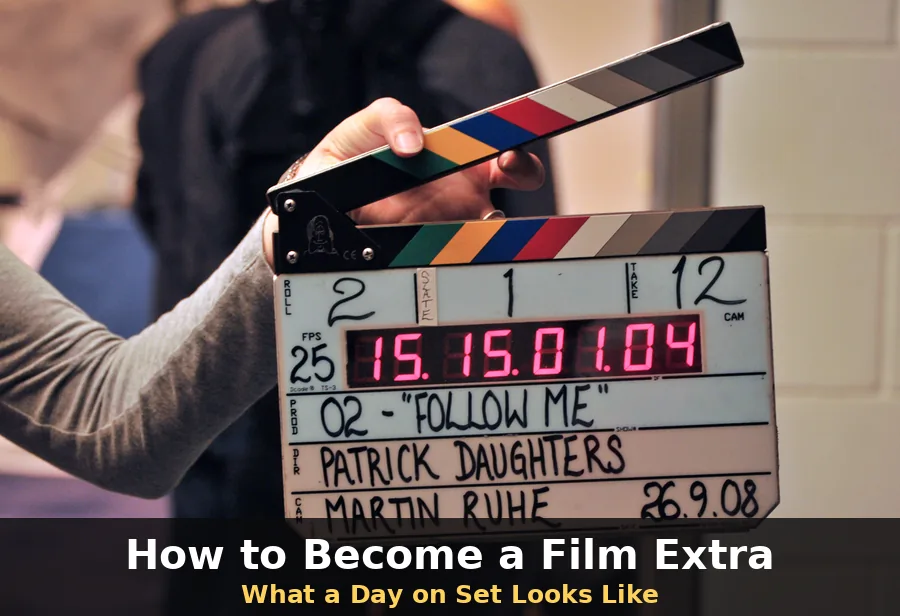
Your call time may sit before sunrise. You sign in, then queue for costume and makeup. Wardrobe checks your look against the scene’s period. Hair may be restyled to match the era.
On set, the rules are simple and strict. Phones stay away during filming. You never look into the camera lens. You mime conversation rather than making real noise. Between takes, you return to your start mark.
Feeding is part of the deal on set. Productions feed their background artistes during long days. Breaks happen away from the working set. A good extra treats every instruction as final. Sets remember faces that cause no problems.
The Scams and Fees to Watch For
Real agencies earn when you earn. Commission deducted from paid work is the model. Some also charge a modest listing fee. Uni-versal Extras, for example, lists fees from £25. Those small, published fees are normal.
The scam pattern looks very different. A company demands hundreds of pounds upfront. It promises guaranteed roles or celebrity access. It pressures you to pay on the spot. Walk away from every one of those.
Do a few checks before registering anywhere. Search the agency name with the word scam. Look for real productions in its credits. Never pay for a portfolio you did not request. Your phone photos are genuinely enough.
From Background Work to Bigger Things
Extra work is the ground floor of the industry. You learn how sets run from inside them. You watch actors, directors and crews work. Few classrooms teach the business this clearly.
Some famous faces started in the background crowd. Most extras stay extras, and many prefer it. The work fits around other jobs and lives. It pays, it varies, and it asks little.
Treat it as one honest rung, not a lottery ticket. Our pillar guide on how to become famous maps the higher rungs. Browse the Celebrity section for the rest of the cluster. Every career in front of cameras starts somewhere.
Film Extra FAQs
Do I need experience to become a film extra?
No experience is needed at all. Agencies book background artistes from photos, measurements and availability. Reliability matters more than any training. Arrive on time, follow instructions and repeat your actions exactly. Productions rebook people who make the day run smoothly for everyone involved on set.
Do film extras have to audition?
Almost never for background work. Casting happens from your agency profile and photographs. A production picks faces that fit the scene and era. Featured or walk-on roles may involve a short casting session. Ordinary extra bookings simply arrive as availability checks by text or app.
How much do film extras earn in a day?
A standard film or television day usually pays around £100 to £150. Union schemes such as FAA and PACT set the exact rate. Commercials pay more, with published guidelines of £150 for extras. Featured commercial roles reach £350 for a standard ten hour day.
Can I register with more than one extra agency?
Yes, and many working extras do exactly that. Agencies hold different productions on their books. More registrations mean more availability checks reaching you. Keep every profile updated with the same honest photos and measurements. Tell each agency your booked dates to avoid clashes.
Is film extra work a full time job?
Rarely, and it is not designed to be. Bookings arrive in clusters around shooting schedules. Quiet weeks follow busy ones without warning. Most extras treat it as flexible extra income. People with open diaries and low fixed costs manage the gaps best.
Do film extras get fed on set?
Yes, feeding the cast and crew is standard practice. Background artistes eat with the production during long days. Call sheets and agency messages confirm catering arrangements beforehand. Bring patience rather than a picnic, though. The holding area, not the set, is where you will spend breaks.
Your First Day in the Background
The route in is refreshingly ordinary. Take honest photos, register with real agencies, answer fast. No gatekeeper audition stands between you and set. You now know how to become a film extra the honest way. The first booking teaches the rest quickly.
Keep expectations in their proper place. The pay is fair, the days are long, the glamour is borrowed. Still, few side jobs put you inside a working film set. For anyone curious about this world, that is enough.