


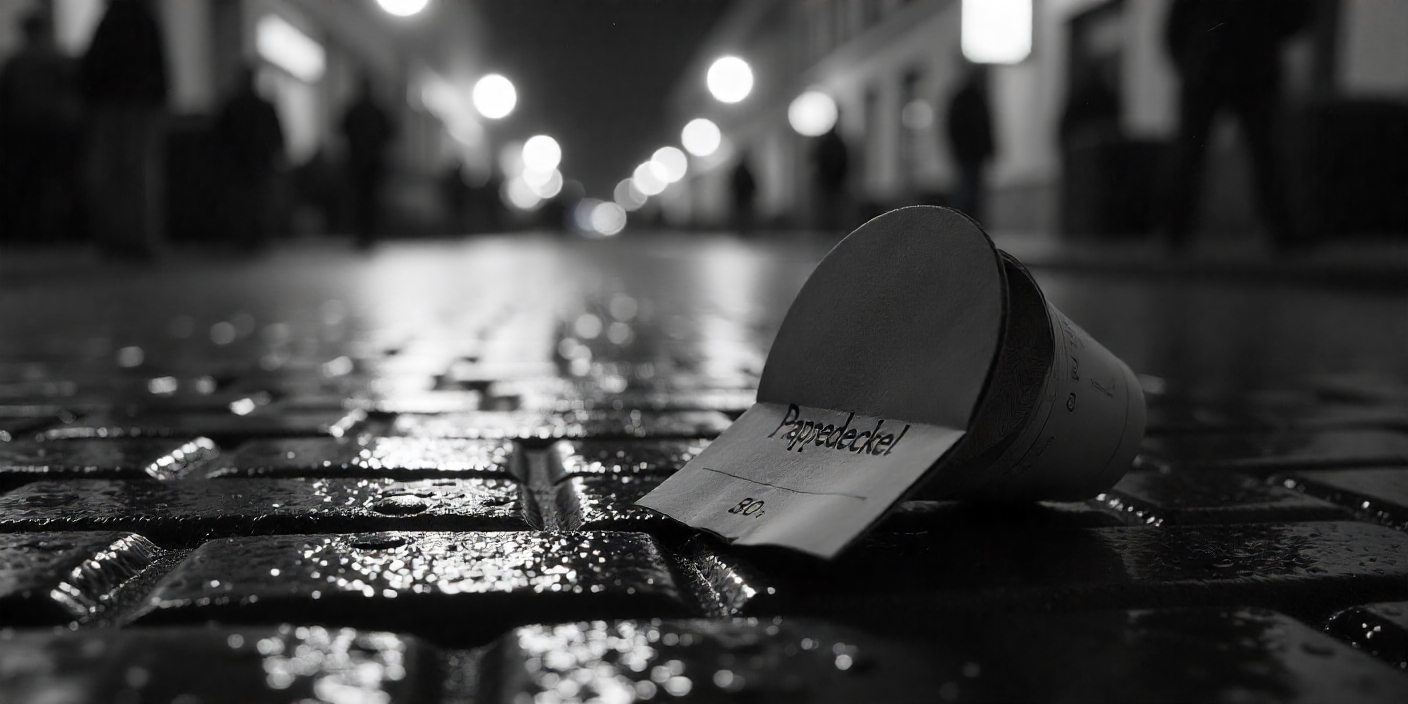
Pappedeckel is a German term meaning “cardboard lid” – a round or square piece of recyclable paperboard used to cover beverages, food containers, and as coasters in German culture.
Pappedeckel comes from the German words “Pappe” (cardboard) and “Deckel” (lid), literally meaning cardboard lid. This circular or rectangular piece of cardboard is designed to cover, protect, or seal containers.
You’ll encounter pappedeckel most commonly as coffee cup lids in German cafés, beer coasters in traditional pubs, or protective covers for takeaway food containers. At its simplest, a pappedeckel is a round or square lid made from cardboard or similar paper-based material.
The term has expanded beyond its literal translation. In modern usage, pappedeckel represents sustainable packaging solutions that replace plastic alternatives across food service, retail, and hospitality industries.
Key Characteristics of Pappedeckel
Modern pappedeckel products share several defining features:
Material composition: Made primarily from recycled paperboard or virgin wood pulp, treated for moisture resistance when needed.
Structural design: Engineered with precise thickness (typically 0.5-2.0mm) to provide adequate protection without adding excessive weight.
Size variations: Available in standard diameters from 70mm to 120mm for beverage applications, with custom sizes for specialized containers.
Surface treatments: Options include wax coating for moisture protection, biodegradable lamination, or food-grade barrier coatings.
The History and Cultural Significance of Pappedeckel in Germany
The cultural use of pappedeckel dates back to the early 20th century when paper-based manufacturing became more affordable and accessible. At first, these lids were simple, unprinted utilitarian objects.
The pappedeckel gained cultural prominence in German beer gardens and pubs during the 1920s and 1930s. Brewery owners discovered that cardboard coasters protected wooden tables while providing advertising space. This dual functionality made pappedeckel an instant success.
Evolution Through the Decades
1920s-1940s: Basic cardboard coasters emerge in German breweries and restaurants.
1950s-1970s: Mass production techniques improve quality and reduce costs, leading to widespread adoption.
1980s-2000s: Printing technology advances enable full-color branding and complex designs.
2010s-Present: Environmental concerns drive innovation in biodegradable formulations and sustainable production methods.
From beer coasters in traditional German pubs to eco-friendly coffee cup lids in modern cafés, pappedeckel has maintained its cultural relevance while adapting to changing consumer needs.
Types and Applications of Pappedeckel
Pappedeckel serves diverse functions across multiple industries, each requiring specific design considerations.
Beverage Industry Applications
Coffee cup lids: Heat-resistant paperboard with precision-cut drinking openings. Standard sizes fit 8oz, 12oz, and 16oz cups.
Beer coasters: Absorbent cardboard typically 90-100mm diameter, often printed with brewery branding.
Wine bottle tags: Decorative pappedeckel attached to bottle necks for product information or branding.
Food Service Solutions
Container seals: Fitted lids for soup containers, salad bowls, and prepared meal packaging.
Pizza box inserts: Grease-resistant cardboard discs that prevent cheese from sticking to box lids.
Bakery packaging: Protective covers for pastries, cakes, and delicate baked goods.
Retail and Industrial Uses
Product protection: Temporary covers during manufacturing, shipping, or storage.
Promotional materials: Branded coasters distributed at trade shows, events, or retail locations.
Educational tools: Printed pappedeckel used in schools for craft projects or learning materials.
Manufacturing Process: How Pappedeckel Is Made
The production of quality pappedeckel involves several precise steps that determine the final product’s durability and performance.
Raw Material Preparation
Manufacturers source recycled paperboard or virgin wood pulp from certified sustainable forests. The pulp undergoes bleaching and cleaning processes to remove impurities and achieve consistent color.
Forming and Pressing
Pulp formation: Wood fibers are mixed with water and binding agents to create a uniform slurry.
Sheet formation: The pulp mixture is spread evenly on forming screens and pressed to remove excess water.
Drying process: Industrial dryers remove remaining moisture while maintaining fiber integrity.
Cutting and Finishing
Precision die-cutting machines shape the dried paperboard into required dimensions. Quality control systems inspect each piece for thickness consistency, edge smoothness, and structural integrity.
Surface Treatment Options
Moisture barriers: Applied to pappedeckel intended for beverage or food contact applications.
Print preparation: Surface treatments that improve ink adhesion and color vibrancy.
Food-grade coatings: Specialized coatings meeting FDA and EU food safety regulations.
Environmental Benefits of Choosing Pappedeckel
Pappedeckel represents a significant advancement in sustainable packaging, made primarily from renewable resources and offering an eco-friendly alternative to plastic options.
Waste Reduction Impact
These lids are recyclable and biodegradable, reducing landfill waste. Studies show that paperboard products decompose within 2-6 months in commercial composting facilities, compared to 450+ years for plastic alternatives.
Carbon Footprint Comparison
Manufacturing pappedeckel generates approximately 60% fewer carbon emissions than equivalent plastic lids. This reduction comes from:
- Lower energy requirements in production
- Renewable raw materials requiring less fossil fuel input
- Shorter transportation distances due to lighter weight
- End-of-life disposal requiring no special handling
Resource Conservation
Water usage: Modern pappedeckel production uses 40% less water than comparable plastic manufacturing.
Energy consumption: Paperboard processing requires 35% less energy than petroleum-based plastic production.
Renewable sourcing: Sustainably managed forests provide raw materials that regenerate naturally.
Economic Advantages for Businesses
Switching to pappedeckel offers measurable financial benefits beyond environmental considerations.
Cost Analysis
Material costs: Bulk pappedeckel pricing ranges from €0.02-€0.08 per unit, competitive with plastic alternatives.
Storage efficiency: Lightweight design reduces shipping costs by 25-30% compared to plastic lids.
Disposal savings: Elimination of special plastic waste handling reduces waste management costs.
Marketing Value
Consumer preference: 73% of consumers prefer businesses using sustainable packaging materials.
Brand differentiation: Eco-friendly packaging creates competitive advantages in crowded markets.
Regulatory compliance: Proactive adoption avoids potential future plastic packaging restrictions.
Quality Standards and Food Safety
Pappedeckel intended for food and beverage contact must meet strict safety regulations across different markets.
International Certifications
FDA approval: US food contact requirements for paperboard products.
EU compliance: EN standards for food-grade packaging materials.
ISO certifications: Quality management standards for manufacturing processes.
Testing Protocols
Migration testing: Ensures no harmful substances transfer from packaging to food.
Moisture resistance: Evaluates performance under various humidity conditions.
Structural integrity: Stress testing under normal use conditions.
Customization Options and Branding Opportunities
Modern pappedeckel offers extensive customization possibilities that help businesses create memorable brand experiences.
Printing Techniques
Offset printing: High-quality color reproduction for detailed logos and graphics.
Digital printing: Cost-effective for small runs and variable data printing.
Screen printing: Durable option for simple designs requiring vibrant colors.
Design Considerations
Color matching: Pantone color systems ensure brand consistency across print runs.
Special effects: Embossing, debossing, and spot UV coating for premium appearance.
Die-cut shapes: Custom shapes beyond standard round or square formats.
Branding Integration
Successful pappedeckel branding requires balancing visual impact with functional requirements. Design elements must remain legible after moisture exposure and normal handling.
Installation and Usage Best Practices
Proper handling and storage maximize pappedeckel performance and longevity.
Storage Requirements
Environmental conditions: Maintain 45-65% relative humidity to prevent curling or brittleness.
Temperature control: Store between 18-24°C for optimal structural stability.
Stacking methods: Use appropriate support systems to prevent compression damage.
Application Techniques
Container compatibility: Ensure proper fit with rim dimensions and container materials.
Sealing methods: Apply consistent pressure for effective moisture barriers.
Handling procedures: Train staff on proper installation to minimize waste and ensure quality.
Market Trends and Future Developments
The pappedeckel market continues expanding as environmental regulations tighten and consumer preferences shift toward sustainable products.
Industry Growth Projections
Market research indicates 15-20% annual growth in sustainable packaging segments through 2030. This growth is driven by:
- Increasing plastic packaging bans in major markets
- Corporate sustainability commitments requiring packaging changes
- Consumer willingness to pay premiums for eco-friendly products
Technological Innovations
Barrier improvements: New coating technologies improve moisture and grease resistance while maintaining biodegradability.
Smart packaging: Integration of QR codes and NFC technology for enhanced consumer interaction.
Performance materials: Advanced fiber treatments increase strength without adding weight.
Regional Market Variations
European markets: Leading adoption due to strict environmental regulations and cultural acceptance.
North American growth: Increasing awareness driving rapid market expansion.
Asian development: Emerging markets showing strong interest in sustainable packaging solutions.
FAQs
What makes pappedeckel different from regular cardboard?
Pappedeckel uses specially treated paperboard with controlled thickness and density for specific packaging applications, unlike general-purpose cardboard.
Can pappedeckel be composted at home?
Yes, uncoated pappedeckel composts readily in home systems within 3-6 months. Coated versions may require commercial composting facilities.
How long does pappedeckel last in storage?
Properly stored pappedeckel maintains quality for 2-3 years in controlled conditions with appropriate humidity and temperature.
Is pappedeckel safe for hot beverages?
Food-grade pappedeckel withstands temperatures up to 85°C, suitable for most hot beverage applications when properly treated.
What’s the minimum order quantity for custom pappedeckel?
Most manufacturers accept orders starting at 10,000 units, though some specialize in smaller runs for testing or limited releases.
Conclusion
Pappedeckel represents more than just a German cardboard lid – it embodies a sustainable approach to packaging that balances functionality, cultural significance, and environmental responsibility. From its origins in early 20th-century German beer gardens to its current role in addressing global plastic waste concerns, pappedeckel demonstrates how traditional solutions can adapt to modern challenges.
The continued growth of the pappedeckel market reflects broader shifts toward sustainable business practices and consumer demand for environmentally conscious products. As regulations tighten around single-use plastics and corporate sustainability commitments expand, pappedeckel offers a proven, scalable alternative that doesn’t compromise on performance or cost-effectiveness.
For businesses considering the switch to pappedeckel, the benefits extend beyond environmental compliance. The combination of cost competitiveness, customization options, and positive consumer perception creates compelling reasons for adoption across multiple industries.
The future of pappedeckel looks promising as technological innovations continue improving performance while maintaining its core environmental advantages. Whether used as a simple coffee cup lid or an integral part of complex packaging systems, pappedeckel proves that sustainable solutions can be both practical and culturally meaningful.