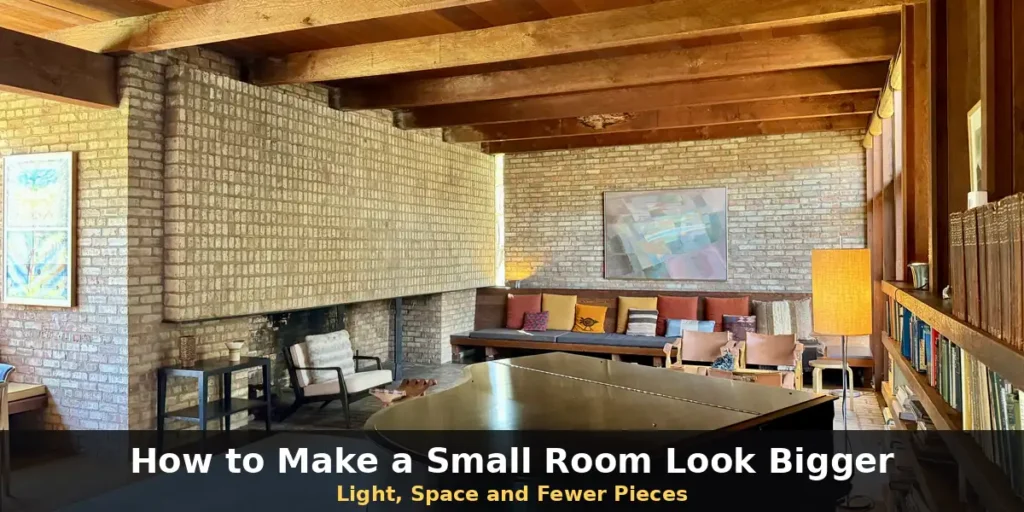
You make a small room look bigger by maximising light first. Pale unified colours, leggy furniture and cleared surfaces follow. None of this needs any building work. Most of it costs nothing at all.
The eye judges space by edges and light. Blur the edges and the room grows. Every trick below works on that principle. Work through them in order for the strongest effect.
Key Takeaways
- Light, unified colours remove the visual edges that shrink rooms.
- Mirrors double light and fake extra depth cheaply.
- Furniture on legs reveals floor and reads lighter.
- One large rug beats several small scattered ones.
- Clearing surfaces is the fastest free improvement available.
Let In More Light, Then Spread It
Light is the raw material of spaciousness. Clean the windows inside and out first. A season of grime quietly dims a room. Trim any hedge swallowing the sill outside.
Swap heavy curtains for lighter treatments. Hang curtains high and wide of the frame. The window then reads larger than it is. Sheers keep privacy while admitting daylight.
Layer artificial light after dark instead. One central pendant flattens everything below it. Add lamps at different heights around the room. Pools of light create depth the eye enjoys.
This work sits inside any wider refresh. Our budget home improvement ideas cover whole-home upgrades cheaply. Small rooms benefit fastest from those same principles. Start here before spending money anywhere else.
Paint Colours That Push Walls Back
Pale colours reflect light around the room. White, soft grey and warm off-white all perform. Paint walls, skirting and ceiling in similar tones. The boundaries between surfaces fade from view.
Designers call the underlying principle forced perspective. Theatre sets use it to fake vast stages. Your room uses a gentler domestic version. Fewer visible edges means a bigger read.
One darker accent wall can still work. Place it on the shortest wall only. The trick pulls that wall visually forward. The remaining pale walls then stretch further.
Avoid chopping walls with two-tone schemes. Horizontal colour breaks shorten perceived height instantly. Keep doors painted like the walls too. A unified shell always reads larger.
Satin and eggshell finishes reflect slightly more light. Matt paint absorbs light and flattens the walls. On balance, a soft sheen serves small rooms better. Save deep matt finishes for large, bright spaces instead.
Mirrors and Reflective Surfaces
A mirror doubles whatever light it catches. Hang the largest you can opposite a window. The reflection fakes a second opening entirely. Even landlords usually allow one strong fixing.
Group small mirrors if one big piece strains budgets. Keep frames slim and finishes consistent throughout. Glass-fronted cabinets and glossy tiles help too. Every reflective surface returns light to the room.
Position matters more than mirror size alone. Never reflect a cluttered corner back at yourself. Aim reflections at windows, lamps or greenery. Check the view from the doorway before fixing.
Learning how to make a small room look bigger often starts here. Mirrors cost little and install in minutes. Their effect, though, feels like structural change. Few upgrades compete on impact per pound.
Furniture That Shows the Floor
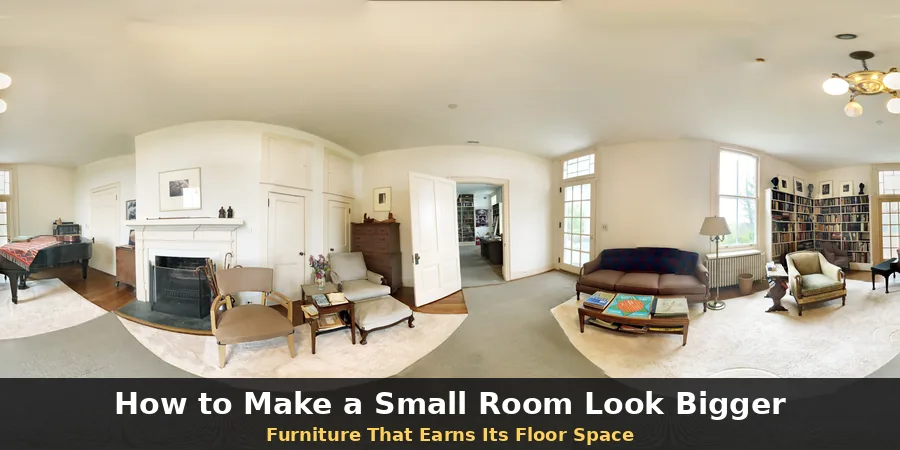
Bulky furniture squatting to the floor reads heavy. Legs change everything about how pieces sit. Sofas and cabinets raised on visible legs lighten instantly. The eye travels underneath and counts more space.
Scale each piece to the room honestly. One oversized sofa can swallow a small lounge. Choose compact frames with slim arms instead. Measure doorways and floor plans before buying anything.
Keep pathways through the room fully clear. Furniture pushed against every wall often backfires. Floating one piece slightly forward can deepen perspective. Test layouts with masking tape before lifting anything.
Multi-purpose pieces pay rent twice over. Storage ottomans, nesting tables and sofa beds earn space. Fewer, harder-working pieces beat many single-job items. That discipline suits cosy cottage rooms too, as our cottage interiors guide shows.
Windows, Curtains and Ceiling Tricks
Anyone learning how to make a small room look bigger should study the windows. Curtains hung just below the ceiling cheat height beautifully. The fabric then falls in one long line. Eyes read the whole drop as window height.
Choose curtain colours close to the wall tone. Strong contrast chops the wall into segments. Segments shrink the perceived width immediately. Blinds fitted outside the recess gain extra centimetres too.
Ceilings offer one more quiet trick. A slightly glossy ceiling paint reflects more light. The effect suits bathrooms and kitchens especially well. Keep the shade pale to avoid a looming feel.
Rugs, Floors and Visual Flow
Flooring continuity stretches a small room visually. One large rug under the main furniture anchors it. Several small mats chop the floor into fragments. Fragments always read smaller than one expanse.
Choose a rug bigger than instinct suggests. Front legs of sofas and chairs should sit on it. The grouping then reads as one island. Surrounding floor becomes the calm sea around it.
Keep flooring tones similar between adjoining rooms. The eye reads connected floors as one space. Thresholds in matching finishes blur the joins. Open doorways complete the flowing effect.
Clear the Surfaces, Keep the Calm
Clutter is visual noise that shrinks rooms. Clear every surface back to a few objects. Group ornaments in threes rather than scattering them. The room instantly breathes more easily for every visitor.
Storage should hide behind closed doors where possible. Open shelving displays dust and chaos equally. Baskets tidy loose items in seconds flat. Daily resets of two minutes stop the creep returning.
Anyone researching how to make a small room look bigger overlooks this. Tidiness is a design feature, not housekeeping. Hotels feel spacious largely through ruthless editing. Copy that discipline at home for free.
How to Make a Small Room Look Bigger FAQs
What colour makes a small room look biggest?
Pale, warm off-whites usually maximise perceived space. They reflect the most light around the room. Similar tones on walls, woodwork and ceiling help further. The shell reads as one continuous surface. Cool greys work in bright south-facing rooms. Test samples at different times of day first.
Do mirrors really make a room look bigger?
Yes, when placed to reflect light or views. Opposite a window gives the strongest effect. The reflection imitates a second window convincingly. Large mirrors also return lamplight after dark. Avoid reflecting clutter or blank walls directly. Position decides whether the trick works at all.
Should furniture be pushed against the walls?
Not always, despite the common instinct. A small gap behind a sofa adds depth. Floating pieces can anchor a layout better. Clear walking paths matter more than wall contact. Test arrangements before committing to one layout. Photograph each option from the doorway to compare.
How can I make a small bedroom look bigger?
Use the same light and colour rules first. Choose a bed frame with visible legs. Keep bedding pale and mostly plain throughout. Mirrored wardrobe doors bounce light effectively here. Remove anything that does not serve sleep or storage. A calm, edited bedroom always reads larger.
Does painting the ceiling help a small room?
Yes, a pale ceiling lifts the room visually. Match it closely to the wall colour. The corner lines between surfaces soften noticeably. Avoid stark white ceilings above coloured walls. That contrast caps the room like a lid. One soft tone throughout works best.
What is the cheapest way to enlarge a small room?
Clearing clutter and cleaning windows costs nothing. Rearranging furniture for clear pathways is free too. These three steps change the feel within hours. A mirror is usually the first worthwhile purchase. Paint comes next when budgets allow it. Spend in that order for maximum effect.
Space Is Mostly a Trick of the Eye
Small rooms rarely need bigger budgets. They need lighter colours, clearer floors and fewer objects. Each change frees the eye to travel further. Together they transform how the room feels every single day you live in it.
Guides on how to make a small room look bigger agree on one thing. Work through the list one weekend at a time. Photograph the room before starting each step. The comparisons will keep your motivation honest. Friends will assume you decorated far more heavily. In truth, you mostly subtracted and lightened. Find more projects in our Home Improvement section.