Most blocked sinks clear with hot water, patience and one small plunger. This guide shows how to unblock a sink in the right order. Each method here takes minutes and costs nothing. The trap clean at the end solves the stubborn cases.
Work through the steps from gentle to hands-on. Hot water first, then simple household powders. The plunger follows, and the trap comes last. Our budget home improvement ideas guide files it with the cheapest fixes in the house.
Why Sinks Block in the First Place
Kitchen sinks block with fat, food scraps and coffee grounds. Cooled cooking fat sets hard inside the pipe. Grounds and rice swell and settle in the bend. Wickes lists the same build-up behind most kitchen clogs.
Bathroom sinks block in a different, slower way. Hair wraps around the plughole and trap parts. Soap scum and toothpaste bind that hair together. The plug of hair then narrows the pipe gradually.
- Water drains slowly, then barely drains at all
- Gurgling sounds come from the plughole
- A stale smell rises from the drain
- Water rises in the second bowl as well
Choosing the right method is half of how to unblock a sink. Fat responds to heat and hot water. Hair needs pulling out, not dissolving away. Solid scraps usually sit in the trap bend.
The Essentials
- Start with hot water before any product.
- Seal the overflow before you plunge.
- Never plunge after using chemical unblocker.
- The trap holds most stubborn blockages.
- Bin cooled fat instead of rinsing it away.
What You Need Before You Start
Most of this kit already sits under your sink. A small cup plunger suits sinks best. Flanged toilet plungers seal poorly on flat plugholes. A bucket and old towels handle the trap water.
- Kettle or a large pan for hot water
- Small cup plunger with a flat rim
- Bucket, old towels and rubber gloves
- Wrench or grips for stiff trap nuts
- Plumber’s snake or drain rod (optional)
- Bicarbonate of soda and white vinegar (optional)
Treat chemical drain unblocker as a last resort only. It burns skin and can damage some pipework. Never mix two drain chemicals in one sink. Open a window before using any strong product.
Start With Hot Water and the Kettle
Fill the kettle and let the water cool slightly. Water just off the boil suits metal pipes. Plastic waste pipes prefer very hot tap water instead. Boiling water can soften some plastic joints over time.
Pour the water slowly, in two or three stages. Give each pour half a minute to work. Fat and soap soften a little more each time. Run the hot tap afterwards for one full minute.
Bicarbonate and Vinegar, Honestly Assessed
Tip half a mug of bicarbonate down the plughole. Follow it with the same amount of white vinegar. The mixture fizzes loudly and looks busy. Cover the plughole and leave it fifteen minutes.
The honest verdict matters more than the fizz. The two ingredients largely cancel each other out. What remains mostly cleans and freshens the pipe. It will not shift a solid plug of fat.
Use this step for smells and light grease. Then move on quickly if draining stays slow. The plunger does the real clearing work. Save your time for the methods below.
Plunge the Sink Properly
Fill the sink with enough water to cover the cup. Water over the cup makes the seal work. Block the overflow with a wet cloth first. A helper can hold that cloth firmly in place.
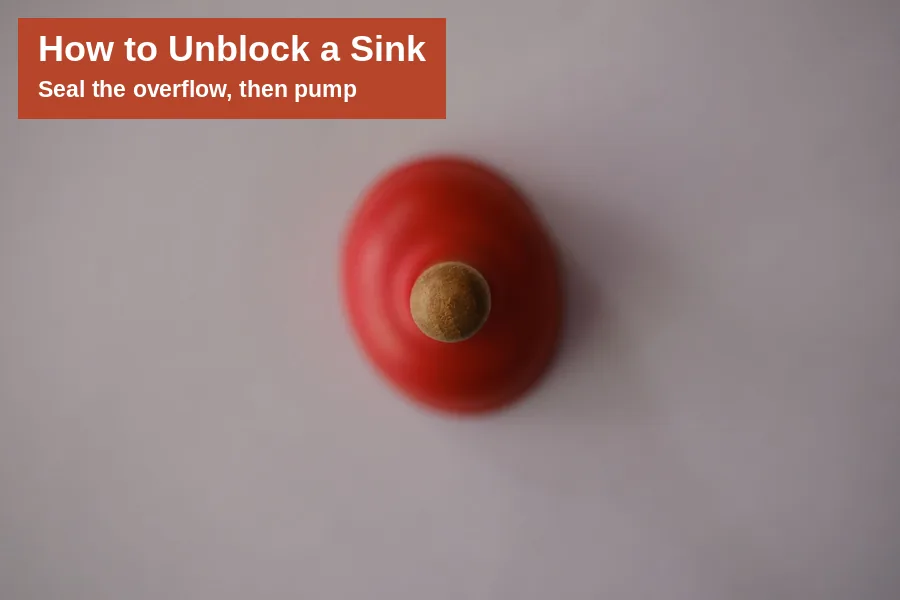
- Place the cup flat over the plughole.
- Push down slowly, then pull up sharply.
- Repeat the pump fifteen to twenty times.
- Lift the cup away and watch the drain.
- Run hot water for a minute afterwards.
Pressure shifts the blockage rather than brute force. The pull stroke matters as much as the push. Keep the rim sealed throughout the whole burst. Learning how to unblock a sink is mostly this technique.
Never plunge a sink holding chemical unblocker. Splashes from that water can burn skin badly. Rinse the sink thoroughly and wait instead. Then plunge once the water runs clear.
Clear the Trap Under the Sink
The trap is the curved bend under the sink. It holds water that blocks drain smells. It also catches fat, hair and dropped items. The Wickes guide to unblocking a kitchen sink walks through these same trap steps.
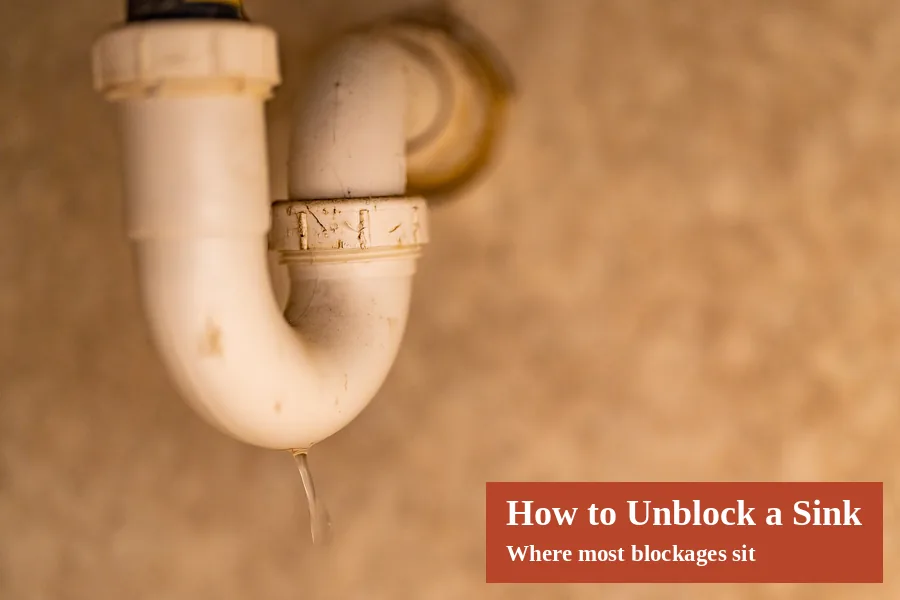
- Put a bucket under the trap bend.
- Unscrew both ends of the bend slowly.
- Lower the bend and tip the water out.
- Scrape the sludge into the bucket.
- Wash the bend clean with hot water.
- Refit the bend and tighten by hand.
Finish with PTFE tape if the threads weep slightly. Wickes suggests tape on the trap threads. Tighten the nuts firmly, but never force them. Plastic threads crack under a heavy wrench.
This trap clean finishes how to unblock a sink properly. The bend holds the plug most of the time. Rings and coins also turn up here sometimes. Check the bend before you refit it.
Which Method Fits Which Blockage
Match the method to the blockage you found. Gentle methods suit grease and early build-up. Solid plugs need pressure or the trap opened.
| Method | Best for | Watch out |
|---|---|---|
| Hot water | Light grease and soap film | Plastic pipes, use hot not boiling |
| Soda and vinegar | Smells and light grease | Fizz cleans, but shifts little |
| Cup plunger | Fat plugs and food scraps | Never after chemical unblocker |
| Trap clean | Hair, solids and lost items | Bucket first, water always spills |
| Drain snake | Blockages past the trap | Feed gently, never force it |
Working in order is the heart of how to unblock a sink. Stop as soon as the water runs freely. Skipping steps wastes effort and sometimes money. The snake only earns its place last.
Signs the Blockage Sits Further Down
Some blockages sit past the trap entirely. Several fixtures draining slowly points that way. Gurgling from other plugholes tells the same story. A drain snake reaches some of these plugs.
- The bath and sink both drain slowly
- Gurgling sounds come from other plugholes
- Water backs up into another fixture
- The outside gully overflows after heavy rain
Stop and call a plumber at that point. Main drain problems grow worse when ignored. Raw sewage backing up is a health risk. A camera survey finds the fault properly.
Keep the Sink Clear After Today
Prevention takes seconds and saves the whole job. Wipe greasy pans with kitchen paper first. Tip cooled fat into the bin, never the sink. A simple strainer catches most food scraps.
- Run the hot tap a minute each month
- Fit a strainer over the kitchen plughole
- Use a hair catcher in the bathroom basin
- Keep coffee grounds out of the sink
- Tip rice and pasta water into a sieve first
The same calm approach fixes most small plumbing jobs. Our guide to fixing a dripping tap covers the other classic. A loose toilet seat takes similar tools and patience. More projects live in our Home Improvement archive.
Run the tap once more and enjoy the swirl. Clear water, no gurgle, no standing pool. That quiet finish is the whole reward. The sink should stay clear for months now.
Frequently Asked Questions
Can bicarbonate and vinegar unblock a sink?
They clean and freshen the pipe, but shift little. The fizz mostly cancels itself out chemically. Use them for smells and very light grease. A solid plug still needs the plunger or the trap opened afterwards.
Why does my sink still drain slowly after plunging?
The plug probably sits inside the trap bend. Plunging moves water, but hair and solids stay put. Open the trap and clear the bend by hand. That step clears most sinks that plunging leaves slow.
Is chemical drain unblocker safe to use?
It works on some grease, but it carries real risks. The liquid burns skin and eyes on contact. Never mix products, and never plunge afterwards. Open a window and wear gloves throughout the job.
How do I unblock a bathroom sink full of hair?
Lift the plug and pull the hair out first. A hook of wire or old tweezers works well. Hair below reach sits in the trap bend. Open the trap, clear it, and refit everything.
When should I call a plumber about a blocked sink?
Call when several fixtures drain slowly at once. Backing up into the bath signals a deeper fault. Sewage smells or an overflowing gully count too. Those faults sit beyond safe home methods entirely.
How often should the trap under a sink be cleaned?
Most homes manage with a clean once a year. Busy kitchens may need it twice as often. Slow draining is the clearest sign to act sooner. The job takes fifteen minutes with a bucket ready.