
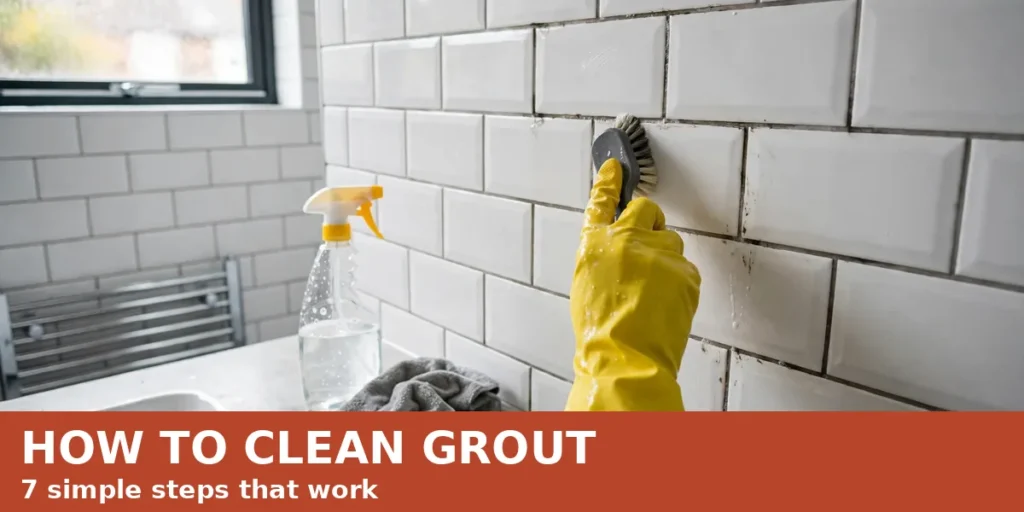
Dark grout lines can make clean tiles look tired. You mop the floor and wipe the walls. The grey lines still stare back at you. This guide shows a routine for UK homes.
We cover the bathroom, the shower, the kitchen floor, and the hall. You will learn which cleaner suits your grout. You will also learn what to keep off stone, and how to seal clean lines.
What Is the Quickest Way to Clean Grout?
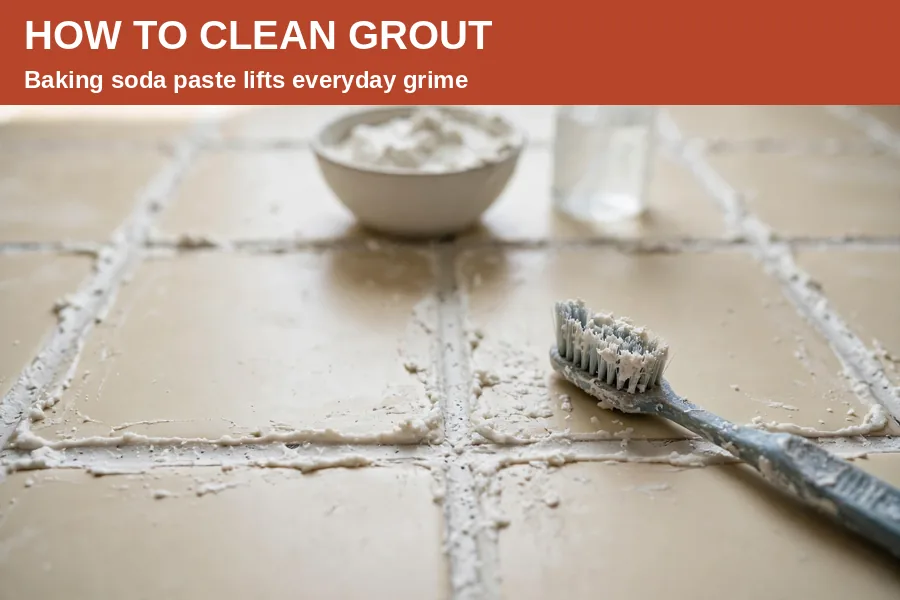
This is how to clean grout fast. Use a baking soda paste, a short wait, and a stiff brush. Mix baking soda with a little water and spread it on the lines. Leave it for 10 to 15 minutes, then scrub and rinse.
That routine lifts most everyday dirt in one pass. It suits white grout, grey grout, and ceramic tiles. Add a vinegar spray for soap scum, but keep it off natural stone.
Bad mould needs a different first move. Spray a mould cleaner on the lines. Let it work for the time on the label, then wipe it off. Dry scrubbing spreads mould spores, so spray comes first.
The Short Version
- Start with a baking soda paste, 10 to 15 minutes, then scrub and rinse.
- Use a vinegar spray only on ceramic and porcelain, never on stone.
- Spray mould cleaner first, then wipe.
- Keep bleach for white grout only, and never mix it.
- Seal clean grout so the next clean takes less time.
Why Does Grout Turn Dark?
Grout is porous, so it drinks in water, soap, grease, and dirt. Glazed tiles shed spills, but grout holds them in its tiny holes. Over months, those trapped bits turn the lines grey, yellow, or black.
Bathrooms add damp air and poor airflow to the mix. Mould loves warm, wet grout, so shower lines often go black first. Kitchens add cooking grease and food splashes near hobs and sinks.
What You Will Need
You do not need pricey kit for most grout jobs. A small set of basics will cover a bathroom, a kitchen, and a hall floor. A grout brush saves your knees on floors.
- Baking soda and white vinegar
- Warm water, a spray bottle, and a bucket
- A stiff grout brush or an old toothbrush
- Rubber gloves, safety glasses, and a dust mask
- Microfibre cloths and an old towel
- A penetrating grout sealer
Pick your cleaner by grout type, not by the loudest label. The table below sets out the common choices. It also says what to keep each one away from.
| Cleaner | Best For | Keep It Off |
|---|---|---|
| Baking soda paste | Most grout, mild dirt | Nothing much, but rinse well |
| White vinegar | Soap scum on ceramic | Stone and coloured grout |
| Hydrogen peroxide | White grout stains | Coloured grout |
| Bleach | White grout, now and then | Coloured grout, stone |
| Mould spray | Mould and black stains | Unlisted surfaces |
| Steam cleaner | Grout without chemicals | Loose or cracked grout |
How to Clean Grout in 7 Simple Steps
Use this routine for most grout in your home. This is how to clean grout on walls and floors. It needs a little time, but no special kit.
- Clear the area, sweep the floor, and wipe down the tiles.
- Mix two parts baking soda with one part water to form a paste.
- Spread the paste along the grout lines and leave it for 10 to 15 minutes.
- Scrub each line in short strokes with a stiff brush.
- Spray white vinegar on the lines to cut soap scum.
- Scrub again, then rinse the whole area with clean water.
- Dry the tiles and check for lines that need a second pass.
Clean grout lines in short runs of about one metre at a time. Short runs keep the paste wet and let you see the change as you go. If the lines still look grey, repeat the paste and scrub once more.
How to Clean Bathroom Grout and Shower Mould
Bathroom grout needs care with mould first and dirt second. Mould sits in damp lines near the bath and taps. Start by spraying a mould cleaner on the dark lines. Leave it for the time shown on the label.
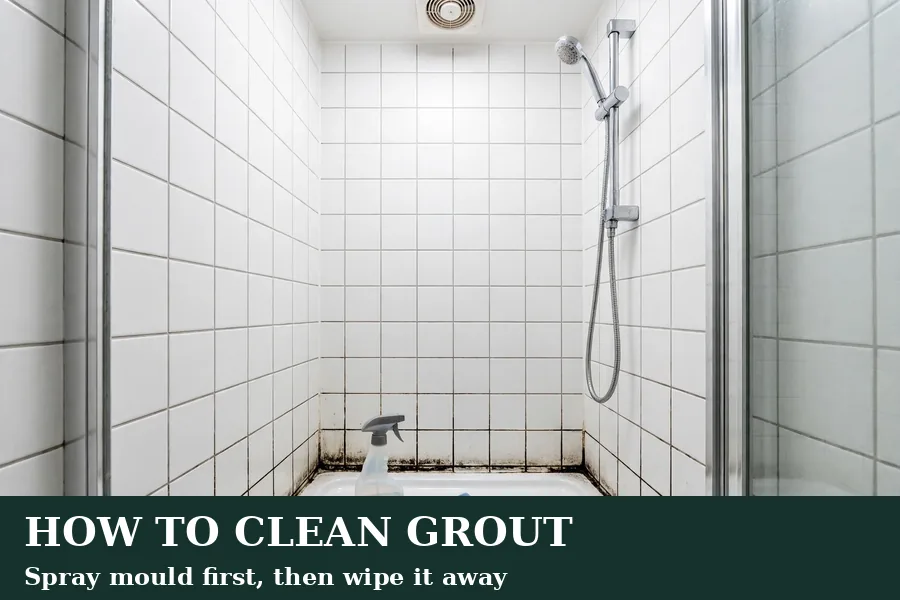
Do not scrub dry mould, since scrubbing can spread spores across the tiles. Wipe the lines with a damp cloth once the spray has worked. Our guide to how to remove mould from walls covers damp patches too.
Astonish Mould and Mildew Remover is one UK option, with a listed price of £2.50. Other brands in supermarkets work in the same way. Pick one that names grout on its label, and open a window while you use it.
Run the extractor fan during and after showers. Wipe the tiles down after your shower if you can. Dry grout gives mould far less to feed on. If the bath sealant looks worn, read our guide to how to reseal a bath first.
How to Clean Floor Grout
This is how to clean grout on floors: the same paste, plus more rinsing. Dirt sits deeper in floor lines. Start with a good sweep. Then mop the tiles so loose grit does not scratch them as you scrub.
Use a long-handled grout brush for large floors, since it keeps you off your knees. Work in rows across the tiles, and rinse the floor with clean water as you go. Change the rinse water often.
Let floor tiles dry fully before you walk on them again. Wet tiles are a slip risk, and wet grout picks up dirt fast. Open doors and windows to speed drying. Keep pets and kids off the floor until it feels dry.
Stubborn Stains: Bleach and Hydrogen Peroxide
Some stains stay put after the paste and the vinegar spray. That is the point to step up one level, not three. Pick one stronger method and test it first.
This is how to clean grout stains that stay dark. Try hydrogen peroxide on white grout. Mix one part with two parts water, or stir it into a baking soda paste. Apply it, wait 10 to 15 minutes, scrub, and rinse well.
Bleach suits white grout only, and only now and then. It can fade coloured grout and wear down grout cement over time. Dilute it as the bottle says, wear gloves and glasses, and open a window.
Never mix bleach with vinegar, ammonia, or any other cleaner. Mixing bleach with acids or ammonia gives off chlorine gas, which harms eyes, skin, and lungs. The Health and Safety Executive warns against this mix in its cleaning guidance.
Coloured Grout and Natural Stone: What to Avoid
Coloured grout and natural stone need the mildest methods first. Acids can fade grout colour and etch stone. So vinegar and lemon juice stay in the cupboard here. Bleach is out too, since it can bleach patches of colour unevenly.
Use a baking soda paste or a pH-neutral tile cleaner on these surfaces. Both lift dirt without attacking the grout colour or the stone face. Finish with a clean water rinse, then pat the tiles dry.
Keep wire brushes, steel wool, and harsh scouring pads away from all tiles. Metal fibres scratch glaze and rough up grout. A stiff nylon brush does the job without that harm.
Seal Your Grout and Keep It Bright
Sealing is the last step in how to clean grout well. A penetrating sealer soaks into the grout and blocks water and dirt from sinking back in. Clean lines stay clean, and the next wash takes less scrubbing.
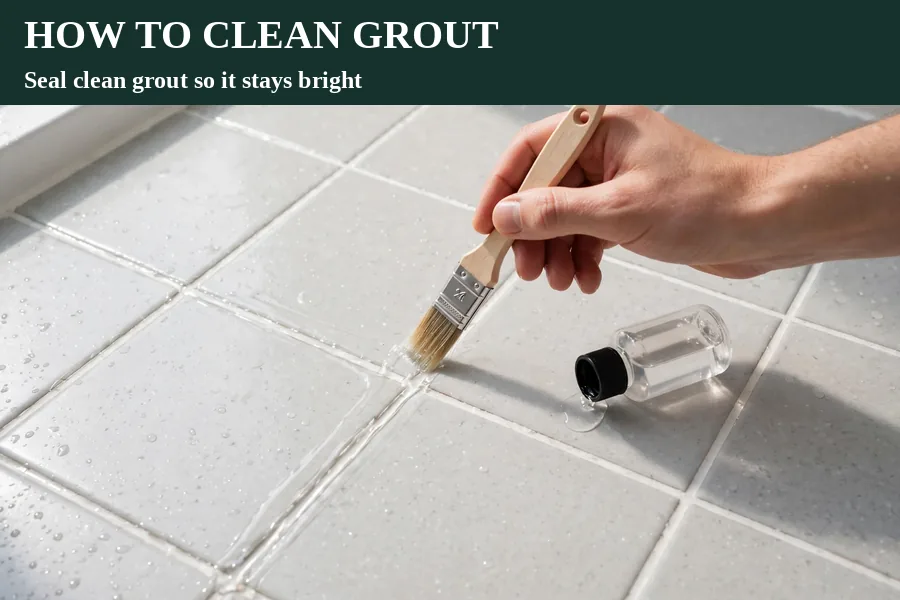
Wait until the grout is fully dry before you seal it. Apply the sealer with a small brush along each line. Wipe extra sealer off the tile faces. Let it dry for the time on the bottle.
Repeat sealing every 12 to 18 months in a shower or wet room. Drier rooms can wait longer, but check the lines each year for dark patches. If water soaks in fast instead of beading, the sealer has worn thin.
When Cleaning Is Not Enough
Cleaning has limits, and worn grout shows them plainly. Cracks, crumbling lines, and stains that stay dark after three tries all point past cleaning. At that stage, fresh grout beats a fourth bottle of cleaner.
Regrouting means raking out the old lines and pressing new grout in. It is slow work, but it costs far less than new tiles. It can make a whole bathroom look new. Hire a tiler if the area is large or the tiles are stone.
Frequently Asked Questions
How to clean grout at home?
A baking soda paste is the best first try for most homes. Spread it on the lines and wait 10 to 15 minutes. Scrub with a stiff brush and rinse well. It is cheap and mild, and it lifts everyday dirt.
Can I use bleach to clean my grout?
Yes, but only on white grout and only now and then. Dilute it as the bottle says, wear gloves, and open a window. Never mix bleach with vinegar or any other cleaner. The mix can give off harmful gas.
How often should you clean grout?
Wipe tiles weekly and deep clean grout every few months. Shower grout needs more care, since damp air feeds mould fast. Seal the lines once they are clean to stretch the gaps between deep cleans.
Will vinegar damage coloured grout?
Yes, vinegar can fade coloured grout over time, since it is an acid. It can also etch natural stone tiles such as marble and limestone. Use a baking soda paste or a pH-neutral cleaner instead.
Can I use a steam cleaner on grout?
Yes, a steam cleaner works well on grout lines. Run the nozzle slowly along each line, then wipe the loosened dirt away at once. It needs no chemicals, so it suits homes with small kids.
When should I regrout instead of cleaning?
Regrout when lines crack, crumble, or stay dark after three good tries. Cleaning cannot fix worn grout, and fresh grout seals the gaps again. A tiler can do large areas faster and neater.
Your Tiles Can Look New Again This Weekend
You now know how to clean grout with a paste, a brush, and a little patience. Start with the mildest method, test before you commit, and seal the lines once they shine. Your bathroom and kitchen will look brighter for it.
Pick one room, set aside an hour, and work in small patches. The change shows fast, and clean grout makes the whole room feel fresh. Next, try our guide to how to unblock a sink. Keep the bathroom wins coming with how to bleed a radiator before winter.
Browse our Home Improvement archive for your next job. Start with a small task first. Each clean makes the next one quicker.