
Most UK drains clear with a plunger, hot water, or a clean trap. Start with the gentlest fix, then move to the next one if the water still sits. Try the plunger first for sinks and toilets. Hot water and washing-up liquid shift grease in kitchen pipes.
This guide shows how to unblock a drain UK homes face most, step by step. It covers seven fixes in order, from a slow sink to a blocked outside drain. You will also learn when to call your water company or a drainage specialist.
At a Glance
- One slow fixture means a local blockage you can often clear yourself.
- Several fixtures at once point to the main drain, so stop and check who owns it.
- Plunger first, then hot water, then the trap. That is how to unblock a drain UK homes clear most.
- Never mix chemical cleaners, and skip boiling water on old PVC pipes.
- Shared drains passed to water companies in October 2011, so check before you pay.
What Blocks a Drain, and What Are the Signs?
Hair and soap scum clog bathroom drains over time. Fat, oil and food scraps narrow kitchen pipes as they cool and set. Wet wipes and sanitary products block toilets, since they do not break down. Leaves, silt and tree roots choke outside drains, most of all in autumn.
- Water that drains slowly, or sits in the basin
- Gurgling from the toilet when a bath empties
- A sour, stale smell near a plughole
- Water that bubbles up from an outside drain cover
A slow drain still moves water, so gentle fixes may work. A drain that holds standing water has a full blockage further down. Act early, since a partial blockage grows worse with each use.
Find Where the Blockage Sits Before You Start
Run each tap in turn and watch what happens. One slow fixture means the block sits near that trap. Several fixtures backing up together mean the main drain is blocked.
Check the inspection chamber outside if you can lift the cover safely. A full chamber means the block sits past it, in the shared run. An empty chamber means the block sits between the house and the chamber.
A dripping tap needs its own fix, so see our dripping tap guide. Note which fixtures drain well, since that tells you where the block sits. Write down the slow ones, since the pattern points to the fault.
How to Unblock a Drain UK With a Plunger
A plunger clears most sink, bath and toilet blockages in minutes. Seal the overflow, cover the cup with water, then pump in firm, steady strokes. Repeat the strokes, then run the tap to test the flow. Most guides on how to unblock a drain UK start here, with the gentlest fix.
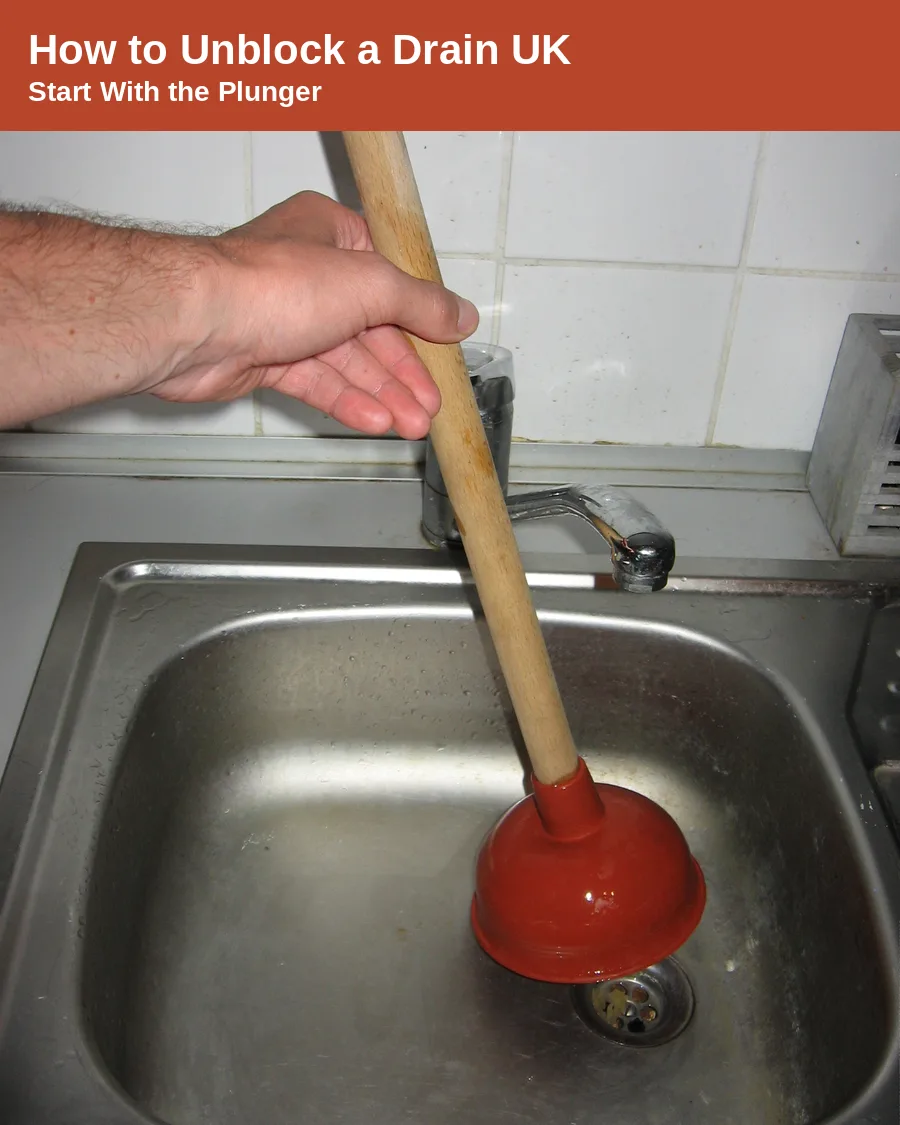
- Block the overflow with a damp cloth, so air cannot escape.
- Run enough water to cover the rubber cup by a finger width.
- Set the cup flat over the plughole and press it down hard.
- Pump up and down in firm strokes for about 30 seconds.
- Lift the cup, then run the tap to check the flow.
Toilets need a flanged plunger, which seals round the bowl outlet. Use the same steady strokes, and keep the cup under water. If the bowl water rises, bail some out first with a jug.
How to Unblock a Sink Drain With Hot Water and Bicarb
Hot water shifts grease, while bicarb and vinegar loosen soap scum and light grime. Pour a kettle of hot water down the sink in slow stages. If the flow stays slow, follow with bicarb and vinegar, then flush again.
Use hot water, not boiling water, if your pipes are plastic. Very hot water can soften some PVC joints, so let the kettle cool first. Tip half a cup of bicarb down the plughole, then add white vinegar. Leave the fizz to work for an hour, then flush with hot water.
Clean the Trap Under the Sink
The U-bend trap under the sink catches hair, food and grit. Put a bucket below it, unscrew the slip nuts by hand, and tip the trap out. Rinse it clean, refit it snugly, then run the tap to check for drips. Our guide on how to unblock a sink covers slow sinks in more depth.
How to Clear a Blocked Shower Drain
Hair causes most shower blockages, so start by lifting it out. Lift the drain cover off if it comes free, then pick out hair and soap. Run the shower to test the flow before you try anything else.
A small drain snake reaches the hair that sits just past the cover. Feed it in gently, twist it to catch the clump, then pull it back out. While the tray is clear, check the grout round it for dark stains. Our guide on how to clean grout shows the quick fix for stained joints.
How to Unblock an Outside Drain With Rods
Clear leaves from the gully first, then use drain rods to break the blockage. Screw the rods together, feed them in, and turn them clockwise as you push. Pull them back often to drag the debris out with them.
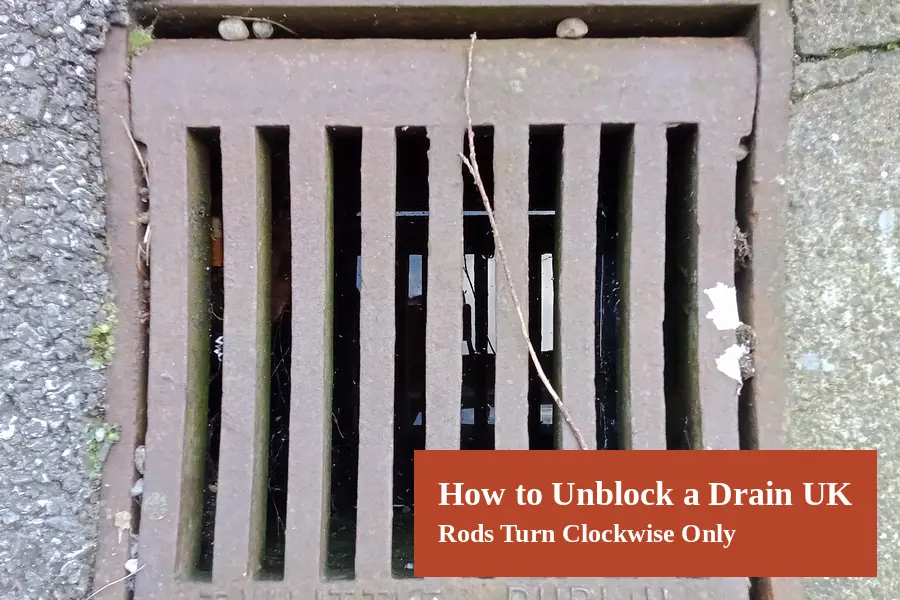
Never turn the rods anticlockwise, since the joints unscrew and a rod stays in the pipe. Stop at a hard block that will not move, since force can crack old clay pipes. Never climb into a manhole, since the gases inside can kill.
Check the chamber before you pay anyone to rod the drain. If the chamber is full, the block sits in the shared run past it. That run may sit with your water company.
Chemical Drain Cleaners: What to Know First
Chemical cleaners suit light grease and soap scum, not solid blocks. On a full blockage the liquid sits on top, heats up, and harms the pipe. It also leaves a hazard for the next person who opens the trap.
Never mix two chemical cleaners, since the mix can give off toxic fumes. Wear gloves and eye protection, open a window, and follow the label to the letter. Keep children and pets out of the room while it works.
Enzyme cleaners work more slowly, yet they treat pipes gently. They use bacteria to eat hair, soap and food waste over hours. Leave one in overnight for a slow drain that keeps coming back.
Who Pays for a Blocked Drain in the UK?
You own the drain that serves only your home inside your boundary. Shared drains and lateral drains passed to water companies in October 2011. That change covers England and Wales, so check your own water company first.
A block in a shared run is often cleared free by the water company. A block in your own private drain is yours to arrange and pay for. Find out which side of the line the block sits on before you book anyone.
When to Call a Drainage Specialist
Call a specialist when several fixtures back up at once. Call one too when sewage comes back into the house, since that is a health risk. Do not keep pouring products down a drain that will not clear.
A drain that blocks in the same place each month has a fault, not bad luck. Roots, a cracked joint or a dip in the pipe cause repeat blocks. A camera survey shows the fault, so the fix lasts.
How to Stop Drains Blocking Again
Prevention beats clearing, since a clear pipe needs no fix at all. Most blocks grow from small daily habits, so change the habit and the block never forms. Thames Water shows how fat, oil and grease harden inside pipes.
- Let cooking fat cool, then scrape it into the bin.
- Fit a strainer in every sink and shower drain.
- Flush only toilet paper, never wipes or cotton pads.
- Clear leaves from gullies before autumn rain.
Standing water feeds damp, and damp feeds mould nearby. Dry the area well after a leak or a spill from the sink. Our guide on how to remove mould from walls shows the safe clean-up.
Frequently Asked Questions
How do I unblock a drain fast?
Use a plunger first, since it clears most clogs in minutes. This is how to unblock a drain UK homes fix first, before chemicals. Seal the overflow and cover the cup with water. Pump in firm strokes, then run the tap to test the flow.
Can I use baking soda and vinegar to unblock a drain?
Yes, for light blockages in sinks and baths. Tip half a cup of bicarb down the plughole, then add white vinegar. Leave it to work for an hour. Flush with hot water, and repeat once if the flow stays slow.
Does boiling water unblock a drain?
It helps with grease in metal pipes, yet it can harm plastic ones. Use hot water, not boiling water, if your pipe type is unknown. Let the kettle cool for a minute before you pour.
What should I do if my outside drain overflows?
Keep clear of the water, since it may hold sewage. Ring your water company first if the drain serves more than one home. Take a photo of the overflow, since it helps the crew find the fault.
Can I use a drain snake on a toilet?
Yes, but use a toilet auger, not a standard sink snake. Feed it in slowly, twist gently, and pull the blockage back out. Stop if it jams, since force can scratch the bowl or crack the pipe.
Is it safe to use chemical drain cleaner?
It is safe only when you follow the label to the letter. Wear gloves and eye protection, open a window, and never mix two products. Skip chemicals for a full blockage, since they sit on top and harm the pipe.
Your Drain Can Run Clear Again
You now know how to unblock a drain UK homes face most, from sink to street. Start gentle, work in order, and stop when the signs point past your own pipes. Keep fat out of the sink, hair out of the shower, and wipes in the bin. Try the plunger today, then enjoy the sound of water running free again.