You become a TV presenter by building provable on-camera skill first. A short showreel and beginner-friendly work follow from that. Local television, radio, online channels and live events hire starters. National shows arrive years later. The ladder is climbed one rung of evidence at a time.
Charisma matters less than preparation in this trade. Producers hire people who hit timings and stay calm. They also hire voices viewers trust quickly. All three qualities can be trained deliberately.
Key Takeaways
- A two-minute showreel is your real application.
- Local media and radio give beginners genuine airtime.
- Autocue, interviewing and timing are trainable core skills.
- Most presenters arrive via journalism, acting or expertise.
- Persistence through small credits builds the national break.
What Presenters Actually Do All Day
Presenting looks like talking and nothing more. The real work hides underneath the smile. Presenters read scripts, conduct interviews and fill gaps. They also listen to producers through an earpiece constantly.
Live television punishes panic instantly and publicly. A guest cancels, a package fails, timings collapse. The presenter covers smoothly while chaos whispers nearby. That composure is the profession’s true core skill.
Recorded shows demand a different discipline entirely. Takes repeat until energy stays identical each time. Enthusiasm at take twelve is a technical skill. Nobody is born able to do it.
Formats split into news, entertainment, sport and factual. Each values different strengths in its presenters. News prizes accuracy and authority above warmth. Entertainment reverses that order almost completely. Choosing your format early shapes every skill you practise afterwards.
The Core Skills to Train
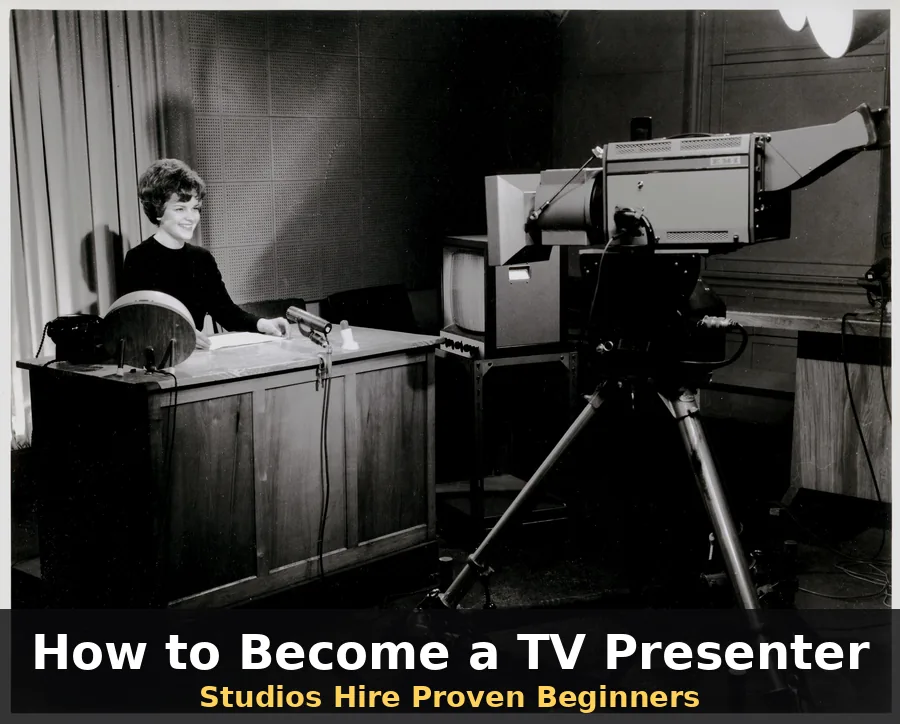
Autocue reading must sound like spontaneous speech. Beginners practise reading aloud every single day. Record yourself on a phone and listen critically. The camera forgives almost everything except obvious reading.
Interviewing is a learnable craft of its own. Prepare questions, then listen beyond the script. Follow-ups come from answers, not from your list. Guests relax when presenters genuinely hear them.
Timing separates professionals from enthusiastic amateurs. Segments end on seconds, not roughly around then. Practise links against a stopwatch at home. Hit thirty seconds repeatedly until it feels natural.
Voice work underpins every format on television. Breath control, pace and clarity all respond to training. Our voice actor guide covers adjacent vocal craft. Presenters borrow heavily from that discipline daily.
Anyone studying how to become a tv presenter should film constantly. Weekly practice footage builds an honest mirror. Improvement becomes visible month by month on screen. Confidence follows evidence, not the reverse.
Your Showreel: The Two-Minute Audition
Producers decide within the first thirty seconds. Your reel opens with your strongest link ever. No titles, no montages, no slow build-up. Straight into you, talking to camera, mid-flow.
Include three flavours across the two minutes. A studio link, an interview clip, one location piece. Range matters more than polish at beginner level. Personality must survive every single cut.
Host the reel publicly and link it everywhere. Update it whenever better footage exists. Old reels quietly expire your chances. Treat it as a living document, not homework.
Send the reel with a two-line covering note. Name the format you suit and one relevant credit. Producers read brevity as professionalism at this level. Long biographies get deleted unread almost always. Follow up once, politely, after a fortnight.
Mistakes That Keep Beginners Off Screen
Guides on how to become a tv presenter rarely name the traps. Applying only to national shows is the biggest one. Those inboxes hold thousands of identical hopeful emails. Local opportunities sit almost empty by comparison.
Copying a famous presenter’s style fails almost as fast. Producers already employ the original at full price. Your value lies in sounding unmistakably like yourself. Imitation reads as insecurity on camera instantly.
Neglecting the technical side quietly ends many auditions. Talkback, autocue and floor signals confuse unprepared guests. Professionals learn studio language before screen tests arrive. Fluency there lets personality surface under pressure.
Routes In That Actually Exist
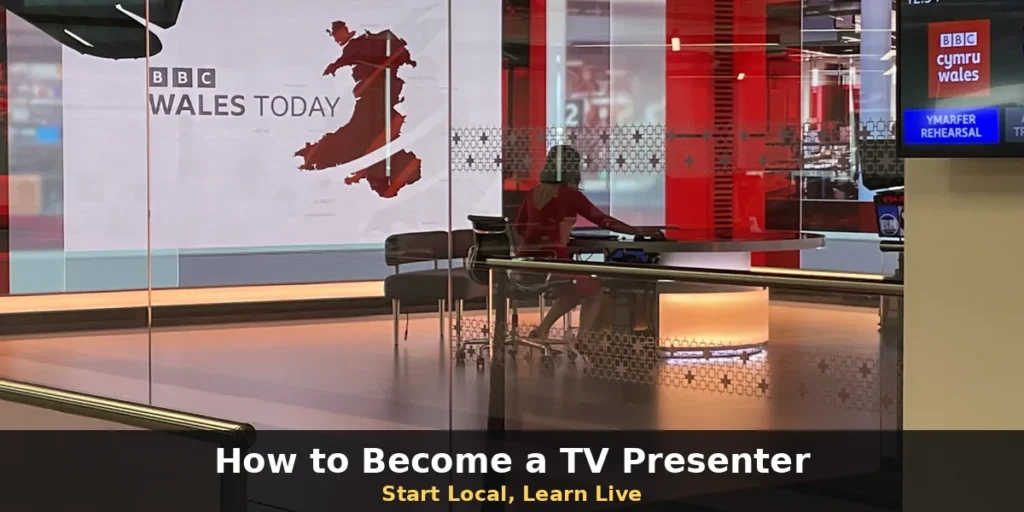
Local television and community channels hire beginners. The audiences are small, the learning enormous. Mistakes there cost nothing and teach everything. Many national names started exactly this way.
Radio builds presenting muscle faster than television. Hospital, student and community stations accept volunteers. Hours of live broadcasting sharpen anyone’s timing. Our fame guide maps these feeder routes together.
Journalism remains the classic news-presenting pathway. Reporters who file on camera get noticed internally. Broadcasters promote proven journalists into presenting chairs. The BBC careers pages outline such schemes openly.
Expertise opens the factual and specialist doors. Chefs, scientists, historians and athletes become presenters. Their authority precedes their camera technique completely. Broadcasters train the television skills around them.
Understanding how to become a tv presenter means choosing your door. Match the route to your existing strengths honestly. A funny expert and a trained journalist differ. Both reach screens through different corridors.
Agents, Auditions and the Long Middle
Agents usually arrive after early television credits. They rarely launch complete beginners from nothing. Early work you book yourself, rung by rung. Credits create the agent conversation, not vice versa.
Screen tests reward the prepared brutally. Research the show, the audience, the tone. Arrive with energy matched to the format. Overdress slightly rather than under, every time.
The middle years mix presenting with other work. Voiceovers, events and corporate videos pay bills. Each booking adds footage and professional contacts. Careers look sudden only in selective retelling.
Rejection is the industry’s default background noise throughout every career. Castings outnumber bookings for almost everyone working in television today. The presenters you see persisted through identical ratios. Their secret is arithmetic, not magic.
That wider ladder belongs to one bigger map. Our guide to how to become famous draws it fully. Presenting is one visible branch of it. Explore more industry routes in our Celebrity section.
How to Become a TV Presenter FAQs
Do I need a degree to become a TV presenter?
No degree is required for most presenting work. Journalism roles sometimes prefer media or subject degrees. Demonstrable skill and footage outweigh certificates widely. Employers audition the person on the reel. A relevant degree can help early shortlists. It never replaces a strong showreel, though.
How do I make a showreel with no experience?
Film links and interviews with a phone first. Local events and community channels provide real footage. Student productions welcome keen volunteer presenters constantly. Edit the best two minutes ruthlessly afterwards. Personality and clarity matter more than production gloss. Update it as better material arrives.
How much do TV presenters earn in the UK?
Beginners on local media often earn modest fees. Freelance day rates grow with credits and profile. National entertainment names command very large contracts eventually. News presenting salaries vary hugely by broadcaster. Most working presenters sit between those extremes comfortably. Income mixes presenting with voice and event work.
Is TV presenting very competitive?
Yes, it is among media’s most contested jobs. Thousands apply for visible presenting opportunities. The bottleneck is opportunity, not talented people. Starting locally bypasses the worst of that queue. Specialist expertise dramatically reduces your direct competition too. Persistence filters the field more than talent.
What age do presenters start at?
Most begin in their twenties through feeder roles. Expertise routes often start people later in life. Children’s and youth formats cast younger presenters specifically. Factual television values maturity and authority highly. There is no single correct starting age really. Your route matters more than your birth year.
Can I present without journalism training?
Entertainment, sport and factual formats welcome non-journalists. News presenting usually expects a journalism background though. Experts present within their field without news training. Acting and comedy backgrounds also transfer well. Choose formats matching the experience you hold. Training can always be added later deliberately.
Skill, Footage and the Patience Game
Presenting rewards those who collect evidence patiently over years. Every local shift adds precious seconds to your growing reel. Every hour live sharpens the calm producers buy. The national break usually recognises years of preparation.
Learning how to become a tv presenter is now the easy part. Film something presentable this week, however rough. Then apply for the smallest real opportunity nearby. The ladder only exists once you stand on it properly.