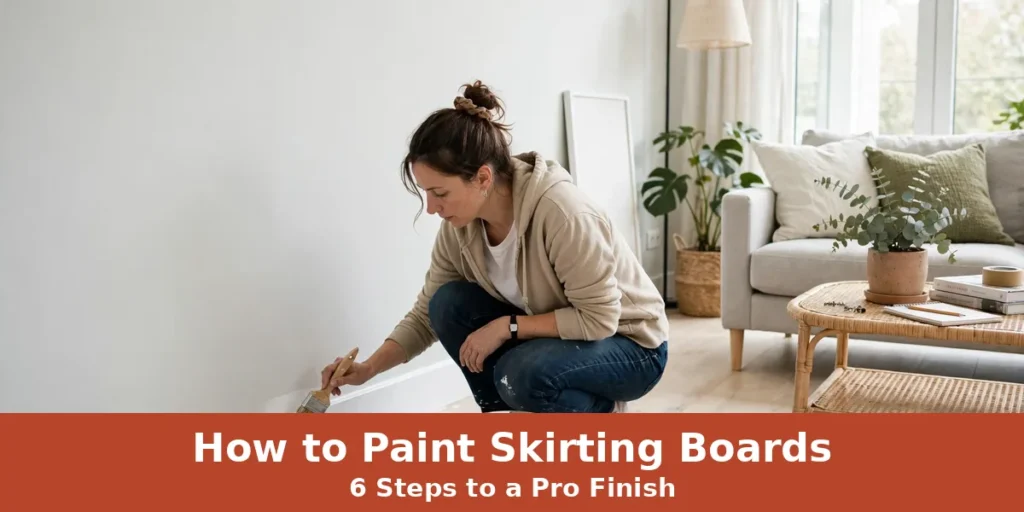
Skirting boards take a beating every day. Hoover bumps, shoe scuffs and toy cars leave marks that dull a whole room. You can learn how to paint skirting boards with basic tools.
This guide walks you through each step in plain terms. It covers paint choice, prep, drying times and the small mistakes that spoil a finish. It also shows what the job costs and when to call a decorator instead.
The Short Version
- Clean with sugar soap, then sand with 120-grit paper.
- Fill chips and gaps, then tape the wall and floor.
- Prime bare wood or MDF before the topcoat.
- Brush on two thin coats of satin or gloss.
- Leave 2 to 4 hours between coats.
What you need to paint skirting boards
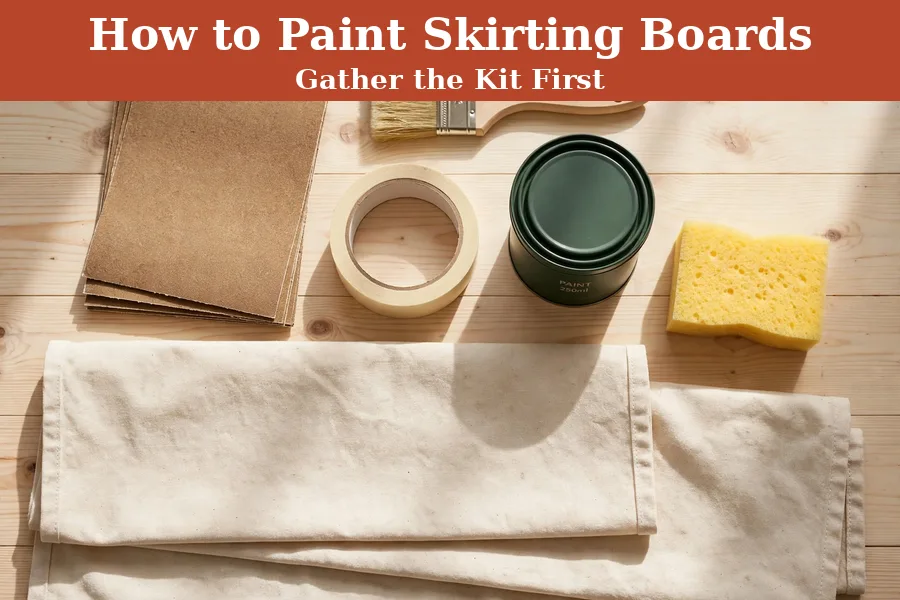
Good tools make this job far easier than it looks. A cheap brush sheds hairs into wet paint. Thin tape lets paint bleed onto the wall. Spend more on the brush and tape, and save on paint if you must.
Most of the kit is already in a DIY cupboard. Check what you own before you shop, and buy only the gaps. A 2-inch brush suits most boards; a 3-inch brush suits tall ones.
- 2-inch angled brush
- Sandpaper, 120 and 220-grit
- Sugar soap and a sponge
- Low-tack masking tape
- Dust sheets and old towels
- Wood filler and a filling knife
- Primer for bare wood or MDF
- Satin, gloss or eggshell paint
- Gloves, goggles and a dust mask
Which paint is best for skirting boards?
Satin paint suits most homes best. It gives a soft sheen, hides small marks and wipes clean with a damp cloth. Gloss is tougher and shinier, but it shows every bump and brush mark.
Eggshell sits between the two, with a flat finish that forgives poor prep. It marks more easily than satin, so it suits low traffic rooms best. Water-based paint dries fast and smells less, while oil-based paint lasts longer but dries slowly. Pick water-based gloss for white that stays bright, as oil-based gloss can turn yellow over time.
| Finish | Sheen | Best for | Drying time between coats |
|---|---|---|---|
| Gloss | High shine | Busy hallways | 6 to 8 hours (touch dry) |
| Satin | Soft sheen | Most rooms | 2 to 4 hours |
| Eggshell | Almost flat | Quiet bedrooms | 2 to 4 hours |
What colour should skirting boards be?
White is the safe choice, and it works with pale and dark walls alike. It frames the room and makes the walls look bolder by contrast. Match the wall colour if you want the boards to blend away. Dark boards can look smart in a large room with high ceilings.
How to paint skirting boards in 6 steps
Clean the boards with sugar soap, sand them with 120-grit paper and fill any chips. Tape the wall above and the floor below, then prime bare wood. Brush on two thin coats of satin or gloss, with 2 to 4 hours between coats. Peel the tape off while the last coat is still tacky.
Step 1: Clear the room and protect the floor
Move furniture away from the walls so you can reach the full run of boards. Lay dust sheets along the floor and tape them down at the edges. If you have carpet, press wide tape between the pile and the board base. While the room is clear, it is a good time to fix squeaky floorboards too.
Step 2: Clean the boards with sugar soap
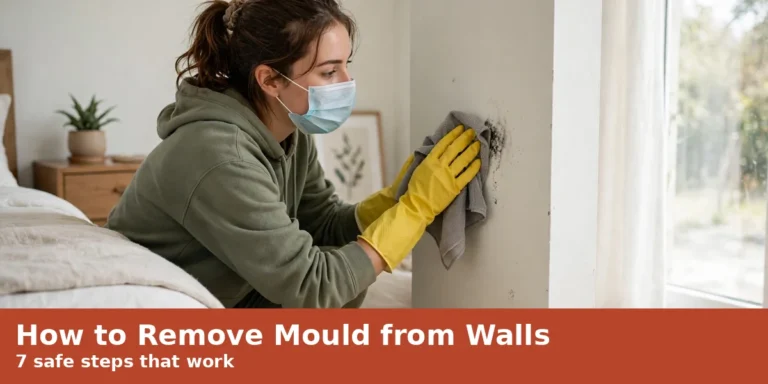
Mix sugar soap with warm water and wipe every board with a sponge. Kitchens need extra care, as cooking grease stops paint from sticking. Rinse with clean water and let the boards dry fully. If black mould sits near the boards, follow our guide to remove mould from walls first.
Step 3: Sand, fill and key the surface
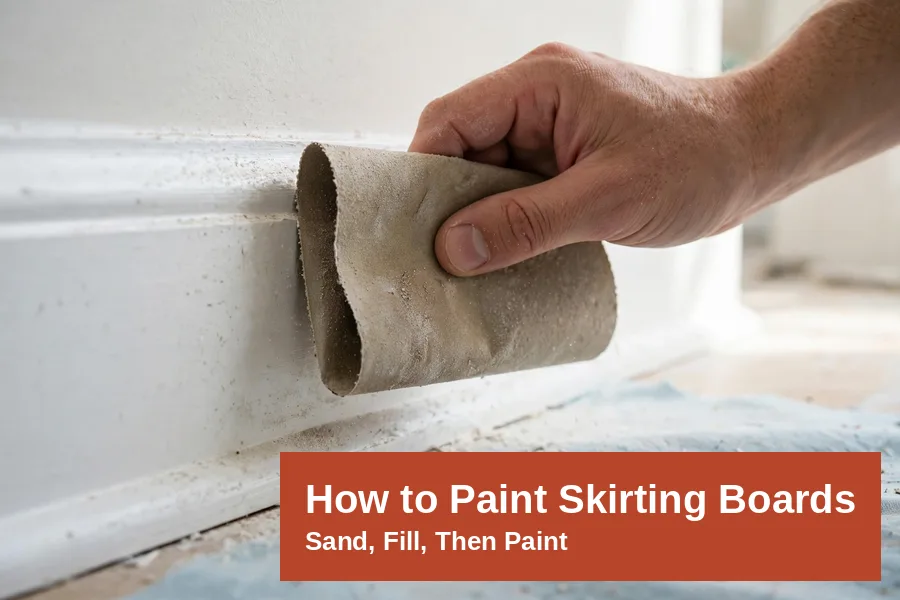
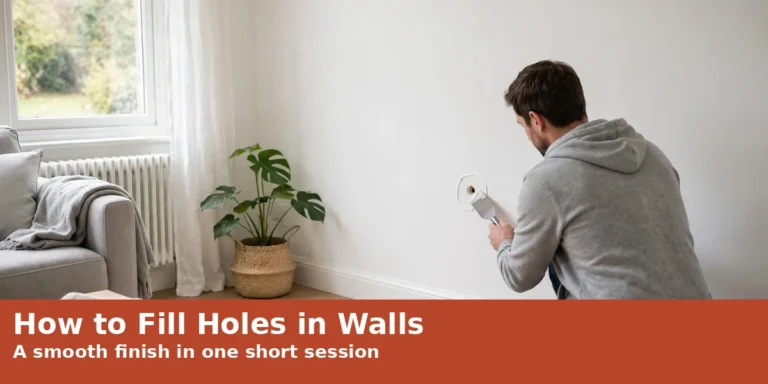
Sand with 120-grit paper until the old shine has gone. Fill chips and cracks with wood filler, let it dry, then sand it smooth. Wipe all dust away with a tack cloth or a damp rag. The same filler that fixes holes in walls works here too.
Step 4: Tape the wall and floor
Run low-tack tape along the wall just above the board. Press the lower edge down hard so paint cannot creep under it. Tape the floor too, or slide card strips under the board edge.
Step 5: Prime bare wood
Bare wood and MDF need primer, or the topcoat will soak in and look patchy. Use a high-adhesion primer and let it dry per the tin. Skip this step if the old paint is sound. Dab knotting solution on bare knots first, or resin can bleed through the paint.
Step 6: Paint two thin coats
Stir the paint well and dip the brush a third of the way in. Tap off the extra on the rim. Work in long strokes along the board, then lay off with one light pass.
Let the first coat dry fully. Sand it with 220-grit paper, then brush on the second coat. Peel the tape off while the last coat is still tacky.
Should you paint skirting boards or walls first?
Paint the walls first, then the skirting boards. Drips from the walls land on the boards and get covered by the trim paint. Once you know how to paint skirting boards, the order still matters.
Some decorators paint the boards first and cut the walls in after. That order works too, but it needs a steadier hand. For a first timer, walls first is the safer order.
If you paint a whole room, work top to bottom: ceiling, walls, then boards. Each stage covers the drips of the one above it. The same order suits a single wall refresh too.
How much does it cost to paint skirting boards?
A DIY job costs little beyond paint and tools. One litre of paint covers about 12 square metres with one coat. Most rooms need two coats. The table below assumes boards about 150mm tall.
A decorator charges per room or per day, so get two or three quotes first. Prices vary by area and board state. Our budget home improvement ideas show where else a small spend makes a big change.
| Room | Board area, one coat | Paint for two coats |
|---|---|---|
| Small bedroom, 3 by 4 metres | About 2 square metres | Under half a litre |
| Living room, 4 by 5 metres | About 3 square metres | About half a litre |
| Large room, 5 by 6 metres | About 3.5 square metres | Under one litre |
How long does it take to paint skirting boards?
One average room takes a day from start to finish. Most of that time goes to drying, not painting. Prep takes an hour or two in most rooms. Each coat takes under an hour to brush on.
Drying time sets the pace, and it varies by paint type. Water-based paint dries fastest, while oil-based gloss needs a full day. Keep the room warm and aired, as cold damp air slows every coat.
- Water-based satin or eggshell: 2 to 4 hours between coats
- Quick-dry formulas: 1 to 2 hours between coats
- Oil-based gloss: 6 to 8 hours to feel dry, 24 hours before the next coat
- Full cure: wait 24 hours after the last coat
5 mistakes that ruin skirting boards
Most failed finishes come from rushing the prep, not from poor painting. Each mistake below is easy to make and easy to avoid. Fix it now, or fix it later with sandpaper.
- Thick coats that drip and run: load less paint and brush drips out while wet.
- Skipping the sand: new paint peels off shiny old gloss, so key the surface first.
- Painting over grease or dust: wash with sugar soap first, or the paint will not grip.
- Pulling tape off dry paint: it lifts the edge with it. Peel while the paint is tacky.
- Painting in a cold, damp room: aim for 18 to 24°C with the window ajar.
When to replace skirting boards instead of painting
Paint hides scuffs, not damage. Boards with deep rot, large splits or missing chunks need new timber, not another coat. Soaked MDF will not sand smooth either.
If the boards are sound, learning how to paint skirting boards is the cheaper fix. Homes built before the 1980s may hold lead paint under newer coats. The Health and Safety Executive advises wet sanding for old paint. Read its lead guidance before you start.
New boards cost more than paint but far less than a full redecoration. Fit them before you paint the walls, as fitting kicks up dust and scuffs fresh paint. Prime new boards first, then add two topcoats.
Frequently asked questions
Can I paint skirting boards without removing them?
Yes, and most people do. Every guide to how to paint skirting boards leaves the boards in place. Tape the wall above and the floor below, or cut in freehand with an angled brush.
How many coats of paint do skirting boards need?
Two thin coats over primer, or over sound old paint. Dark colours over pale boards may need a third coat for full cover. One thick coat looks worse and dries slowly.
Do I need to prime skirting boards before painting?
Only bare wood or MDF needs primer. Sound old paint needs only a clean and a light sand to key the surface. Use a high-adhesion primer on new boards and let it dry fully first.
Should I use gloss or satin paint on skirting boards?
Satin suits most rooms, with a soft sheen that hides marks and wipes clean. Gloss is tougher but shows every flaw, so it needs perfect prep. Eggshell gives a flat look and suits quiet bedrooms best.
How long does paint take to dry on skirting boards?
Water-based paint dries in 2 to 4 hours between coats. Quick-dry types take 1 to 2 hours. Oil-based gloss needs 6 to 8 hours to feel dry, then a day before recoating. Wait 24 hours before you push furniture back.
Can I paint skirting boards with a roller?
A small foam roller speeds up long boards, but a brush wins on detail. Use the roller for the flat face and a 2-inch brush for edges and grooves. Finish with one light brush pass to smooth the surface.
Fresh boards, finished room
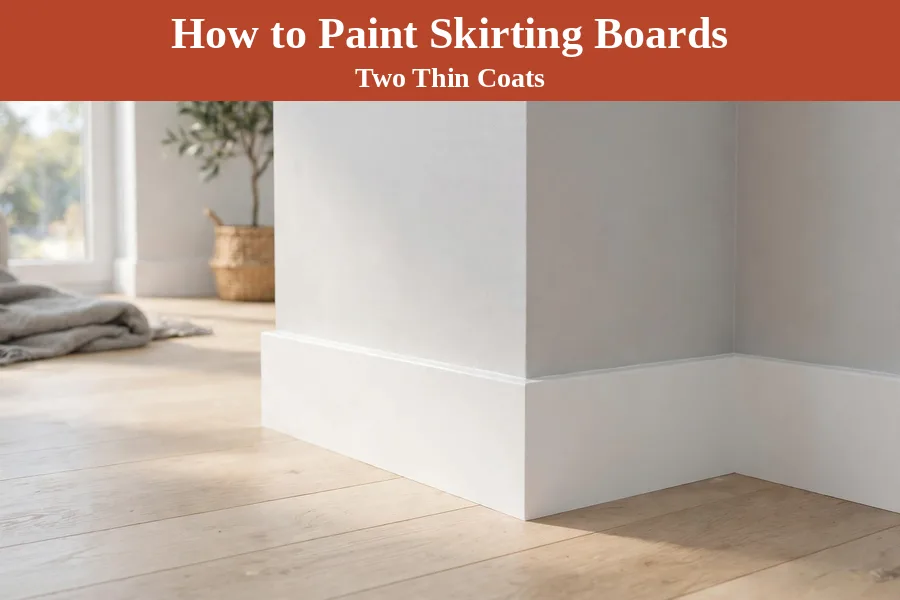
Fresh skirting boards change a room more than most people expect. The job costs little, takes a day and needs no special skill. Now you know how to paint skirting boards, start with one room and see the change.
Then walk through the house and spot the next boards that need care. Fresh boards can make a small room look bigger too. Plan the next small win from our Home Improvement archive.