


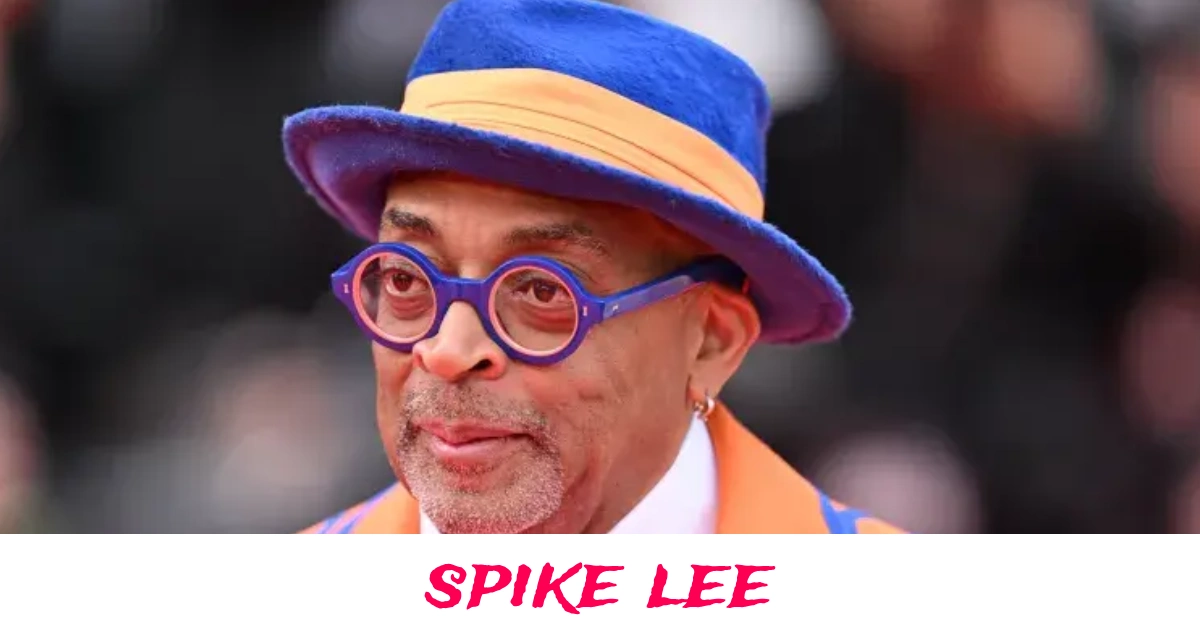
Spike Lee is an American film director, producer, screenwriter, and actor known for exploring race relations, urban crime, and social issues through cinema. He won his first competitive Academy Award in 2019 for Best Adapted Screenplay for “BlacKkKlansman.”
Who Is Spike Lee? A Revolutionary Voice in American Cinema
Shelton Jackson “Spike” Lee, born March 20, 1957, stands as one of America’s most influential filmmakers. His four-decade career has produced over 35 films that tackle complex social issues with unflinching honesty and artistic brilliance.
Born in Atlanta, Georgia, Lee moved to Brooklyn, New York, at a young age during the pre-civil rights era. This early exposure to racial tensions and urban life would become central themes throughout his filmmaking career. His mother, Jacqueline Carroll Shelton, was a teacher of arts and black literature, while his father, William James Edward Lee III, was a jazz musician and composer.
The nickname “Spike” came from his mother during childhood, reflecting his tough nature even at an early age. This resilience would prove essential as he navigated Hollywood’s challenges while maintaining his artistic vision and social consciousness.
Educational Foundation and Early Film Work
Lee attended John Dewey High School in Brooklyn’s Gravesend neighborhood before enrolling at Morehouse College, a historically black college in Atlanta. At Morehouse, he made his first student film, “Last Hustle in Brooklyn,” and graduated with a B.A. in mass communication.
He continued his education at New York University’s Tisch School of the Arts, earning a Master of Fine Arts in film and television. This decision proved pivotal to his career development and creative network building.
In 1983, Lee premiered his thesis film “Joe’s Bed-Stuy Barbershop: We Cut Heads” at Tisch School. The film marked several important firsts: it was the first student film showcased at Lincoln Center’s New Directors New Films Festival, and it won a Student Academy Award. His classmates Ang Lee and Ernest R. Dickerson worked on the project as assistant director and cinematographer, respectively.
Breakthrough Success with “She’s Gotta Have It”
Lee’s directorial debut came with “She’s Gotta Have It” in 1986. The black-and-white film explored a young woman’s relationships with three different men, addressing themes of female sexuality and independence that were groundbreaking for the time.
Working with an incredibly modest budget of $175,000, Lee wrote, directed, produced, starred in, and edited the film, completing the shoot in just two weeks. Despite these constraints, the film grossed over $7 million at the U.S. box office, launching Lee’s career and establishing him as a major new voice in independent cinema.
The success of “She’s Gotta Have It” proved that films about African American experiences could achieve both critical acclaim and commercial success, opening doors for future projects and other filmmakers.
“Do the Right Thing”: A Masterpiece of Social Commentary
Released in 1989, “Do the Right Thing” stands as Lee’s most celebrated and influential work. The film examines racial tensions in a Brooklyn neighborhood during one scorching summer day, culminating in violence between the community and local business owners.
“Do the Right Thing” starred Lee alongside Danny Aiello, Ossie Davis, Ruby Dee, and Samuel L. Jackson, marking the feature film debuts of Martin Lawrence and Rosie Perez. The film’s exploration of systemic racism, police brutality, and community dynamics proved prophetic and remains relevant today.
The film earned Lee Academy Award and Golden Globe nominations for Best Original Screenplay, Best Director, and Best Screenplay. The Library of Congress selected “Do the Right Thing” for preservation in the National Film Registry for being “culturally, historically, or aesthetically significant.”
Critics and audiences continue to regard “Do the Right Thing” as one of the greatest American films ever made, with its themes and artistic techniques studied in film schools worldwide.
Major Films and Career Highlights
The Malcolm X Epic
Lee’s 1992 biographical film “Malcolm X” starring Denzel Washington represents one of his most ambitious projects. The three-hour epic chronicled the life of the civil rights leader from his early years through his assassination. Washington’s transformative performance earned him an Academy Award nomination, while the film itself gained critical acclaim for its historical accuracy and cinematic scope.
Commercial Success and Artistic Growth
Throughout the 1990s and 2000s, Lee continued exploring diverse themes with films like “Crooklyn” (1994), “Clockers” (1995), “25th Hour” (2002), and “Inside Man” (2006). “Inside Man,” starring Denzel Washington and Jodie Foster, became Lee’s highest-grossing film, proving his ability to work within mainstream Hollywood while maintaining his distinctive style.
Documentary Excellence
Lee’s documentary work has earned widespread recognition. “4 Little Girls” (1997) examined the 1963 Birmingham church bombing, earning an Academy Award nomination for Best Documentary Feature. His HBO series “When the Levees Broke” (2006) provided a comprehensive look at Hurricane Katrina’s impact on New Orleans.
Academy Award Victory with “BlacKkKlansman”
After 30 years since “Do the Right Thing,” Lee finally won his first competitive Oscar in 2019. “BlacKkKlansman” earned Lee the Academy Award for Best Adapted Screenplay, which he shared with Kevin Willmott, David Rabinowitz, and Charlie Wachtel.
Based on the true story of Ron Stallworth, the film follows a black police officer (John David Washington) and his white colleague (Adam Driver) as they infiltrate the Ku Klux Klan in 1970s Colorado Springs. The film also received nominations for Best Picture and Best Director, marking Lee’s first nomination in the directing category.
The film’s contemporary relevance, combined with Lee’s masterful storytelling, resonated with audiences and critics alike, grossing over $93 million worldwide.
Teaching and Mentorship Legacy
Lee has maintained a strong commitment to education throughout his career. He taught filmmaking at Harvard University in 1991 and began teaching at New York University’s Tisch School of the Arts Graduate Film Program in 1993.
His role as an educator has influenced countless aspiring filmmakers, particularly students of color who see him as a role model and advocate for diverse voices in cinema. Lee’s teaching philosophy emphasizes authentic storytelling, technical excellence, and social responsibility.
Production Company and Business Ventures
Lee’s production company, 40 Acres and a Mule Filmworks, has produced more than 35 films since 1983. The company’s name references the unfulfilled promise made to freed slaves after the Civil War, reflecting Lee’s commitment to addressing historical injustices through his work.
Beyond filmmaking, Lee has directed commercials, music videos, and television projects, showcasing his versatility across different media formats. His commercial work includes memorable campaigns for Nike featuring Michael Jordan.
Recent Projects and Continued Relevance
Lee’s recent work includes “Da 5 Bloods” (2020) for Netflix, “American Utopia” (2020) featuring David Byrne, and the documentary series “NYC Epicenters 9/11→2021½” (2021).
“Da 5 Bloods,” starring Delroy Lindo and Chadwick Boseman in his final performance, examined the legacy of the Vietnam War through the experiences of Black veterans. The film earned critical acclaim and several award nominations, proving Lee’s continued ability to address contemporary issues through compelling storytelling.
Awards and Recognition
Lee has received numerous accolades throughout his career, including an Academy Award, two Primetime Emmy Awards, a BAFTA Award, and two Peabody Awards. He was honored with an Honorary BAFTA Award in 2002, an Honorary César in 2003, and the Academy Honorary Award in 2015.
Five of Lee’s films—”Do the Right Thing,” “Bamboozled,” “Malcolm X,” “4 Little Girls,” and “She’s Gotta Have It”—have been selected for preservation in the National Film Registry. This recognition reflects the lasting cultural and artistic significance of his work.
Impact on Cinema and Culture
Lee’s influence extends far beyond his individual films. He has consistently provided opportunities for actors of color, with his films featuring breakthrough performances from stars like Denzel Washington, Samuel L. Jackson, Laurence Fishburne, and John David Washington.
His commitment to depicting authentic African American experiences has challenged Hollywood stereotypes and opened doors for other filmmakers. Lee’s films have sparked important conversations about race, class, and social justice that continue today.
Signature Style and Techniques
Lee’s films typically identify themselves as “A Spike Lee Joint,” with closing credits that end with the phrases “By Any Means Necessary,” “Ya Dig,” and “Sho Nuff.” These signature elements reflect his distinctive artistic identity and cultural consciousness.
His visual style incorporates dynamic camera movements, vibrant colors, and innovative techniques like the “double dolly shot” that creates a floating effect. These elements, combined with his father’s jazz compositions and other carefully selected music, create a unique cinematic language.
Family and Personal Life
Lee comes from an artistic family that has contributed to his success. His siblings Joie, David, and Cinqué have worked in various capacities on his films, while his cousin Malcolm D. Lee is also a successful director.
This collaborative approach extends to his professional relationships, with Lee frequently working with the same actors, cinematographers, and crew members across multiple projects, creating a close-knit creative community.
FAQs
What was Spike Lee’s first major film?
“She’s Gotta Have It” (1986) was Lee’s directorial debut and first major success, grossing over $7 million despite a budget of only $175,000.
How many Oscars has Spike Lee won?
Lee won his first competitive Academy Award in 2019 for Best Adapted Screenplay for “BlacKkKlansman.” He also received the Academy Honorary Award in 2015.
What themes does Spike Lee explore in his films?
Lee’s work continually explores race relations, issues within the black community, media’s role in contemporary life, urban crime and poverty, and other political issues.
Where did Spike Lee study filmmaking?
Lee earned his Master of Fine Arts in film and television from New York University’s Tisch School of the Arts, where he also currently teaches.
What is Spike Lee’s production company called?
His production company is 40 Acres and a Mule Filmworks, which has produced more than 35 films since 1983.
Spike Lee’s career represents more than individual artistic achievement—it embodies a commitment to social justice, authentic storytelling, and the power of cinema to create change. His influence on American culture extends well beyond the film industry, making him one of the most important artists of his generation. As he continues creating new work and mentoring future filmmakers, Lee’s legacy as a groundbreaking director and cultural commentator remains stronger than ever.