How to become a celebrity chef starts in a real kitchen, not on a screen. Train properly, climb the kitchen ladder, then build a public name slowly. Television, books and brands tend to follow skill, not lead it.
Our how to become famous guide maps the wider fame game in full. This page stays on the chef route only. It covers training, kitchen years and the media break. Nothing here promises fame, because nobody honestly can.
Key Takeaways
- How to become a celebrity chef begins with proper chef training.
- No formal qualification is legally required in the UK.
- Apprenticeships and college courses both lead into kitchens.
- Kitchen pay stays modest until head chef level.
- A clear signature style helps producers notice you.
- Television competitions are auditions, not starting points.
- Fame income varies wildly, so the craft must pay first.
How to Become a Celebrity Chef: What the Job Really Is
A celebrity chef is a working chef the public knows by name. The cooking comes first, every single week. Menus, services and kitchen teams fill most days.
The public side sits on top of that base. You present dishes on screen and explain them simply. You sign books, front campaigns and answer to reviewers. Guests book the name as much as the menu.
That is why thin cooking never survives fame for long. Cameras reward skill they can actually film. Build the skill first and the rest has something real to sell.
Start With Real Training: College, Apprenticeships and First Jobs
No law says a UK chef needs a formal qualification. Kitchens still expect proven skill and safe food handling. Training simply gets you both, faster and cleaner.
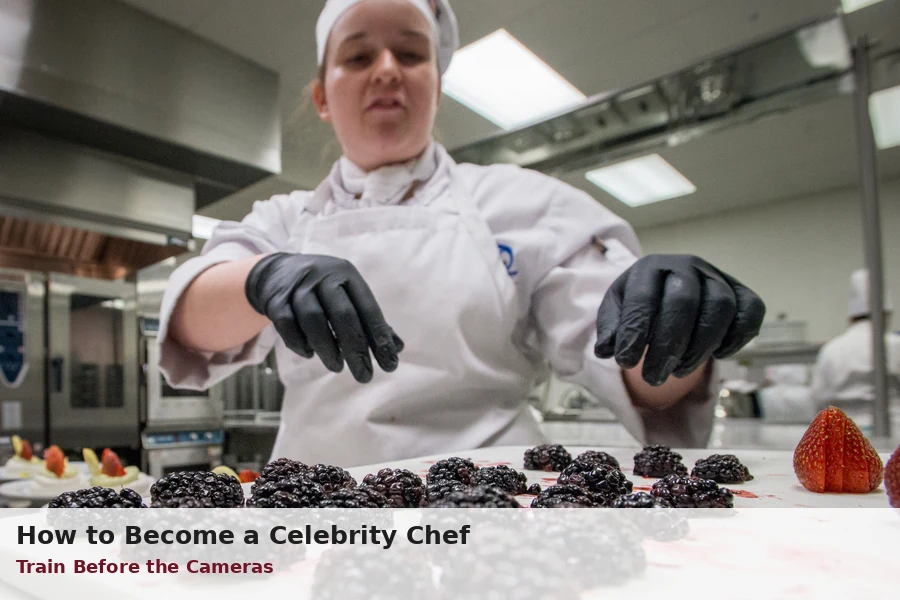
Most beginners enter through one of four doors. Each door leads to the same hot, loud kitchen. Pick the one that gets you cooking daily.
- A professional cookery apprenticeship, learning inside a working kitchen
- A college course in professional cookery, with practice built in
- City & Guilds or SVQ awards in food preparation and cooking
- A kitchen porter job, watched, then trusted with prep
- Short work experience in any busy kitchen, however small
Anyone handling food must finish food safety and hygiene training. Some employers ask for a basic food hygiene certificate before you start. Much early training happens on the job, with day release to college.
Climb the Kitchen Ladder, Rung by Rung
Every famous name started at the bottom of this ladder. Commis chefs prep, clean and learn each station slowly. Nobody skips straight to running a kitchen. The ladder is the training, served in order.
The pay column below uses figures from Planit. Planit is Scotland’s national careers service for this guidance. Its figures are guides, and real rates vary widely.
| Kitchen rung | What the work involves | Pay guide |
|---|---|---|
| Kitchen porter | Washing, cleaning and basic prep work | Entry role, pay varies |
| Commis chef | Prep, basics and learning each station | £20,000 to £25,000 |
| Chef de partie | Runs one section, such as fish or vegetables | £20,000 to £25,000 |
| Sous chef | Second in command, runs daily service | £25,000 to £35,000 |
| Head chef | Menus, staff, budgets and the whole kitchen | Up to £45,000, sometimes more |
Planit also lists a later move into ownership. A chef patron owns the restaurant and carries its risk. That step teaches business lessons fame later demands.
Find the Style That Makes You Recognisable
Producers cast a clear point of view first. Your style might be regional cooking, fire cooking or budget family food. It must be real, repeated and easy to describe. It should also be food you happily cook weekly.
One dish can carry your name further than fifty decent plates. Cook it at events and post it online. Repetition slowly turns a recipe into a reputation.
Small habits build that style faster than rare big moments. Cook one cuisine deeply before chasing variety elsewhere. Write your recipes down weekly, in plain words.
- Take local demo and food festival slots when offered
- Ask head chefs for honest notes, then act on them
- Photograph your plates well, even on a phone
Get Seen: Social Video, Local Press and Small Screens First
Visibility starts small, close to home. Local papers, radio slots and market demos count as media training. Short videos of real cooking teach camera skills cheaply. Most chefs asking how to become a celebrity chef begin exactly here.
Talk while you cook, in plain everyday words. Viewers copy teachers who explain each step calmly. That skill is presenting, and kitchens rarely teach it. Our TV presenter guide covers camera work in more depth.
Keep a simple posting rhythm you can actually hold. Two honest videos a week beat daily panic posting. Film real services, real prep and real mistakes fixed.
The Television Break: Competitions, Guest Slots and Your Own Series
Television usually finds chefs who already have a story. Cooking competitions test skill under lights and time pressure. Guest slots then test whether viewers warm to you.
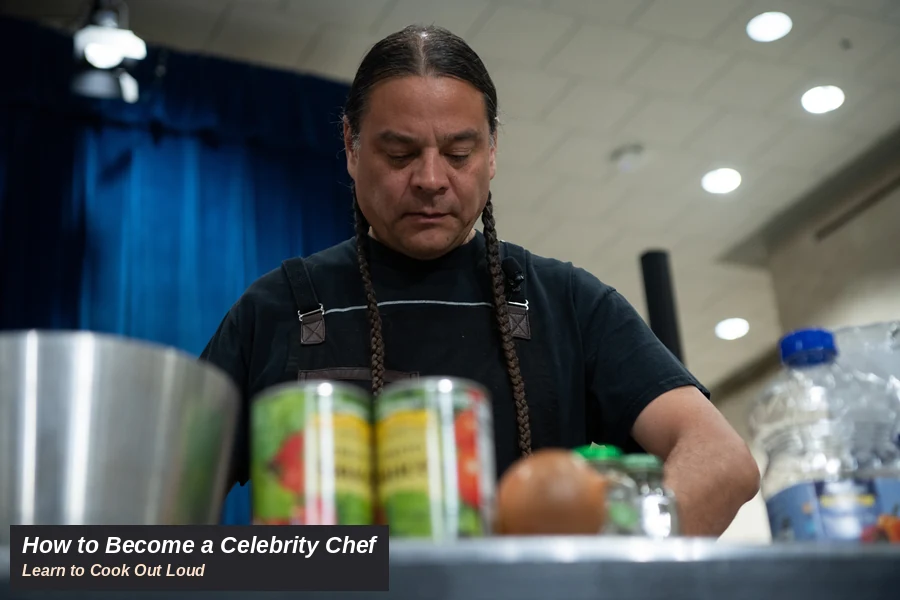
Apply for competitions only when your kitchen craft feels solid. A weak performance follows you online for years. A strong one gives producers proof, not promises.
- A two minute video of you cooking and talking
- Three dishes you can cook perfectly under pressure
- A short story about why your food matters
Screen cooking also runs on unseen help. Assistants test recipes, prep ingredients and reset dishes between takes. Doing that job is itself a quiet route in. Our film director guide explains how screen work gets made.
Books, Restaurants and Brands: Where Fame Turns Into a Business
Fame pays through books, restaurants, endorsements and product ranges. Each stream rests on the same trusted name. None of them survives weak cooking for long.
Publishers ask what audience you already bring with you. A loyal local following beats a vague big idea. Your book angle should match your kitchen style exactly. That business layer completes how to become a celebrity chef.
Our Jamie Oliver net worth profile shows how one name became a business. Treat every deal as a kitchen decision, not a lottery win. Check who owns your name, recipes and image rights. Get advice before signing anything long or exclusive.
Your First Service Matters More Than Your First Series
Learning how to become a celebrity chef is a long apprenticeship in public. The craft comes first, the ladder second, the cameras last. Start where you are: one kitchen, one style, one audience.
Cook something honest this week and let people taste it. Then write the recipe down and share it properly. Fame, if it comes, will find a working chef. More routes sit in our Celebrity archive.
Write down this week’s single step before you sleep tonight. Book the course, ask for the trial shift, film the dish. Small booked steps turn into a career.
Frequently Asked Questions
How long does it take to become a celebrity chef?
There is no fixed timetable for how to become a celebrity chef. Most names spend years climbing from commis chef to head chef first. Media breaks then depend on style, timing and luck. Treat ten years of kitchen work as a normal runway, not a delay.
Do I need qualifications to become a chef in the UK?
No formal qualification is legally required to cook professionally here. Planit notes that some employers still ask for a basic food hygiene certificate. College courses and apprenticeships in professional cookery simply build skill faster. Kitchens promote on proven cooking, not paper alone.
How much do chefs earn before they are famous?
Kitchen pay is modest for years, and Planit publishes the guide figures. Commis chefs and chefs de partie generally earn £20,000 to £25,000. Sous chefs earn £25,000 to £35,000, and head chefs up to £45,000. Fame income sits on top and varies wildly.
Do I need my own restaurant to become famous?
No, a restaurant is only one route to a public name. Television, books and social video have carried many chefs further. Planit does list owning a restaurant, as a chef patron, as a later step. It is an option, never a requirement.
What actually makes a chef stand out to producers?
Producers look for a clear point of view, told simply. A regional cuisine, a fire cooking habit or budget family food all work. The style must survive repetition across shows and books. Camera confidence matters, but weak cooking convinces nobody for long.
Can I skip kitchen training and start on social media?
You can post cooking videos without any training at all. Building a lasting name is harder without real kitchen craft behind it. Audiences and producers test whether the food actually works. A short apprenticeship or college course protects your name later.