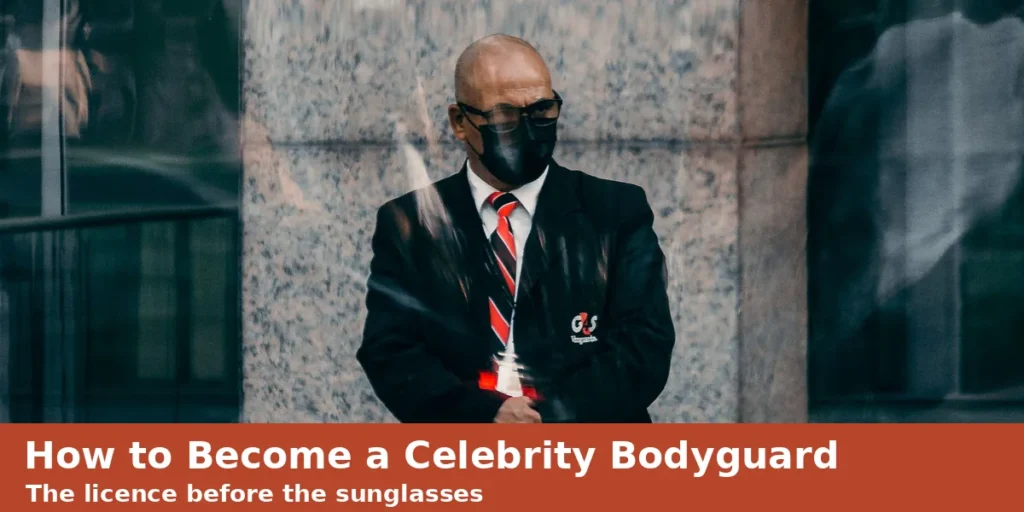
To become a celebrity bodyguard in the UK, you first need an SIA close protection licence. That means a first aid qualification, then a Level 3 close protection course. You then pass criminal record checks and apply to the SIA. Celebrity clients come later, once companies trust your record.
The famous part of this job is smaller than people expect. Most hours are doors, cars, hotels and quiet watching. This guide explains how to become a celebrity bodyguard in plain order. It covers the licence, the training, the pay and the celebrity layer itself.
What a Celebrity Bodyguard Actually Does All Day
A celebrity bodyguard protects one person, or one family, from harm. The National Careers Service lists stalkers and over-enthusiastic fans among the threats. Press crowds and political opponents appear on that list too. The work starts long before the client walks out.

You check rooms, routes and entrances before the client arrives. You drive the client, or ride beside the driver, between stops. You watch faces in a crowd and move early. Most problems end with a calm word and a changed route.
- Checking venues and exits before arrivals
- Walking clients through crowds and camera lines
- Guarding homes during tours and film shoots
- Planning routes, timings and backup cars
- Spotting suspicious behaviour and acting early
Travel days stretch this routine across cities and time zones. You scout the hotel, the venue and the route between them. The client rests while you stay on duty. Quiet planning keeps those days boring, which is the point.
The Licence Comes First: SIA Close Protection
In the UK, bodyguard work carries the legal name close protection. Nobody can do the work legally without an SIA licence. The SIA is the Security Industry Authority, the national regulator. Its close protection licence is a front line licence.
| Requirement | What the SIA or the role asks |
|---|---|
| Age | 18 or over |
| Licence | SIA close protection licence, front line |
| Qualification | Level 3 Certificate for Close Protection Operatives |
| First aid | A valid qualification, held before training starts |
| Checks | Identity, address history and criminal record checks |
| Driving | A full driving licence, listed for the role |
| Licence fee | £204, and the licence lasts three years |
The rules sit on GOV.UK, and they change over time. Read the SIA guidance on training for an SIA licence before booking anything. The qualification must come from an approved training provider. Awarding bodies include Highfield, NOCN, Pearson, QNUK and SFJ Awards.
How to Become a Celebrity Bodyguard, Step by Step
The route for how to become a celebrity bodyguard has a fixed order. First aid comes before training, and training comes before the licence. Skipping steps wastes money and months. Here is the order that works.
- Confirm you are over 18, with the right to work here.
- Gain a first aid qualification valid for twelve more months.
- Book the Level 3 course with an approved provider.
- Pass the course, and let the awarding body confirm it.
- Apply to the SIA and pay the £204 licence fee.
- Take starter jobs, then aim at celebrity clients.
Spent six months or more abroad in ten years? The SIA asks for overseas criminal record checks as well. Gather identity documents and address history early. The fee is never refunded, even after a refusal.
What Matters Most
- The licence is the entry ticket, not a bonus.
- First aid comes before the close protection course.
- Day rates follow risk, not fame alone.
- Quiet, reliable guards get the repeat bookings.
- Celebrity clients arrive through companies and trust.
Backgrounds That Help, and the Routes Around Them
Many guards arrive from the police or the armed forces. Prison service years count as useful experience too. The National Careers Service lists all three as helpful backgrounds. None of them is a formal requirement.
Plenty of good guards start with none of that history. They begin on doors, events and residential security shifts. Those jobs teach crowd reading and calm habits. Specialist security recruitment agencies handle many later moves.
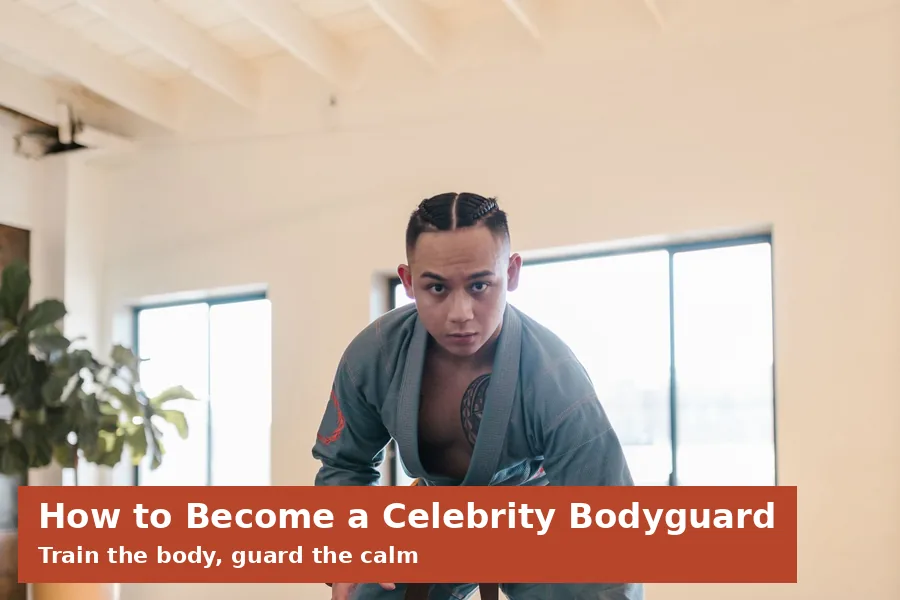
Fitness and driving carry real weight in this trade. Guards stand for hours and drive long, dull miles. Martial arts training helps confidence at close quarters. It never replaces the licence or the checks.
Pay and Hours, Stated Plainly
The National Careers Service publishes no salary band for bodyguards. It gives day rates instead, from £150 to over £300. Location, risk and threat level move that figure. London work and higher risk work sit near the top.
No official source publishes a separate celebrity pay rate. Fame alone does not set the fee; danger does. A quiet star on a film set may pay standard rates. A threatened client pays for experience and numbers.
Hours run from 37 to 51 a week, and they vary. Evenings, weekends and bank holidays are normal here. Tours and shoots mean nights away from home. Smart business clothes are the usual uniform.
The Celebrity Part: Cameras, Crowds and Quiet Days
Celebrity security adds one extra problem: attention. Crowds gather fast, and cameras record every small scuffle. A guard who shoves a fan harms the client’s name. Calm handling protects the picture as well as the person.
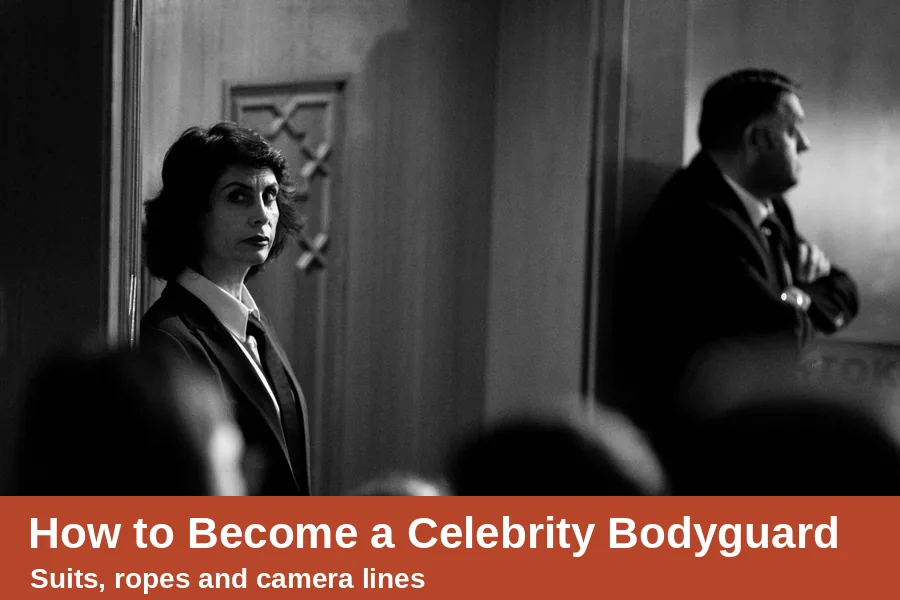
You work inside a small travelling team on these jobs. The celebrity publicist manages the press lines and the story. The celebrity photographer works the same ropes from the other side. Guards who respect both jobs get asked back.
Discretion decides who lasts at this level. You hear arguments, deals and family news at close range. None of it gets repeated, posted or sold. The National Careers Service notes growing demand for female bodyguards.
Renewal, and Where Experience Can Take You
Most people learning how to become a celebrity bodyguard stop reading at the licence. The licence lasts three years, then renewal begins. Renewal needs the Level 2 refresher award on top. A level 3 first aid qualification comes before that refresher.
Experience then opens side doors inside the same trade. The National Careers Service lists surveillance, driving and residential security as specialisms. Later moves include risk assessment consultancy and bodyguard training. Each step pays for judgement, not just presence.
Habits That Keep Good Guards on Small Jobs
Plenty of licensed guards never reach celebrity work. Their skills are fine, but their habits block promotion. Companies quietly stop calling the same names.
- Posting client photos or locations on social media
- Talking to journalists about a client’s private life
- Letting first aid cover lapse before renewal time
- Turning up late, scruffy or smelling of alcohol
- Chasing autographs and selfies while on duty
Each habit breaks the one promise this job sells. Clients buy safety and silence in equal measure. Guard both, and the diary slowly fills. Break either, and it empties just as slowly.
The Quiet Ones Get the Repeat Bookings
Learning how to become a celebrity bodyguard starts with paperwork, not sunglasses. Check your SIA eligibility before paying for any course. That one check protects your money and your timeline. The route then rewards patience far more than drama.
Earn the licence, stack steady shifts and protect every reputation. The stars themselves follow the route in our how to become famous pillar. More careers around them sit in our Celebrity archive. Stand close, stay quiet, and let the bookings compound.
The work will not make you famous, and that suits it. The best guards stay unknown outside their client’s circle. Their names travel quietly between companies instead.
Frequently Asked Questions
Do you need a licence to work as a celebrity bodyguard in the UK?
Yes. The SIA close protection licence is a legal requirement for this work. It needs a licence-linked qualification and criminal record checks. Working without one risks prosecution and ends careers early.
How much does an SIA close protection licence cost?
The licence fee is £204 for one licence. It lasts three years and is never refunded. Extra licences in the same application cost £102 each. The fee rose in April 2026, so older guides quote less.
What qualification do I need for close protection work?
You need the Level 3 Certificate for Close Protection Operatives. Approved providers deliver it for bodies like Highfield, NOCN and Pearson. A first aid qualification comes first, with twelve months validity left.
How much do celebrity bodyguards get paid?
The National Careers Service gives day rates, not salaries. Rates run from £150 to over £300 a day. Risk, location and threat level set the figure, not fame alone. Celebrity clients usually book through companies at those rates.
Do I need a police or military background?
No, you do not need one to start. Police, armed forces and prison service experience all help. The National Careers Service calls that experience useful, never required. Licensed beginners start on smaller jobs and build trust.
How long does the licence last, and how do I renew it?
The licence lasts three years. Renewal needs your full qualification plus a Level 2 refresher award. A level 3 first aid qualification must come before that refresher training. Let it lapse three years, and you start again.