How to become a celebrity publicist starts far from any red carpet. You train in ordinary public relations first. You learn pitching, writing and media handling on small accounts. Famous clients arrive years later, once agencies trust your judgement.
Our how to become famous guide maps the wider fame business in full. This page stays on the publicity desk only. It covers training, the assistant years and press craft. The famous names sit at the end of that road.
The Main Points
- How to become a celebrity publicist begins with ordinary PR training.
- No licence exists for this work in the UK.
- Most entrants hold a degree in a relevant subject.
- Everyone starts as an assistant, answering phones and building lists.
- Pay guides start near £20,000 and rise slowly with experience.
- Journalists take your calls only after you earn their trust.
- Discretion decides who keeps celebrity clients.
How to Become a Celebrity Publicist: What the Job Really Is
A celebrity publicist manages how the public sees one person. The work covers interviews, photographs, announcements and rumours. You plan stories, brief journalists and guard private life. The client performs; you shape everything around the performance.

The role differs from an agent’s job in one clear way. Agents negotiate contracts, fees and deals for clients. Publicists handle media, image and public statements instead. Our acting agent guide explains the deal-making side in full.
Most days are office days, not party days. Planit lists campaign planning, press writing and coverage analysis. Evenings out happen at launches and premieres, working. The glamour is real, but it belongs to the client.
Study the Trade First: Degrees, Short Courses and Work Experience
No licence or single qualification controls entry into publicity. Most entrants hold a degree, says Planit. Employers then judge experience, writing and contacts. School subjects matter less than proof of media interest.
Relevant degrees include public relations and journalism. Communication studies, media studies and marketing also fit well. Business studies, politics and psychology appear on Planit’s list too. A different degree can lead to a postgraduate course.
- Student media, blogs or a campus radio show
- Work experience inside any newsroom or agency
- Short CIPR or PRCA courses after graduation
- A writing portfolio with published clips
Training continues after the first job starts. Planit describes training as mostly on the job. The CIPR runs courses at every level. Its Professional Diploma leads towards Accredited Practitioner status.
Start as a PR Assistant: The Agency Ladder
Almost everyone starts as a PR assistant. Planit calls it the normal first rung. Assistants answer phones, update media lists and log coverage. Unglamorous tasks teach how newsrooms actually work.
Agency ladders then climb in named steps. Assistants become account executives, then senior account executives. Account managers and account directors follow with experience. In-house teams promote towards communications or media relations manager.
Entertainment agencies run the same ladder with flashier clients. Film, music and talent agencies all employ publicity teams. Our music manager guide shows the neighbouring desk in that world. Managers and publicists speak daily on busy rosters.
The Daily Craft: Pitches, Press Releases and Media Lists
A publicist’s core skill is the short, honest pitch. You ring a journalist with one clear story idea. The idea must suit their readers, not your client. Rejection is daily, normal and rarely personal.
Press releases still carry official news and announcements. Planit lists writing and editing them among core tasks. Speeches, statements and social posts share the same desk. Every word must survive being quoted back.
- Build media lists by beat, not by fame
- Read every target publication before pitching it
- Keep client facts, dates and spellings exact
- Log every promise made to every journalist
Media relations grows from hundreds of small reliabilities. Send what you promised, when you promised it. Correct errors fast and without sulking. Journalists remember both habits for years.
Press Days, Interviews and Red Carpets
Press days put the publicist beside the client. You schedule interviews, brief both sides and watch clocks. A press junket stacks twenty interviews into one hotel day. Your job is calm logistics, repeated hourly.

Red carpets look loose but run on rails. Photographers hold marked positions along the barrier. You walk your client down the line, pausing for pictures. Our celebrity makeup artist guide covers another chair in that team.
Travel comes with the territory at this level. Planit notes trips to studios, conferences and events. Evenings and weekends bend around client schedules. The phone rarely respects office hours here.
What the Work Pays: Guide Figures and the Honest Truth
Publicity pay starts modestly and rises with responsibility. The table below uses figures from Planit, Scotland’s careers service. Planit stresses that its figures are only a guide. Outside the public sector, no set salary scales exist.
| Career stage | Pay guide |
|---|---|
| Starting salaries | £20,000 to £22,000 |
| Early years | £24,000 to £30,000 |
| Experienced officers | £40,000 to £50,000 |
| Director or head of corporate affairs | Up to £100,000 |
Celebrity clients do not change those early numbers. Junior staff earn junior pay on famous accounts too. Senior publicists with trusted names earn the top band. Freelance day rates vary too widely to print honestly.
Planit adds that figures vary by workplace and region. Larger agencies and London desks usually sit higher. Small regional agencies cluster near the starting band. Ask about review dates before accepting any offer.
When News Breaks Badly: Crisis Calls and Quiet Fixes
Every publicist eventually takes the late night call. A client has posted, said or done something public. Your first task is facts, not panic. Statements wait until you know what actually happened.
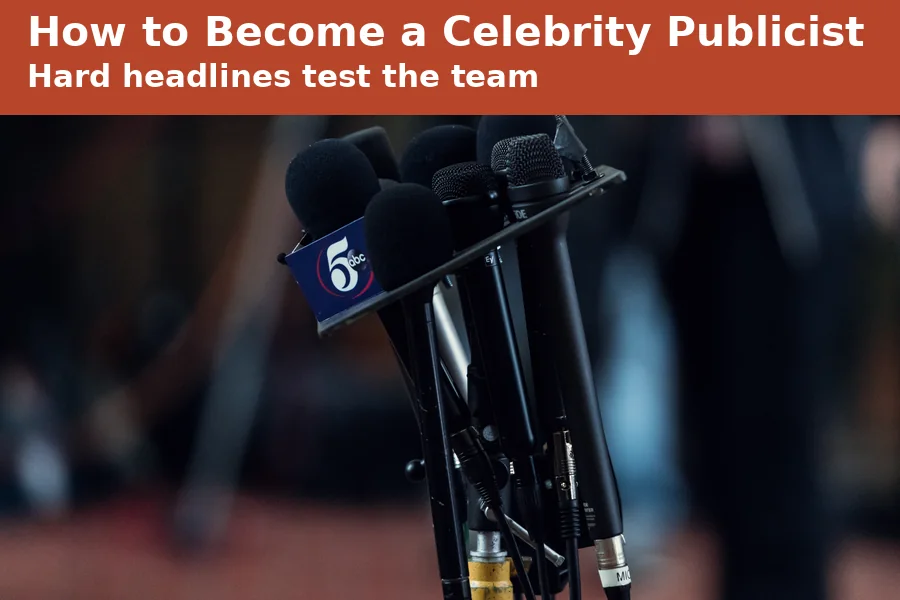
Good crisis work is mostly preparation done earlier. You hold statements, contact lists and agreed lines ready. Journalists get one honest answer, delivered quickly. Silence invites other people to tell the story.
- Confirm the facts before drafting any statement
- Agree one spokesperson and one clear line
- Answer the first calls, never dodge them
- Write down who said what, and when
Discretion outlasts any single headline in this trade. Clients share private details with their publicist weekly. Anything repeated elsewhere ends the relationship instantly. Trust, once lost, does not return with apologies.
Fame Is Their Job; Trust Is Yours
Learning how to become a celebrity publicist takes ordinary years. Degrees, assistant desks and small accounts fill most of them. The famous client, when one arrives, inherits that groundwork. Nobody skips the queue in this business.
Pick one practical move for this month. Apply for agency work experience somewhere near you. Start a small media blog and publish weekly. Habits like these read well at any interview.
Write one sample pitch about a local performer. File it, improve it, and pitch the next one better. More career routes sit in our Celebrity archive. The phones reward people who keep showing up.
Frequently Asked Questions
How long does it take to become a celebrity publicist?
There is no fixed timetable for how to become a celebrity publicist. A degree takes three or four years for most students. Assistant and executive years then follow inside an agency. Celebrity clients usually arrive after a long record of reliable work.
Do I need a degree to become a publicist?
No law requires a degree for publicity work. Planit says most entrants hold one anyway. Relevant subjects include public relations, journalism and media studies. Strong work experience can still carry an applicant without one.
How much do publicists earn in the UK?
Planit lists starting salaries between £20,000 and £22,000. Pay rises to £24,000 to £30,000 in the early years. Experienced officers earn £40,000 to £50,000 a year. Directors can reach £100,000, and Planit calls every figure a guide.
How do publicists get their first celebrity client?
Famous clients rarely arrive through adverts or applications. They arrive through agents, managers and journalists who trust you. Assisting senior publicists puts you near famous names early. One well handled small client often brings the bigger call.
What is the difference between a publicist and an agent?
An agent negotiates contracts, fees and work for clients. A publicist manages media coverage, image and public statements. Both sit on the same small team around a star. They speak most days on busy accounts.
Is crisis management a big part of the job?
Crisis work fills few weeks but decides reputations. Most days cover planned stories, interviews and launches. When trouble lands, preparation and speed matter most. Publicists who stay calm under fire keep their clients longest.