Learning how to become a celebrity photographer starts with people photography, not famous faces. You master light, speed and calm portraits first. Then you earn access slowly, event by small event. Skill gets you considered, but trust gets you through the door.
This guide walks how to become a celebrity photographer, in plain UK terms. It covers training, assisting, portfolios and the behaviour publicists remember. Our how to become famous guide shows the fame side of the same rooms. Here, the camera side gets the honest version.
The Main Points
| Stage | What counts most |
|---|---|
| First skill | Portraits under pressure, in poor light |
| Training | No licence needed; one route takes about 18 months |
| First work | Assisting, local events and rising acts |
| Pay anchor | £25,000 starter to £45,000 experienced, per the National Careers Service |
| Real credential | Trust: discretion, speed and clean behaviour |
How to Become a Celebrity Photographer: The Job Up Close
A celebrity photographer shoots famous people for media and brands. The diary mixes red carpets, concerts, premieres, parties and booked portrait sessions. Most work arrives through organisers, editors and publicists, not public adverts. One strong night can fill the next month with calls.
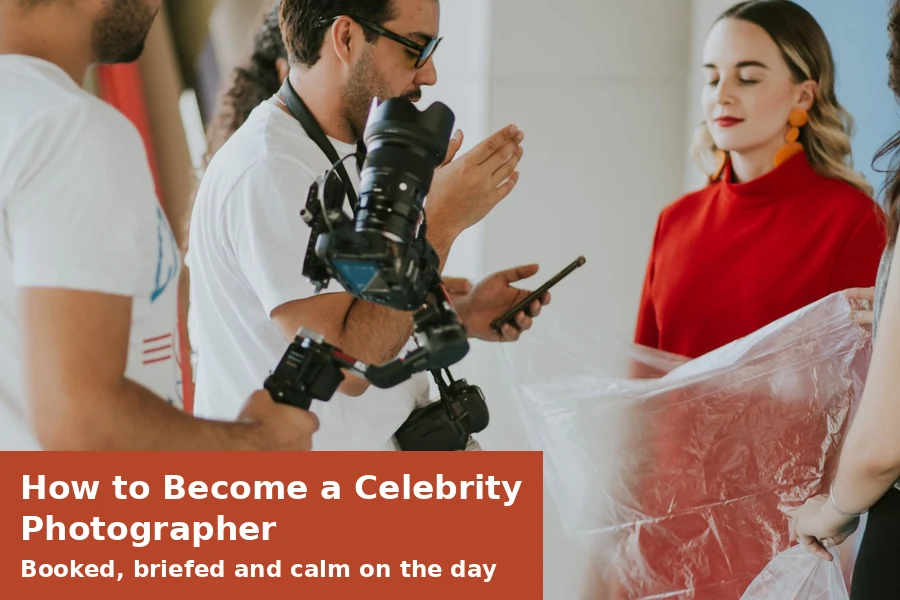
The work splits into three broad kinds of booking. Red carpet and event photography sells speed, volume and same-night delivery. Portrait photographers sell a look that magazines and campaigns reuse. Both kinds guard a reputation for calm, quiet professionalism.
One boundary matters from your first day in this trade. A celebrity photographer works with permission, passes and booked access. Paparazzi work sits outside that line, chasing people who never agreed. Clients, venues and agencies keep the two apart carefully.
Learn People Photography Until the Camera Disappears
Celebrity rooms move faster than almost any other assignment. You may get minutes with a subject, sometimes only seconds. Settings must sit in your fingers, never in your thoughts. Flash, low light and moving crowds become normal conditions.
Portraits carry the whole trade, so practise them relentlessly. Celebrity portrait photography rewards a calm, quick rapport with strangers. Shoot friends, local bands and amateur models every week. Each session teaches posing, direction and honest flattery.
Editing speed matters almost as much as shooting speed. Learn to cull, correct colour and export in batches. A Saturday night event needs files before Sunday morning. Slow delivery quietly kills repeat bookings in entertainment.
- Manual settings you can change without looking down
- On-camera flash and simple off-camera lighting
- Fast, accurate focus in dark, crowded rooms
- Batch editing with presets you trust
Training Routes in the UK: Degree, College, Apprenticeship or Assistant
No licence or degree is legally required in Britain. The National Careers Service lists four honest routes into photography. Clients judge your portfolio and your manner, not certificates. Training simply shortens the messy early years of how to become a celebrity photographer.
Universities offer degrees in photography, visual arts and commercial photography. Colleges run shorter photography courses at several levels. A college course can lead straight to a studio assistant job. Pick the route that puts a camera in your hands daily.
The apprenticeship route suits people who learn by doing. The Photographer Level 4 Higher Apprenticeship takes around eighteen months. It mixes workplace training with off-the-job study. Many working photographers started as an assistant instead, carrying bags and watching.
- Degree or foundation degree in photography or visual arts
- College photography course, then a studio assistant post
- Photographer Level 4 Higher Apprenticeship, about 18 months
- Straight in as a photographer’s assistant, learning on jobs
Build a Portfolio That Opens Doors
Your photography portfolio is the real qualification in this field. Organisers book the photographer whose work already fits their room. Twenty strong images beat two hundred mixed ones easily. Every picture should say you belong at busy, famous events.
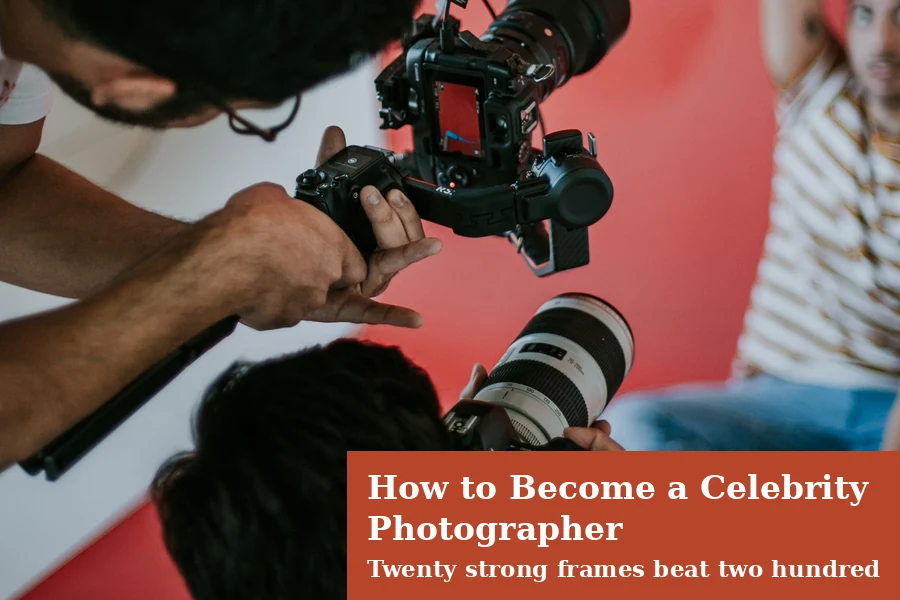
Build the book from the work you can reach today. Shoot local gigs, student fashion shows and community awards. Offer portraits to rising singers and unsigned actors nearby. Credit every subject, stylist and makeup artist on each image.
Your online profile works as a second, faster portfolio. Editors often check it before your website. Make your subject obvious within three photos. Post finished work only, and tag subjects and venues correctly.
Start Around Fame: Events, Gigs and Rising Names
You do not start with the celebrity themselves. You start with the people and rooms around them. DJs, promoters, small venues and new artists need photographers first. Today’s unknown support act becomes tomorrow’s headline name.
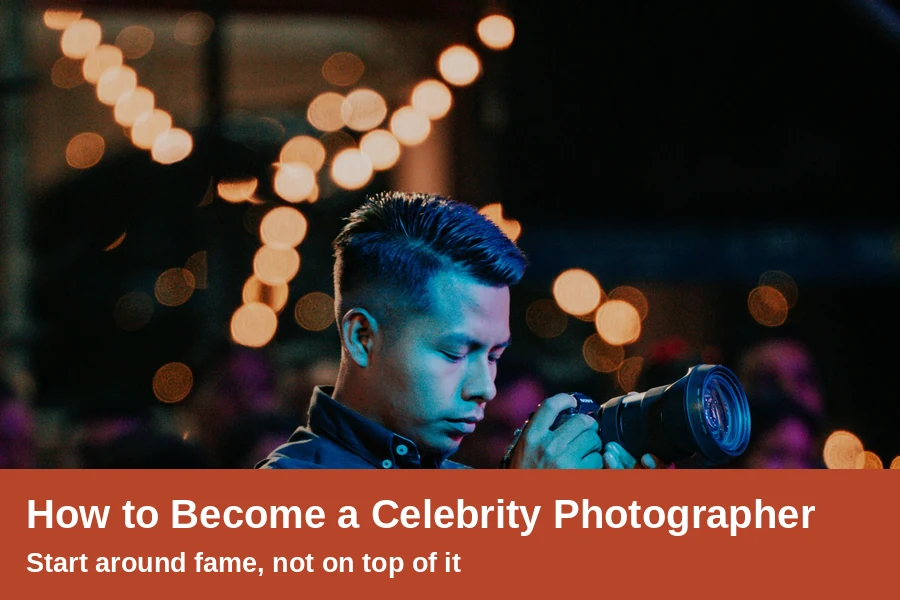
Credentials turn that local work into bigger rooms. Publications and blogs apply for media accreditation at concerts and premieres. A photo pass puts you in the pit, legally and expected. Our celebrity publicist guide explains who approves those lists.
Concert photography teaches the trade faster than any course. Three songs, no flash, house lights changing every second. Nail that, and red carpets feel slow by comparison. Organisers notice the photographer who copes without drama.
- Cover nightlife, gigs and local award nights
- Photograph DJs, promoters and event organisers themselves
- Shoot fashion shows and student shows nearby
- Ask small publications about event coverage swaps
Behaviour Is the Real Credential: Trust on the Night
Famous people relax around photographers who act like staff. You are there to work, never to be a fan. No selfie requests, no gossip, no filming private moments. The photographer who protects a room gets invited back.
Sometimes the professional move is lowering the camera. Private grief, children and unguarded moments sit outside the brief. Publicists watch for exactly that judgement on busy nights. One wrong frame can end a working relationship permanently.
Delivery habits build the same trust after the event. Send the promised files on the promised morning. Tag people correctly and spell every name right. Our celebrity makeup artist guide shows the same room manners.
- Dress like crew, move like crew, stay quiet
- Ask before posting backstage or dressing room frames
- Deliver early, labelled and easy to download
- Never sell or share a frame outside the agreement
What the Work Pays: The Honest UK Numbers
Employed photography pay in Britain starts modestly for most people. The National Careers Service photographer profile puts starters at £25,000 a year. Experienced photographers reach £45,000 on its scale. Its listed week runs 37 to 42 variable hours.
Most routes through how to become a celebrity photographer end freelance, not salaried. Fees swing with the client, the city and your credits. This guide prints no celebrity day rate without a named source. Access alone never pays a rent bill.
Evenings, weekends and bank holidays fill the working diary. The National Careers Service warns the hours follow customer demand. Kit, insurance and travel costs land on freelancers personally. Many keep a second income during the slow first years.
The Next Room Opens From This One
Nobody hands you a red carpet pass for enthusiasm alone. The route runs room by room and frame by frame. Each calm night quietly makes the next invitation likelier. Your reputation enters every room before you do.
Start this week with one small, finishable, useful move. Shoot one local gig and deliver the set next morning. Then write to one organiser offering event cover next month.
Our Celebrity archive holds the other routes into this world. The model guide shows the other side of your lens. Tell us which room taught you the most.
Frequently Asked Questions
How long does it take to become a celebrity photographer?
There is no fixed timetable for how to become a celebrity photographer. Most photographers spend years assisting, shooting events and building credits first. A famous booking usually arrives after a trusted portfolio exists. Treat the slow years as the entry fee, not a delay.
Do I need a degree to work as a celebrity photographer?
No degree or licence is legally required in Britain. The National Careers Service lists degrees among four routes into photography. Many photographers enter through assisting instead of classrooms. Clients and publicists judge your portfolio, behaviour and delivery speed.
What is the difference between celebrity portrait photography and event photography?
Portrait work is booked, lit and unhurried by comparison. You direct one famous subject towards a planned, reusable image. Event work is fast, crowded and mostly candid. Most celebrity photographers earn from events first and portraits later.
How do photographers get press passes for celebrity events?
Passes usually come through a publication, agency or organiser. Media accreditation opens before big concerts, premieres and award nights. You apply with your credits, links and recent published work. Unknown photographers start with smaller outlets and smaller rooms.
What should a photography portfolio include for celebrity work?
Lead with portraits and live event frames of people. Add red carpet or concert shots that show bad light handled well. Keep the set tight, current and easy to scroll. Twenty strong images beat two hundred mixed ones.
Is a celebrity photographer the same as a paparazzi photographer?
No, and clients care about the difference deeply. A celebrity photographer works booked, with passes, permission and agreed use. Paparazzi photographers chase famous people who never agreed to be photographed. Venues and publicists welcome one kind and bar the other.