You become a model by showing agencies your natural look. Simple photos called digitals open the door. Small jobs then build real experience. No portfolio or fee is needed at the start. The real first step costs nothing but an afternoon.
That surprises most beginners. The industry sells expensive shortcuts to hopefuls every day. Real agencies judge raw potential first. This guide walks through the honest route.
Key Takeaways
- Agencies apply with digitals, not pricey portfolios.
- Legitimate agencies earn commission, never joining fees.
- Modelling has many categories beyond high fashion.
- Test shoots build a book without spending.
- Safety checks matter more than speed at the start.
What Modelling Work Actually Looks Like
Modelling is paid posing for photographs and film. Clients include clothing brands, shops and magazines. Work ranges from e-commerce shots to television adverts. Each booking is a short contract, not a job for life.
Most models work freelance through an agency. The agency finds clients and negotiates fees. It takes commission from each booking it lands. The model prepares, travels and performs on the day.
Famous faces sit at the very top. Working models below them earn steadily and quietly. Our guide to how to become famous explains that wider ladder. Modelling is one legitimate first rung on it.
The Categories Decide Where You Fit
High fashion is the narrowest door in modelling. Editorial work favours tall, striking looks. Commercial modelling is far broader and busier. It covers catalogues, adverts and everyday brands.
Other categories hire constantly across the UK:
- Commercial and catalogue work for retail brands
- Curve and petite divisions at major agencies
- Fitness modelling for sports and health brands
- Parts modelling for hands, feet and hair
- Child and family modelling for lifestyle shoots
Guides on how to become a model often skip this part. Measure yourself honestly before applying anywhere. Height, chest, waist and hips guide the fit. Agencies publish their boards and requirements openly. Aim your applications where your measurements belong.
Digitals: The Only Photos You Need First
Digitals are plain, natural photographs of you. Agencies also call them polaroids or snaps. They show your face and shape without styling. A phone camera handles them perfectly well.
Everyone learning how to become a model starts here. Shoot them in daylight against a plain wall. Wear fitted, simple clothes in neutral colours. Take a headshot, a profile and a full-length shot. Keep makeup minimal and hair natural.
Premier Model Management asks new faces for exactly this. Their scouting page stresses that professional photos are unnecessary. Once signed, the agency develops your portfolio itself. That pattern holds across reputable London agencies.
Applying to Agencies, Step by Step
Choose a shortlist of agencies that fit your category. Check each agency’s own website first. Most accept online submissions through a form. Upload your digitals and basic measurements there.
Some London agencies also hold walk-in hours. Premier runs open walk-ins on weekday mornings and afternoons. Walking in shows confidence and saves weeks of waiting. Bring nothing but yourself and a good attitude.
Then keep living your normal life. Replies can take weeks, or never come. Silence from one agency means very little. Apply to several suitable agencies, not dozens blindly. Track who you contacted and when.
Your First Jobs and Test Shoots

Signed models start with development shoots. Agencies arrange tests to build a starter book. Unpaid collaboration shoots, called TFP, help too. Photographers and models both gain portfolio material.
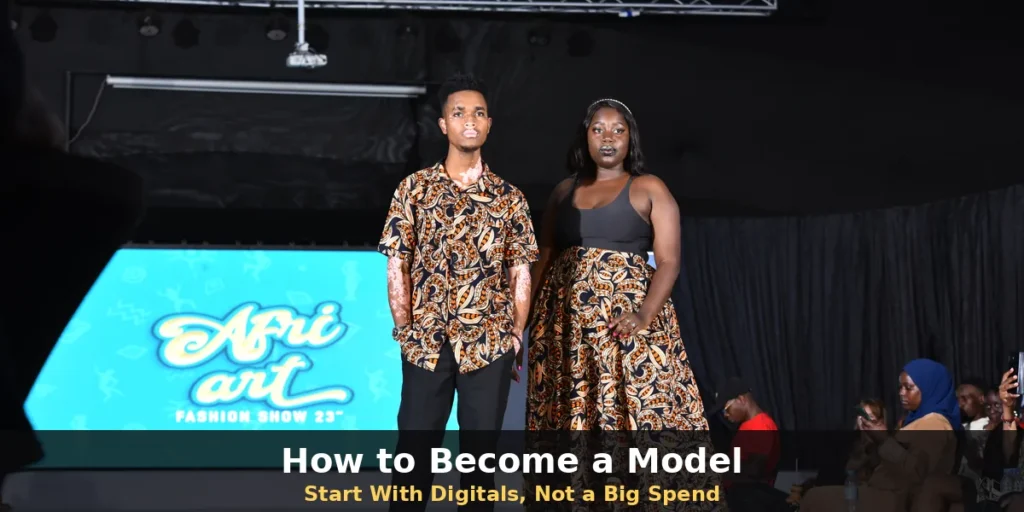
Small local shows offer early runway experience. Student designers and charity shows need models regularly. Each job teaches posing, direction and timing. Reliability gets beginners rebooked more than beauty does.
Treat every early shoot as an audition. Arrive early, bring basics and stay pleasant. Crews remember professionals and recommend them onward. The film extra route teaches similar habits. Our guide to how to become a film extra covers that world.
Your Social Profiles Are Part of the Application
Agencies check social profiles during scouting rounds. A public profile works as a living set of digitals. Post clear, natural photos among your styled ones. Remove anything you would hide from an employer.
Keep your handle professional and easy to find. Reply to agency messages only through verified accounts. Impersonators copy agency names with small spelling changes. Check any approach against the agency’s real website.
Money, Fees and the Scam Patterns
Knowing how to become a model safely starts here. Here is the rule that protects beginners. Legitimate agencies do not charge joining fees. In the UK, agencies cannot charge you simply for representation. Their income is commission on work they book.
Costs that are normal look different. A photographer may charge for an optional shoot. Travel to castings comes from your pocket. Nobody legitimate demands large upfront payments.
Warning signs should end any conversation fast:
- Big fees demanded before any meeting happens
- Guaranteed fame, signings or paid work promised
- Pressure to pay today, before you think
- Contact only through social media messages
- Requests for personal photos outside official channels
Walk away from anyone showing two of these. Real agencies are patient and easy to verify. Their offices, staff and clients are public record.
How Long It Takes, Honestly
Some new faces book work within weeks. Others apply for a year without success. Timing depends on category, market and luck. London concentrates most high-end UK work.
Fitness for castings is a habit, not an event. Keep digitals current as your look changes. Update them every six to twelve months. Agencies notice persistence paired with patience.
Rejection is the industry’s background noise. It reflects client briefs, not your worth. Working models heard no many times first. The ones who last treat it as weather. They keep their digitals fresh and their applications moving.
How to Become a Model FAQs
Do I need experience to become a model?
No experience is required to start. Agencies sign new faces with no prior work regularly. They judge your digitals and your potential instead. Development shoots then teach you the basics quickly. Experience helps later, once bookings begin arriving. Everyone working today started with none at all.
How tall do I need to be for modelling?
High fashion still favours taller models, traditionally. Commercial, curve, petite and parts modelling have no strict height rules. Many busy UK models work below editorial heights. Your category decides which standards apply to you. Measure yourself, then target the boards that fit. Agencies state their requirements openly online.
Should I pay for a portfolio before applying?
No, agencies do not expect a paid portfolio. They ask for simple digitals taken on a phone. Spending heavily first signals inexperience to scouts. If an agency signs you, it guides your portfolio development. Optional photographer shoots are your choice, never a condition. Save your money at the start.
How do modelling agencies make money?
Agencies earn commission from bookings they arrange. A percentage comes out of the fee the client pays. They do not charge models to join their books. In the UK, charging for representation alone is restricted. This model aligns their income with your success. That is why they develop new faces.
At what age can I start modelling?
Child modelling runs through specialist agencies with safeguards. Adult boards usually start from the later teens. There is no upper age limit for commercial work. Mature models book steadily for lifestyle brands. Agencies list their age ranges on their boards. Apply where your age group is represented.
Can I model part time alongside a job?
Yes, many models work part time for years. Bookings arrive irregularly, especially at the start. Keeping a job or studies running is sensible. Agencies understand scheduling limits for developing faces. Reliability matters more than constant availability early on. Say yes when you can, clearly and early.
Start Small, Stay Safe, Keep Going
That is how to become a model in the real world. The route in is simpler than the sales pitches suggest. Take honest digitals, apply where you fit, refuse upfront fees. Small jobs then build the book that matters.
London’s agencies scout new faces every single week. Yours could be next, or it might take longer. Either way, the first step costs an afternoon. Browse more routes into the industry in our Celebrity section.