Becoming a celebrity stylist starts with other people’s clothes, not famous clients. You learn the craft, assist a working stylist, then prove yourself on small shoots. That slow order is how to become a celebrity stylist in real working life. Famous names arrive last, once photographers and agents trust your rails completely.
This guide covers the wardrobe side of the job only, start to finish. Hair styling is a separate trade, with separate training and separate tools. Our how to become famous guide maps the wider fame game around it. It also stays honest about pay, fees and slow early years.
At a Glance
| Stage | What it actually takes |
|---|---|
| Training | No degree is legally required in Britain |
| First work | Assisting, internships and small test shoots |
| Real proof | A portfolio of finished looks on real people |
| Pay anchor | £22,100 average for stylists, per Indeed Salaries |
| Famous clients | Referrals from photographers, agents and makeup artists |
How to Become a Celebrity Stylist: What the Job Really Is
A celebrity stylist chooses the clothes that famous people wear in public. The diary covers red carpets, press tours, photo shoots and music videos. Every outfit must survive bright flashbulbs, long lenses and close public inspection. One loose seam can follow a client around the internet for years.
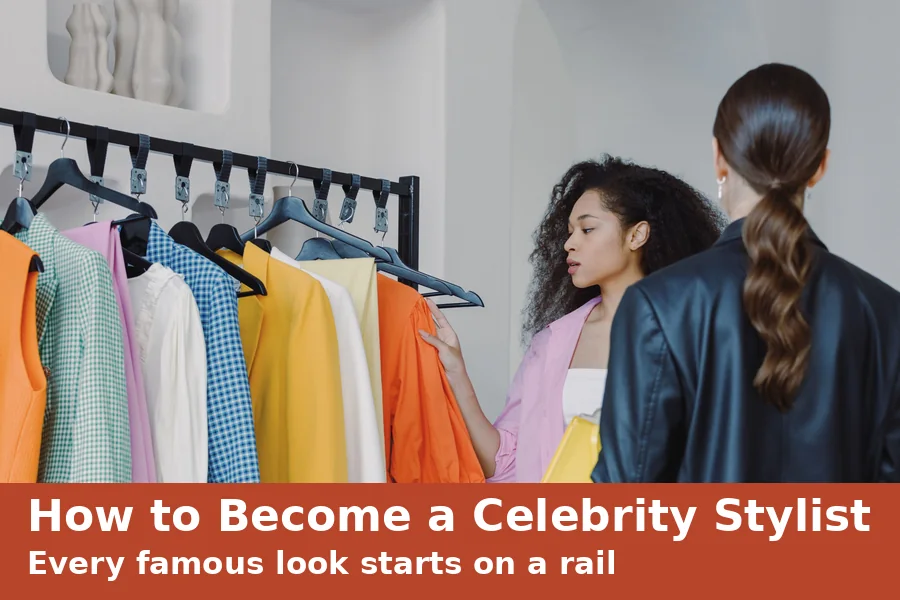
The word stylist here means wardrobe, never hair or makeup. A wardrobe stylist plans outfits, shoes, jewellery, bags and small backup options. Hair and makeup belong to their own artists on the same team.
The work splits into three broad kinds of booking. Personal clients pay for event dressing, tour wardrobes and everyday image planning. Editorial clients pay for magazine shoots, campaigns and advertising days. Either route can end at famous names, given enough trusted referrals.
Learn the Craft First: Courses, Short Classes and Honest Self Study
No licence or degree is legally required to style in Britain. Clients and photographers judge finished work, not certificates on a wall. Training simply shortens the clumsy first years of how to become a celebrity stylist. What training cannot give is taste, patience or discretion.
Four routes build the same base of skill and judgement. Pick the route that gets garments into your hands fastest.
- A college course in fashion styling, design or merchandising
- Short classes in colour, fit and personal shopping skills
- Retail fashion work, learning stock and customers every day
- Test shoots and student films with local creative teams
Study clothes the way good chefs study their ingredients. Learn which fabrics crease, shine, stretch or photograph badly. Learn body shapes and proportions before you chase passing trends. A little fashion history makes modern choices look deliberate.
Assist a Working Stylist: The Door Everyone Actually Uses
Assisting is the normal first job in professional styling. Assistants steam garments, tape shoe soles and guard the rail. They also watch fittings, client handling and quiet problem solving. That watching teaches more than most classroom weeks ever will.

Find assisting days through photographers, makeup artists and local stylists. Offer one free day on a test shoot before asking for paid work. Reliability earns the second call far more than charm does. Assistants who stay calm under pressure get remembered first.
Good assistants share a few habits that leads notice quickly. None of them needs talent, money or lucky contacts. All of them can start on your very next shift.
- Steam and prep every garment before the talent arrives
- Pack spare pins, tape, a lint roller and sewing basics
- Log every borrowed piece, its source and its return date
- Keep everything clients say in the room completely private
The Daily Craft: Pulls, Fittings, Rails and Returns
A pull is a short loan of clothes for one job. Stylists request pieces from fashion brands, showrooms and friendly shops. Each piece travels with paperwork, a condition note and a deadline.
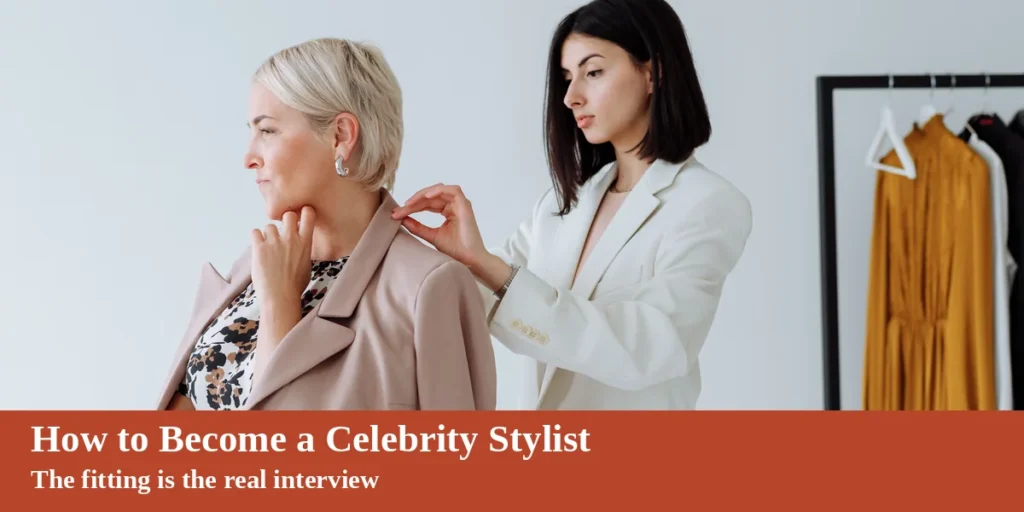
Fittings test the plan on a real, moving, opinionated body. Seams get pinned, shoes get swapped and lengths get judged honestly. Our celebrity makeup artist guide shows the glam side of the same room.
Returns close the job and quietly protect your name. Late or damaged pieces end showroom relationships very fast indeed. Careful stylists photograph every piece before it travels anywhere. The rail goes back cleaner than it arrived, every time.
Build a Portfolio That Books Work
Your portfolio is the real qualification in how to become a celebrity stylist. Photographers book the looks they can already see working. Ten strong, finished images beat fifty mixed snapshots easily.
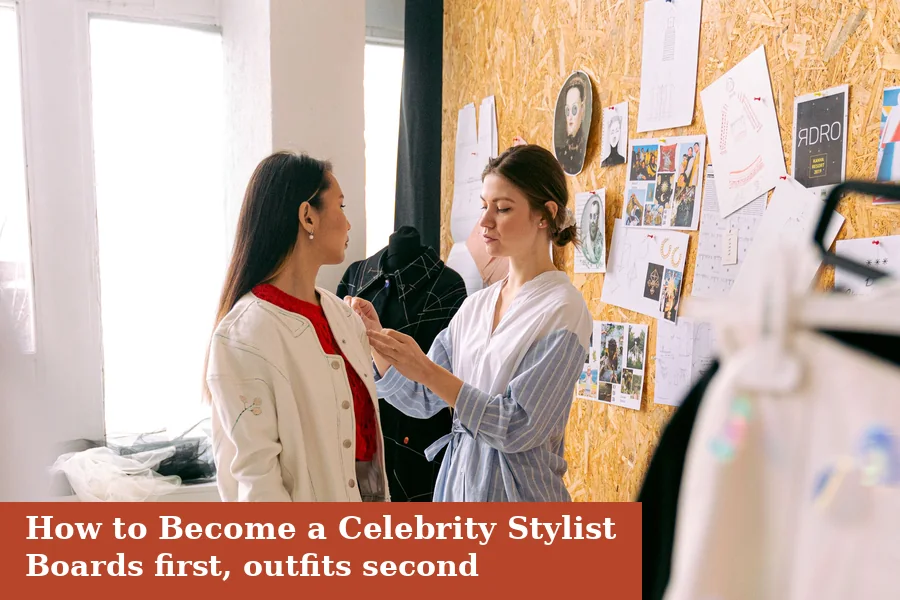
Build the book with test shoots and small local jobs. Style friends, unsigned singers and models nobody knows yet. Credit every photographer, model and makeup artist on each image. Every test shoot teaches one new face shape or fabric.
A booking ready portfolio follows a few plain rules. Every rule serves the person flicking through it fast. Photographers decide in seconds, not in long sittings.
- Show range: tailoring, dresses, streetwear and one bold idea
- Keep every fit clean and every face clearly lit
- Replace the weakest image after every paid job
- Keep a small digital copy ready on your phone
What the Work Pays: The One Honest Number and the Fee Fog
Employed styling pay in Britain starts modestly for most people. The Indeed fashion stylist guide puts the national stylist average at £22,100 a year. That figure covers the whole stylist occupation, fashion roles included. London bookings usually pay above that national average figure.
Freelance day rates swing too widely to print one honestly. Celebrity fee claims online are guesses dressed as facts. This guide prints no rate that lacks a named source. Honest pay talk protects beginners from fantasy budgets later.
Early years often mix paid days with unpaid test shoots. Travel, kit and insurance costs land on the stylist personally. Many young stylists keep a second income while building names.
The First Famous Client: How the Call Usually Comes
Famous clients rarely answer adverts, applications or cold messages. They arrive through people who watched you work closely. One calm shoot can turn a photographer into your referee. Trust travels faster in this trade than advertising does.
Agents and managers guard their clients with good reason. One small job handled well opens their phone book slowly. Our model guide shows the other side of the fitting room mirror.
Three habits turn single jobs into repeat famous bookings. None involves flattery, gifts or loud self promotion. All three cost nothing except attention and speed.
- Answer every message fast, even when the answer is no
- Never post client fitting photos without written permission first
- Thank every referrer the same day, using their name
The Rail Is Open Tomorrow Morning
Nobody hands you a famous client for good intentions alone. The route runs rail by rail and shoot by shoot. Each careful job quietly makes the next call likelier.
Start this week with one small, finishable, useful move. Style one willing friend and photograph the results properly. Then message one local stylist about spare assisting days.
More routes into this world sit in our Celebrity archive. Tell us which rail job taught you the most.
Frequently Asked Questions
How long does it take to become a celebrity stylist?
There is no fixed timetable for how to become a celebrity stylist. Most stylists spend years assisting and shooting tests first. A famous client usually arrives after a solid portfolio exists. Treat three to five years as a normal runway, not a delay.
How much do celebrity stylists earn in the UK?
Indeed Salaries puts the national average for a stylist at £22,100 a year. That figure covers employed stylists across the whole occupation. Freelance and celebrity fees vary too widely for one honest number. Early careers usually mix modest pay with unpaid test days.
Do I need a degree to become a celebrity stylist?
No degree or licence is legally required in Britain. Courses in fashion styling or design still teach colour, fabric and fit. Employers and clients judge your portfolio first. Assisting experience usually opens more doors than certificates alone.
What is the difference between a wardrobe stylist and a personal stylist?
A wardrobe stylist dresses people for cameras and productions. Shoots, videos, tours and red carpets fill that diary. A personal stylist dresses private clients for their own lives. Some stylists do both, but the clients and briefs differ.
How do stylists get clothes for famous clients?
Stylists borrow most pieces through pulls from brands and showrooms. Each loan carries paperwork, deadlines and damage rules. Big clients also buy key pieces outright. Everything returns on time, or the next loan never happens.
Can I become a celebrity stylist without moving to London?
Yes, but the work clusters in a few cities. London holds most shoots, showrooms and red carpets. Stylists elsewhere travel often and build regional clients first. A strong online portfolio helps distance matter less.