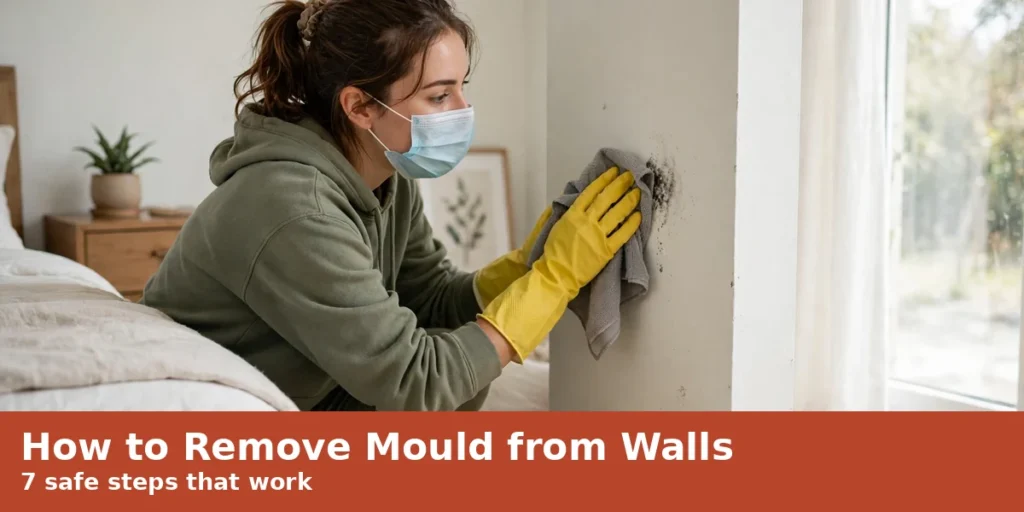
Mould on a wall looks grim, and it can smell musty too. You can learn how to remove mould from walls safely with a few simple tools. This guide shows each step, room by room, in plain terms.
It also explains when a patch is too big for DIY work. You will learn which cleaner fits each surface. You will also learn how to stop the mould coming back. It sits with our budget home improvement ideas, with low cost fixes that suit most UK homes.
Why does mould grow on walls?
Mould grows where damp air meets a cold surface. Warm, moist air cools on the wall and leaves water behind. That damp film feeds tiny mould spores in the air.
Bathrooms, kitchens and cold bedrooms face the highest risk. Steam from showers and cooking adds a lot of moisture. A cold corner or a wall behind furniture stays damp longest.
Condensation mould is the most common type in UK homes. It differs from rising damp and from a leak. Rising damp climbs from the ground, and a leak leaves a clear wet patch. If you fix the moisture source, condensation mould stops returning.
At a Glance
- Find the moisture source first, then clean the patch.
- Use vinegar or a fungicidal wash on painted walls.
- Use a stronger cleaner only on tiles and grout.
- Dry the wall fully, then improve air flow each day.
- Never paint over mould that you have not treated.
When should you clean mould yourself, and when should you call a professional?
Small patches caused by condensation are often safe for DIY cleaning. Keep the patch under about one square metre. Wear gloves, eye cover and a mask that covers your nose.
If you plan how to remove mould from walls yourself, measure the patch first. Call a professional for a patch larger than one square metre. Call one too if the wall feels soft or crumbly. Sewage water, flood water or mould that keeps returning fast also needs expert help.
Children, older people and people with asthma should stay out of the room. Keep pets out too until the wall is dry. If anyone in the home has breathing problems, seek advice first.
How to remove mould from walls on painted surfaces
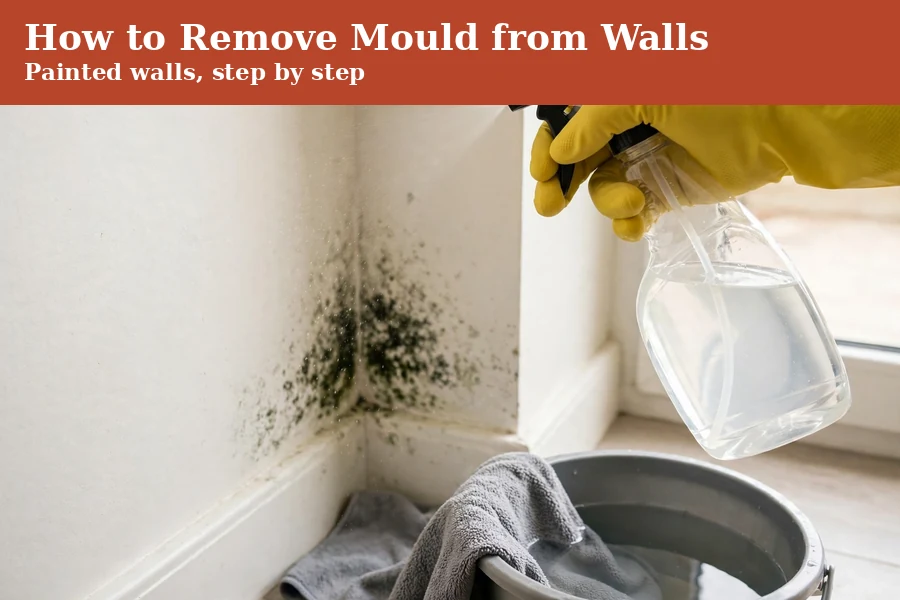
Start by opening a window and shutting the room door. This vents spores outside instead of through the house. Lay an old towel along the skirting board to catch drips.
Put on rubber gloves, a mask and eye cover. Wipe loose mould off with a damp cloth, then bin the cloth. Do not dry brush the patch, as brushing spreads spores in the air.
Spray the patch with white vinegar or a fungicidal wash. Leave it for up to one hour to work. Scrub gently with a soft brush, then wipe with clean water.
- Test the cleaner on a small hidden spot first.
- Work in small sections, not across the whole wall.
- Rinse the cloth often so you do not spread mould.
- Dry the wall with a clean towel, then let air reach it.
Repeat the clean once if faint marks stay after drying. Do not mix cleaners, and never mix bleach with vinegar. Mixed cleaners can give off harmful fumes in a closed room.
How do you remove mould from bathroom tiles and grout?
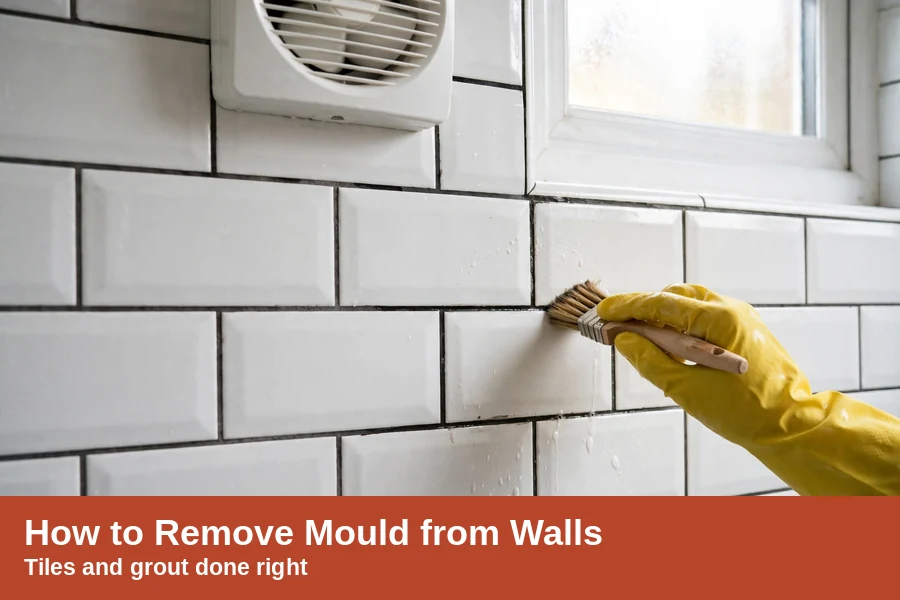
Bathroom mould loves grout lines, sealant and tile edges. Steam, soap scum and poor air flow feed it daily. A short clean each week keeps it from taking hold.
Spray a fungicidal wash or a bathroom mould remover on the tiles. Leave it for the time on the label, then scrub grout with a small brush. Rinse with clean water and dry the tiles with a towel.
Check the silicone sealant around the bath and shower. Black sealant that stays stained may need fresh sealant. Run the extractor fan for 15 minutes after each shower.
- Squeegee shower walls after use to cut moisture fast.
- Wipe tiles dry if the fan is weak or missing.
- Wash shower curtains and bath mats often.
- Keep the bathroom door ajar after steaming showers.
What about mould on wallpaper, plasterboard and bedroom walls?
Bedroom mould often sits in cold corners and behind wardrobes. Move furniture a few centimetres from the wall. This gap lets air move and keeps the wall drier.
Light mould on washable wallpaper may clean off with a damp cloth. Soaked or peeling wallpaper should come off instead. Treat the wall beneath it, then let it dry fully.
Plasterboard needs extra care, as mould can grow inside its layers. Surface cleaning may hide growth that stays deep inside. Replace soft, stained or crumbling plasterboard rather than painting over it.
- Air bedrooms each morning, even on cold days.
- Keep wardrobes a few centimetres from outside walls.
- Wash bedding and curtains that smell musty.
- Check behind beds and wardrobes each month.
Bleach, vinegar or fungicidal wash: which cleaner fits your wall?
Each cleaner works best on a certain surface. Bleach suits hard, sealed surfaces such as tiles. Vinegar suits painted walls and porous surfaces better. A fungicidal wash is made to kill mould, not just bleach its colour.
Use the table below to pick the right cleaner. Always follow the label, and test a hidden spot first. Never mix two cleaners in one session.
| Cleaner | Best for | Avoid on |
|---|---|---|
| White vinegar | Painted walls, light patches | Natural stone, waxed wood |
| Diluted bleach | Tiles, grout, sealed surfaces | Painted walls, plasterboard, fabrics |
| Fungicidal wash | Most walls, stubborn patches | Surfaces the label excludes |
| Washing up liquid | Small marks on hard surfaces | Deep or large patches |
Bleach can fade colour and harm paint, so use it with care. Vinegar may need a second round on stubborn patches. A fungicidal wash often gives the most reliable result on walls. The Which? guide to getting rid of mould gives the same safety advice.
How do you stop mould coming back?
Cleaning alone will not teach you how to remove mould from walls for good. The moisture that fed it must drop each day. Small daily habits beat one big clean each year.
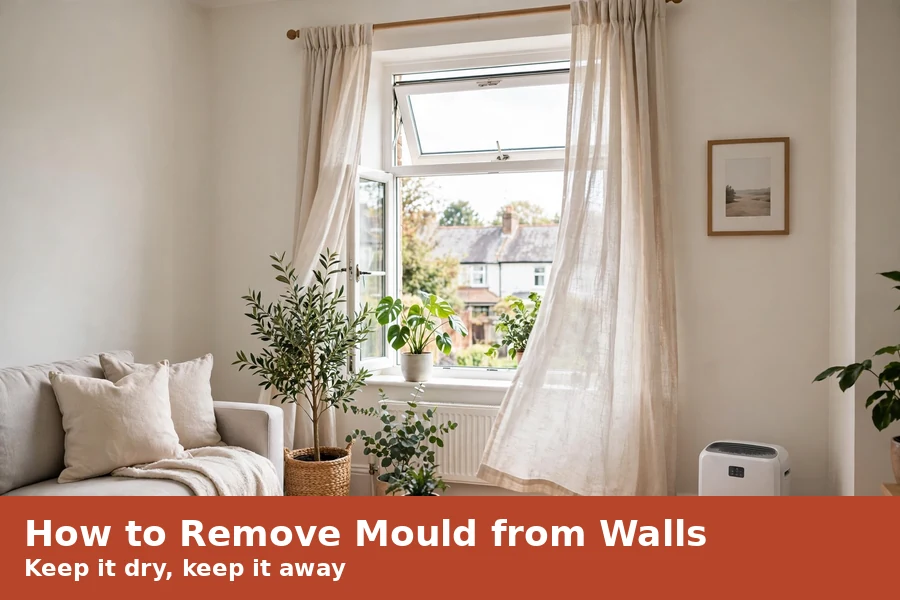
Open windows briefly each morning, even in winter. Heat rooms steadily instead of heating in short bursts. Wipe window condensation off each morning with a dry cloth.
Use extractor fans in kitchens and bathrooms every time. Dry clothes outside or in a vented room. Keep a small gap behind large furniture on outside walls.
- Vent the kitchen while cooking, and use pan lids.
- Shut the bathroom door during showers, then air the room.
- Fix dripping taps and small leaks at once.
- Use a dehumidifier in a damp room if needed.
Can you paint over mould?
Never paint over mould that you have not treated first. Many readers ask how to remove mould from walls before painting, and the answer starts with cleaning. Fresh paint seals mould in for a short time only. The mould soon shows through the new coat again.
Clean the wall, treat it and let it dry fully first. Use a stain block coat if dark stains stay after cleaning. Finish with a mould resistant paint for extra cover.
Ordinary paint gives no lasting cover against mould growth. Mould resistant paint helps only on a clean, dry wall. Fix the damp source too, or the paint will fail again.
Frequently asked questions
Is black mould on walls dangerous?
Black mould can worsen asthma and allergies, mainly in damp rooms. Children, older people and people with breathing problems face higher risk. Clean small patches promptly, vent the room well, and seek advice if symptoms persist.
Does vinegar kill mould on walls?
White vinegar can kill many common mould types on painted walls. Spray it neat, leave it for one hour, then scrub gently. Stubborn patches may need a second round or a fungicidal wash instead.
Should I use bleach to remove mould from walls?
Bleach works best on tiles, grout and sealed surfaces. It suits painted walls poorly, as it can fade paint and miss deep growth. Use vinegar or a fungicidal wash on painted walls, and keep bleach for hard surfaces.
Why does mould keep coming back on the same wall?
Mould returns when moisture stays high on that wall. Cold corners, poor air flow and daily steam all feed it. Improve ventilation, heat the room steadily, fix leaks, and clean small patches before they spread.
What should tenants do about mould in a rented home?
Tenants should tell the landlord in writing, with photos and dates. Landlords must fix structural damp, leaks and poor insulation. Tenants can clean small condensation patches, but they should keep records of each report.
Your next step to a drier, mould free wall
Pick one wall, check its size and clean it today. Vent the room, dry the wall and watch it for a week. Small daily habits will keep that wall dry through winter.
Share this guide with anyone facing the same damp patches. A dry home feels fresher, smells better and stays in good repair. Start with air flow, and the rest gets easier.
This guide showed how to remove mould from walls, room by room, without harsh shortcuts. Keep the routine simple, and check damp corners each month. A dry wall stays clean, and a clean wall stays healthy. Find more fixes in our Home Improvement archive.