You become a casting director by working your way up through casting offices. Nobody passes an exam to enter this job. No degree is required either. Most casting directors start as assistants and learn on real productions.
That surprises many people who love film. The person who assembles a famous cast rarely trained formally. They watched thousands of auditions instead. This guide sets out how to become a casting director, honestly and step by step.
Our wider guide on how to become famous tells the fame story. This article covers the other side of the table.
Key Takeaways
- No degree or licence is required to become a casting director.
- The normal route runs assistant, then associate, then director.
- Watching actors work is the core training, year after year.
- UK routes include ScreenSkills and the Casting Directors’ Guild.
- Reputation and contacts decide who gets the biggest jobs.
What Does a Casting Director Actually Do?
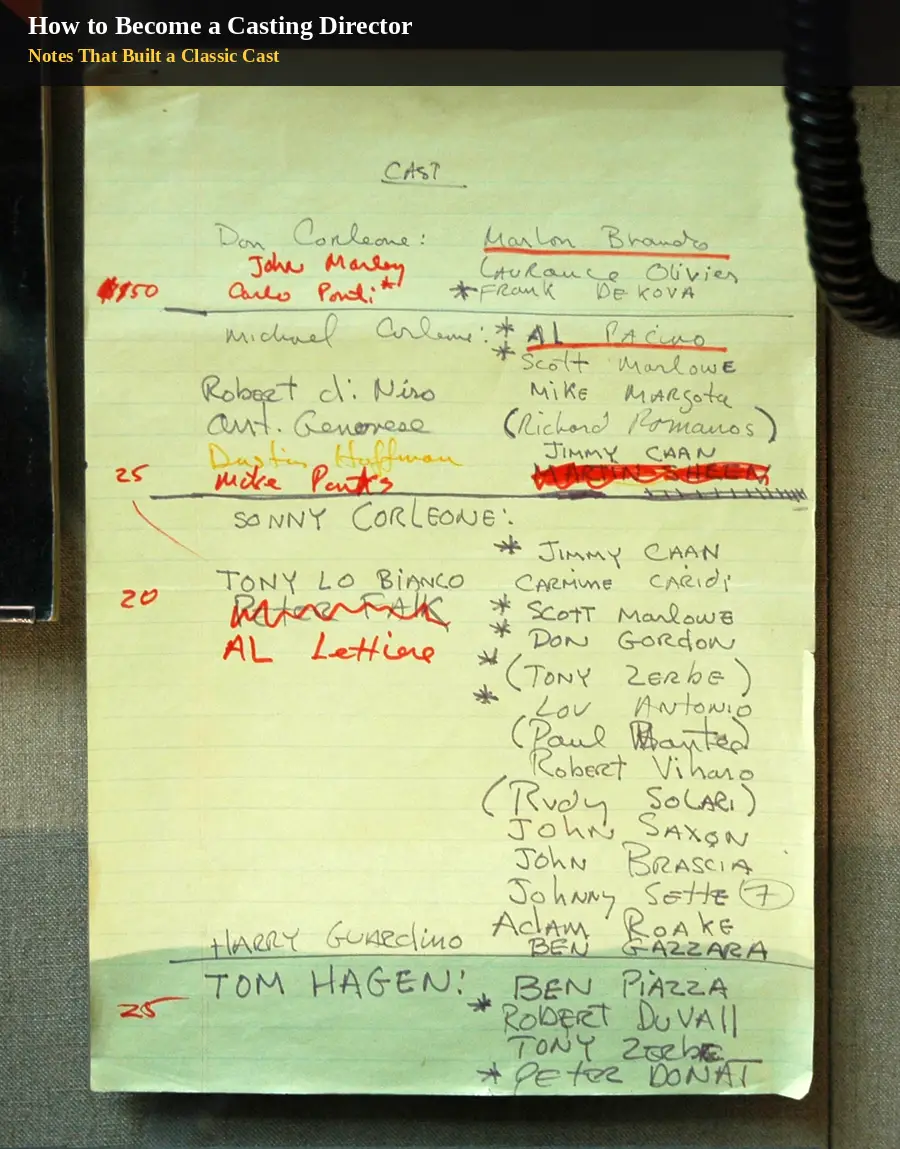
A casting director finds the actors for a production. They work for film, television, theatre and commercials. The director and producers hire them early. Casting shapes a project before filming ever begins.
The daily work is more practical than glamorous. It mixes reading, meetings, auditions and heavy administration. A typical production involves all of the following:
- Reading the script and breaking down every character
- Building longlists of actors who might fit each role
- Contacting agents and checking actor availability
- Organising audition sessions and self tape requests
- Watching auditions and preparing shortlists for the director
- Negotiating fees and contracts with agents
- Solving last minute cast problems during filming
The casting director advises, but rarely decides alone. Directors and producers make the final call on major roles. Your shortlist still shapes almost every choice they make. That influence is the real prize of the job.
Step 1: Learn How Acting and Productions Work
You cannot judge acting without understanding it. Casting directors watch performances with a trained eye. They know what a scene needs from an actor. That judgement comes from years of watching closely.
Formal study helps some people build that eye. Drama, film studies and theatre courses all teach useful basics. Acting classes teach even more, from inside the craft. Many casting directors acted or directed earlier in life.
Plenty of others skip university completely. They learn by working in theatres and production offices. ScreenSkills, the UK industry skills body, profiles the role in its casting director job profile. It stresses knowledge of actors over qualifications.
Step 2: Get a Foot Inside the Industry
Casting offices rarely advertise junior roles widely. Most assistants arrive through other industry jobs first. Any role near actors or productions builds useful knowledge. Persistence matters more than a perfect first step.
Good starting points include:
- Internships or work experience in a casting office
- Runner and production assistant jobs on sets
- Front of house or stage management work in theatres
- Jobs at talent agencies, answering calls and reading scripts
- Volunteering on student films and fringe productions
Each of these puts you near working professionals. You learn how productions really run day to day. You also meet the people who hire assistants later. Our guide on how to get an acting agent shows that world. You will deal with agencies every single day.
Step 3: Become a Casting Assistant, Then an Associate

The assistant job is the true apprenticeship of casting. You support a working casting director full time. The tasks look small, but they teach everything. This is where future casting directors are made.
Assistants schedule auditions and greet arriving actors. They upload self tapes and organise headshots and CVs. They sit in on sessions and watch the director work. Over months, they start spotting talent themselves.
Expect long hours and modest pay at this stage. Expect also to watch hundreds of actors closely. That watching is the training no course can copy. Most people assist for several years before progressing.
Associates take real casting responsibility on smaller projects. You might cast minor roles with limited supervision. You run your own sessions and build your own shortlists. The casting director still signs off the final choices.
This stage proves you can be trusted. Producers begin learning your name and taste. Your contact book of actors and agents keeps growing. Many people work as associates for years happily.
Some associates specialise by genre or medium. Commercials, soaps and theatre all cast very differently. A specialism can make you the obvious hire later. It also keeps the work varied and interesting.
Step 4: Build the Reputation That Wins the Top Jobs
Casting directors are hired on reputation above all. Directors ask who casts well and who runs calm rooms. Producers ask who delivers on time and on budget. Good answers to those questions fill your diary.
Professional bodies help you look established and stay connected. In the UK, the Casting Directors’ Guild represents the profession. In the United States, the Casting Society serves the same purpose. Membership signals that working professionals take you seriously.
Networking in this trade means genuine working relationships. Agents must trust your descriptions of their clients’ chances. Actors must feel respected in your audition rooms. Our piece on how to become a film extra shows the other end. One day you may run those very calls.
The Skills That Separate Good Casting Directors
Technical knowledge can be taught fairly quickly. The skills below take longer and matter more:
- A sharp eye for talent and screen presence
- Deep knowledge of working actors, famous and unknown
- Calm organisation under tight production deadlines
- Clear, honest communication with agents and actors
- Strong memory for faces, names and past performances
- Fair judgement that directors learn to trust
- Discretion with scripts, salaries and unannounced projects
Notice how few of these involve paperwork. Casting is a people business wearing an admin coat. If you love watching actors, the admin feels worth it. If you do not, the job will grind quickly.
How Long It Takes and What It Pays
Honest answer: the climb usually takes years, not months. Assisting for three to five years is common. Associate work can last just as long again. A small number move faster through busy offices.
Pay varies too much for a single honest figure. Assistants often start on junior office level pay. Established casting directors charge productions per project instead. Fees rise steeply with reputation and production size.
Most casting directors work freelance, project to project. Quiet gaps between productions are part of the pattern. A second skill, like teaching or coaching, smooths those gaps. The top of the profession, though, is genuinely well rewarded.
The Chair on the Other Side of the Table
Every famous cast began as somebody’s shortlist. Casting directors shape films long before cameras roll. Their names sit in credits most viewers never read. The work itself is the reward they talk about.
If you love actors and how they work, start now. Take any job near a production this year. Watch performances closely and keep notes on actors. The audition room door opens from the inside.
Frequently Asked Questions
Do you need a degree to become a casting director?
No degree is required for this job. Some casting directors studied drama or film at university. Many others learned entirely through office and theatre work. Employers care about your knowledge of actors, your experience and your reputation far more than certificates.
How do I get my first casting assistant job?
Start anywhere near productions and ask casting offices directly. Internships, runner jobs and theatre work all lead towards casting. Write politely to offices with a short, specific covering note. Offices hire assistants when productions start, so timing and persistence matter.
What is the difference between a casting director and an agent?
An agent represents actors and finds them work. A casting director works for the production and finds actors for it. They speak constantly but sit on opposite sides. Agents push their clients forward, while casting directors compare everyone fairly.
Do casting directors choose the final cast?
They research, audition and shortlist the actors. The director and producers usually approve the main roles. For smaller roles, a trusted casting director often has real freedom. Their recommendations carry weight because directors know the homework behind them.
Can casting directors work outside film and television?
Yes, the same skills transfer widely. Theatre, commercials, voice work and video games all need casting. Some casting professionals also cast reality shows and corporate films. A broad portfolio keeps freelance work steadier across the year.