To become a celebrity social media manager, you first build proven skills on ordinary accounts. You learn to plan posts, cut short video and read basic analytics. Then you earn trust inside an agency, a label or a management company. Famous clients arrive last, once strangers trust your judgement.
The famous name on the account changes the pressure, not the basics. Every post still needs planning, approval and a reason to exist. What grows is the audience watching each small mistake. This guide sets out how to become a celebrity social media manager, in plain order.
How to Become a Celebrity Social Media Manager: The Job Up Close
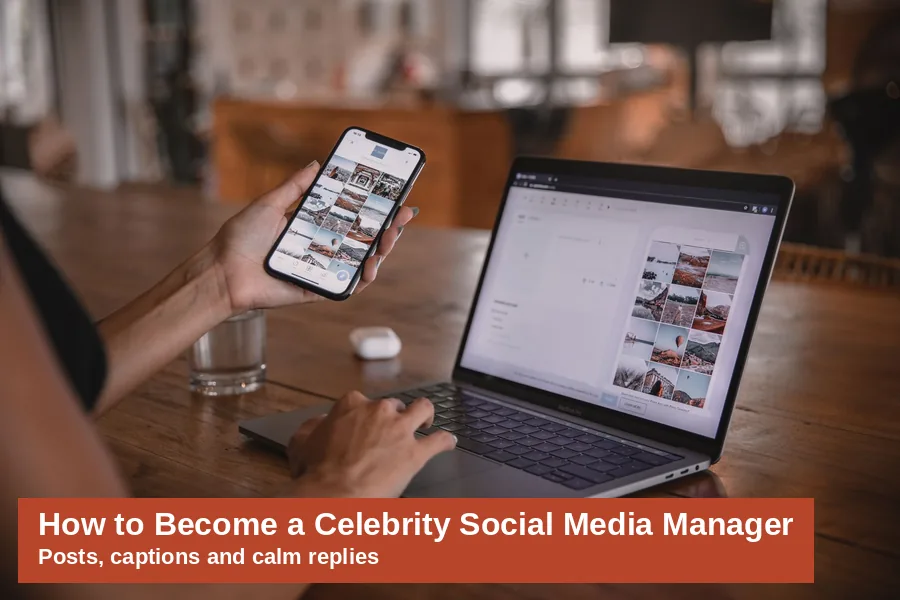
A celebrity social media manager runs the public accounts of a famous person. The work covers planning posts, writing captions and editing photos and short video. It also covers reading comments, watching numbers and flagging trouble early. Prospects lists the same core duties for social media managers everywhere.
The difference sits in whose name is on the account. A brand account speaks for a company and its products. A celebrity account speaks in one person’s voice, to millions. A careless post becomes a news story by breakfast.
A normal week mixes planned campaigns with whatever the day throws up. Album news, match days and red carpets all land without warning. The manager keeps the calendar steady through all of it.
- Planning a content calendar around releases and events
- Writing captions that sound like the client, not a brand
- Editing photos and short video for each platform
- Watching comments, messages and mentions through the day
- Reporting numbers back to the wider team each week
The Essentials
- No licence or set degree exists: skills and proof open the door
- First jobs are assistant roles on ordinary, unglamorous accounts
- Assistant pay starts at £22,000 to £28,000, per Prospects
- Celebrity clients arrive through agencies and management teams
- Discretion, not follower counts, decides who keeps famous accounts
Three Routes In: Degree, Apprenticeship or Assistant Desk
No licence exists for this job, and no degree is legally required. The National Careers Service lists three honest routes into social media work. A relevant degree helps some applicants stand out early. Most working managers still arrived through junior jobs and proof.
University courses in marketing, journalism or digital content creation all feed this trade. The Service notes that some employers expect a degree. Apprenticeships offer a paid alternative with study built in. Named schemes include the Content Creator Level 3 and Multi-channel Marketer Level 3 apprenticeships.
The work route starts one desk lower, as an assistant. Assistants schedule posts, tidy captions and pull simple reports. Volunteering for a charity’s channels builds the same early proof. That slow climb is the real shape of how to become a celebrity social media manager.
Skills You Can Prove Before Anyone Famous Knows Your Name
Employers hire evidence, not enthusiasm, in this crowded field. Prospects stresses copywriting, editing and data analysis among the core skills. Scheduling tools such as Hootsuite, Buffer and Later appear in its duties list. A small portfolio shows all three faster than any interview answer.
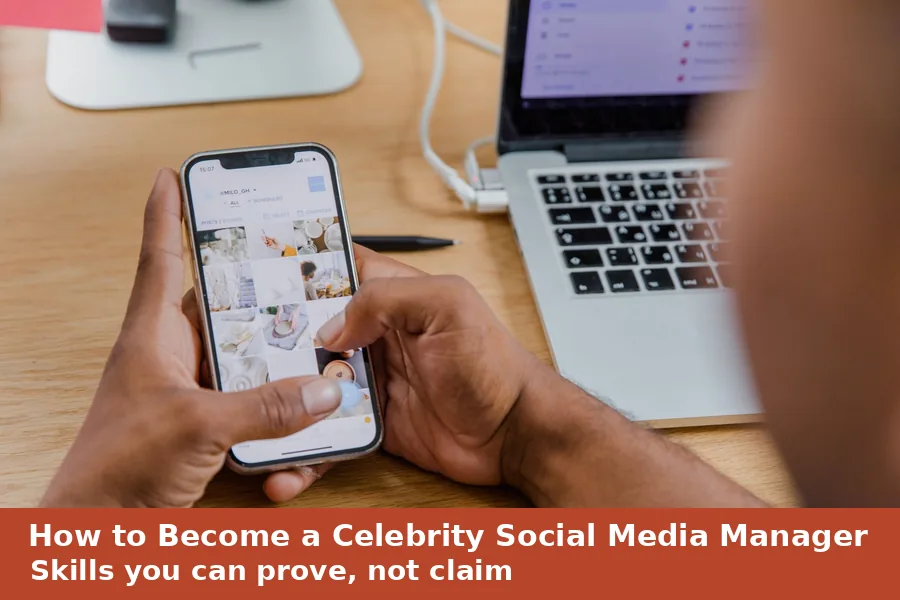
Short video now carries most celebrity accounts day to day. Learn to shoot clean clips on a phone first. Then learn to cut them tightly, with captions added. Platform analytics complete the set: reach, watch time and shares.
- A month of posts you planned, wrote and published yourself
- Two short videos you shot and edited on a phone
- One simple report explaining what the numbers changed
- Captions written in two different voices, on request
Pay and Hours, With the Celebrity Warning Attached
Prospects puts assistant and junior social media pay at £22,000 to £28,000. Social media managers typically earn between £28,000 and £45,000. Heads of social media and account directors reach £50,000 to over £60,000. Freelance day rates run from £200 to £300, per Prospects.
Senior freelance roles can reach £350 to £500 a day. No official source publishes a separate celebrity rate for this job. Fame alone does not set the fee; responsibility does. A personal account with ten million followers carries real risk.
| Stage | Typical pay (Prospects) |
|---|---|
| Assistant or junior manager | £22,000 to £28,000 a year |
| Social media manager | £28,000 to £45,000 a year |
| Head of social media | £50,000 to over £60,000 a year |
| Freelance day rate | £200 to £300, senior £350 to £500 |
Brand roles often keep office hours, Prospects notes. Celebrity accounts ignore office hours completely, because audiences never sleep. Premieres, tours and match nights set the working week instead. That risk, plus unsocial hours, is what top clients pay for.
The Celebrity Layer: Voice, Approval and Total Discretion
Everything on a celebrity account must sound like the celebrity. Managers study how the client talks, jokes and argues. Then they draft in that voice, never their own. Fans spot a borrowed voice within a single post.

Almost nothing posts without approval from someone senior. The celebrity publicist agrees the line on sensitive stories before anything moves. Tour weeks and launch weeks tighten that chain further. Speed matters, but a wrong post costs far more than a late one.
Discretion is the unwritten contract behind every famous account. You will see arguments, contracts and family news before anyone else. None of it gets repeated, hinted at or sold. One screenshot shared with a friend ends the career quietly.
Bad Nights: Mistakes, Pile-Ons and the Plan You Write Early
Every big account faces a bad night sooner or later. A joke lands badly, or an old post resurfaces. Comments turn fast, and screenshots travel faster than deletions. The manager’s job is to slow the damage, not win the argument.
A simple crisis plan, written on a calm day, saves those nights. It names who approves a holding reply, and how fast. It lists which posts get paused and which stay live. It also protects scheduled promotions from running beside bad news.
Silence is sometimes the correct professional answer here. Fans forgive a quiet account faster than a defensive one. The team agrees the line, posts once, and stops. Arguing in replies only feeds the story another day.
Where the First Celebrity Clients Actually Come From
Famous clients almost never hire strangers from direct messages. They hire through the teams already standing around them. Agencies, record labels and management companies hold those contracts. The music manager often decides who touches the artist’s accounts.
So the route runs through assistant jobs at those companies. You start on smaller rosters and quieter accounts first. Good work gets noticed by the people who book bigger names. Our how to become famous guide shows the fame those accounts must protect.
Freelance work arrives later, once a reputation exists. Managers with proof get recommended between teams and clients. Each quiet, competent tour or launch adds another referee. The Celebrity archive collects the roles that surround a famous name.
Habits That Keep Talented People on Small Accounts
Plenty of skilled posters never reach a famous account. Their content is fine, but their habits worry employers. Teams quietly pass their names over at hiring time. Most stall while still asking how to become a celebrity social media manager.
- Posting opinions from a client’s account by accident
- Arguing with fans in the replies, in public
- Sharing screenshots or gossip from inside a team
- Missing scheduled posts around launches and live events
- Treating approval steps as optional when rushed
Trust, once lost with one team, rarely returns. Entertainment is a small world with a long memory. The managers who rise are simply the ones never caught careless.
The Accounts Everyone Watches Are Run by People Nobody Sees
Start where the work is ordinary and the standards are visible. Take the assistant desk, the charity account, the local roster. Learn the tools, the approvals and the quiet habits. Then let bigger names arrive through people who watched you work.
That is the honest end of how to become a celebrity social media manager. Behind every effortless-looking feed sits someone organised, careful and awake. Build that reputation first, and the celebrity work follows it.
Frequently Asked Questions
Do you need a degree to become a celebrity social media manager?
No degree is required, and no licence exists for this work. The National Careers Service lists degrees in marketing, journalism and digital content creation as useful starts. Employers weigh portfolios and junior experience at least as heavily as certificates.
How much do celebrity social media managers earn?
No official source publishes a separate celebrity rate. Prospects puts social media managers at £28,000 to £45,000, with assistants on £22,000 to £28,000. Senior and freelance roles pay more, and famous clients sit at the demanding end.
What qualifications help most in the UK?
The National Careers Service names the main schemes clearly. They include Content Creator Level 3 and Multi-channel Marketer Level 3. A Digital Community Manager Level 4 apprenticeship also exists. Professional bodies such as the Chartered Institute of Marketing offer further qualifications.
Do celebrities write their own posts?
Some do, and some hand everything to their team. Most famous accounts mix both, with drafts prepared and approved in advance. The manager’s craft is keeping one voice across all of it, whoever typed the words.
Can you start this career freelance?
Rarely at celebrity level, because famous clients hire through trusted teams. Freelance social media work exists widely for smaller brands first. Prospects lists day rates of £200 to £300 for experienced freelance managers.
What does a celebrity social media manager do each day?
The day mixes planning, posting, editing and watching. Calendars get updated, captions get drafted, and short videos get cut. Comments, mentions and numbers get checked throughout, with anything risky flagged to the team early.