How to become a screenwriter starts with two habits: reading scripts and writing them. Nobody needs a degree, a licence or industry contacts first. You write a sample script, called a spec script. That sample proves your voice to agents and producers.
Plenty of new writers picture red carpets and premiere nights. The real route looks quieter: drafts, notes, rejections and rewrites. Our guide on how to become famous covers the fame side honestly. This guide explains how to become a screenwriter properly.
Key Takeaways
- No qualification exists that lets you start professionally.
- Your spec script is your real job application.
- BBC Writers and Channel 4 run genuine open doors.
- Guild minimum fees exist, but income stays freelance.
- Rewriting to order is most of the paid work.
How to Become a Screenwriter: What the Job Really Involves
A screenwriter writes scripts for film and television. Some scripts are original stories sold to producers. Others are commissions, written to an agreed brief. Teams often write television, while films usually carry one name.
Most working days go on planning and rewriting. Writers research, outline plots and draft scenes. Producers and script editors then send detailed notes. The writer rewrites, sometimes many times, before filming.
The job also involves pitching ideas aloud. Writers present stories to producers in short meetings. A clear pitch can win a commission quickly. A weak pitch buries strong written work.
Learn the Format by Reading Real Scripts
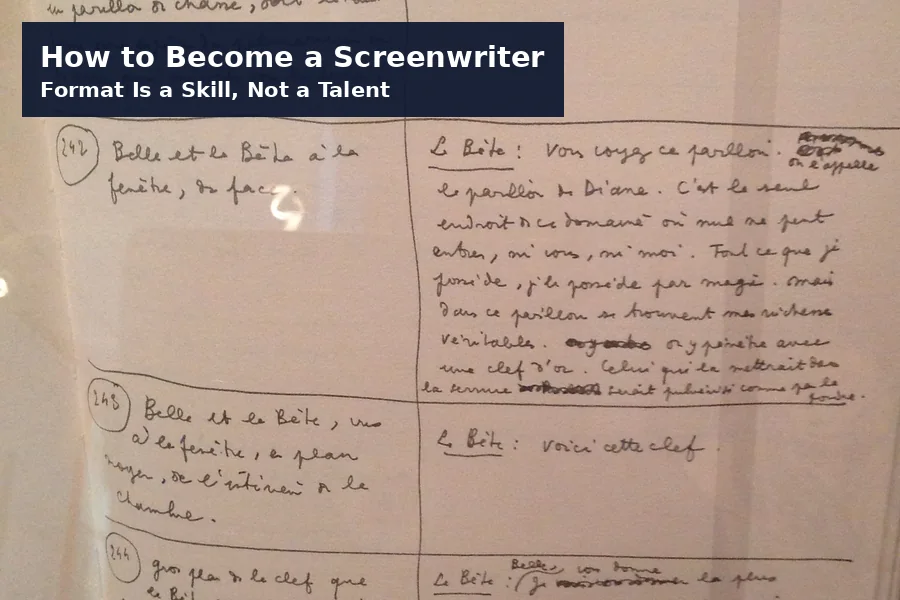
Produced scripts teach you more than most textbooks can. Many film and television scripts sit free online legally. Read one script while watching its finished episode. You see exactly how words became pictures and sound.
Notice how little description a professional page carries. Dialogue sits in short blocks down the middle. Scene headings tell the crew place and time. Every line earns its space on the page.
The standard screenplay format looks strange at first. Pages use wide margins and a typewriter style font. One page roughly equals one minute on screen. Free software handles the layout while you learn.
Write a Spec Script That Proves You Can Finish
A spec script is a sample you write unpaid. It shows your voice, structure and dialogue skills. Agents and producers judge new writers by samples. One finished script beats five abandoned openings easily.
Pick a form that suits your idea. A short film script shows tight visual storytelling. A television pilot shows characters with series potential. A feature script shows stamina across ninety pages.
Finish the draft before you judge it. First drafts exist to be rough and fixable. Most beginners quit during the messy middle weeks. A finished rough draft gives you something real.
Training Routes: Degrees, Short Courses and Self Teaching
No single training route defines how to become a screenwriter. The National Careers Service lists four main entry routes. They are university, college, direct application and specialist courses. Each route suits different budgets and starting points.
| Route | What it involves | Best for |
|---|---|---|
| Degree or masters | Two or three years of study | Structure, tutors and contacts |
| Short courses | Weekends or evenings at film schools | Writers working another job |
| Broadcaster schemes | Competitive places with mentoring | Writers with a strong sample |
| Self teaching | Reading scripts and daily practice | Patient writers on no budget |
Degrees in creative writing and film studies help some writers. They bring deadlines, tutors and a ready peer group. But no employer in this industry demands one. Your pages matter far more than certificates.
Regional screen agencies run affordable screenwriting courses too. Film schools offer weekend and evening options nationwide. Pick training that ends with finished pages. Feedback and deadlines justify the fees, not buildings.
Get Honest Feedback Before You Send Anything
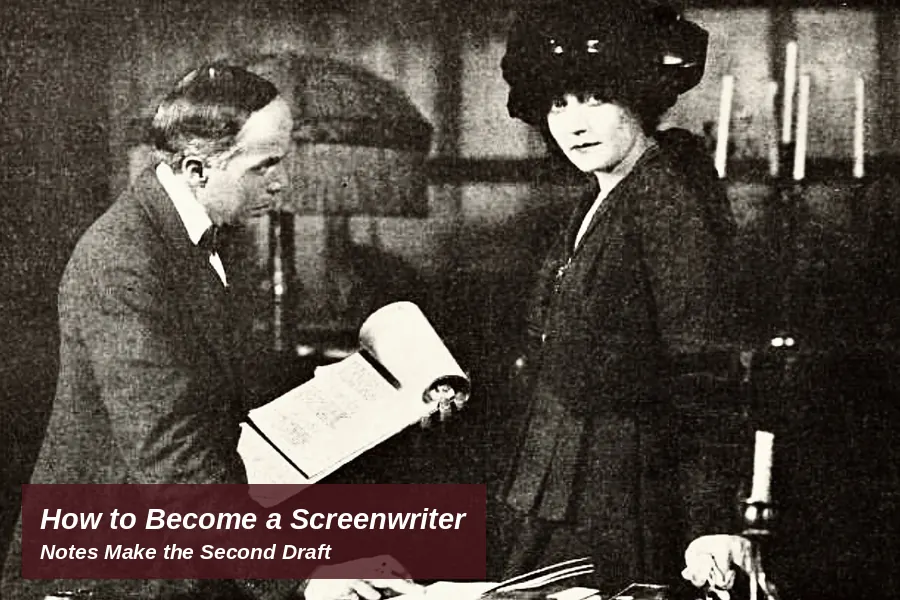
You cannot judge your own script fairly. Writers groups swap drafts and read pages aloud. Hearing dialogue spoken exposes clumsy lines at once. Choose readers who praise little and question much.
Professional script readers also sell written reports, called coverage. Producers use readers to filter their submission piles. A reader’s report shows how strangers judge you. Our casting director guide explains who reads scripts first.
Act on patterns, not single opinions. Three readers stumbling at one scene means trouble. Rewrite that scene, then test the draft again. Thick skin is a professional skill here.
Open Doors: BBC Writers, Competitions and Schemes
British broadcasting keeps several doors open deliberately. BBC Writers runs open submission windows for unsolicited scripts. Its website explains each window and its rules. Read the guidelines twice before sending anything.
Channel 4 runs a new writers scheme yearly. BAFTA Rocliffe runs new writing competitions by category. Regional agencies run new writing nights locally too. These routes exist to find unrepresented talent.
Enter with your strongest finished sample only. Schemes receive thousands of scripts every year. A polished short script often travels furthest. Treat each deadline as a free professional test.
Inside Jobs: Assistants, Runners and Writers’ Rooms
Industry support jobs teach the business from inside. Production companies hire assistants with no formal experience. You handle scripts, calls, schedules and paperwork daily. Every task shows how decisions really get made.
Agency and production offices also hire trainees. Mailroom and runner jobs sound humble but teach plenty. You meet the people who later read scripts. Contacts made early compound for years.
Writers’ assistants sit inside television writers’ rooms. They take notes, track story changes and learn structure. Such roles are competitive and rarely advertised widely. Festivals and industry schemes often share them first.
Agents, Producers and Your First Paid Commission
A literary agent represents writers to buyers. Agents submit scripts, negotiate contracts and chase payments. Most agents accept queries only from recommended writers. Schemes and competitions create those recommendations for you.
Producers also hire writers directly for commissions. A commission means writing to an agreed brief. Television work often starts inside a writers’ room. There, teams plan stories together before drafting episodes.
Representation works much like our acting agent guide explains. Trust, patience and strong samples win representation. Never pay an agent upfront for representation. Real agents earn commission from your paid work.
The Money: Guild Minimums and Freelance Reality
Screenwriting income arrives in uneven freelance chunks. The Writers’ Guild of Great Britain agrees minimum fees. Its BBC teleplay minimum is £11,520 per hour. Features carry minimums based on the production budget.
Producers sometimes buy an option on scripts. An option pays to reserve your script temporarily. If the option lapses, your rights return fully. Most writers mix commissions with other paid work.
Teaching, script reading and copywriting fill quiet gaps. Very few writers live on screen fees alone. Honest budgeting keeps the career sustainable long term. Treat early years as building a trade.
Your First Finished Script Opens Every Later Door
Start your plan for how to become a screenwriter today. Read one produced script alongside its episode. Then outline your own short script properly. Small finished pieces build real professional momentum.
Every working screenwriter once faced that same page. Save this guide and share it with writers. Then open a blank document and begin. Your first page matters more than perfection.
Keep every draft you finish, however rough. Old scripts show agents your range later. They also prove you finish what you start. Finishing is the habit this career rewards.
Frequently Asked Questions
Do I need a degree to become a screenwriter?
No degree is required for this career at all. The National Careers Service lists degrees as one helpful route among four. Producers judge your sample scripts, not your certificates. Many working writers studied unrelated subjects or none.
How long does it take to become a screenwriter?
Most writers take years to reach paid work. Your first finished script might take three months. Agents and schemes then judge samples over further months. Treat the route as an apprenticeship served at your desk.
Can I become a screenwriter with no experience?
Yes, because the spec script exists for beginners. It proves your ability without any previous credits. Industry support jobs also build contacts and knowledge. Script reading, assisting and production work all teach storytelling.
Do screenwriters need an agent from the start?
No, most writers sign with agents after early success. Schemes, competitions and producer interest usually come first. An agent then turns that interest into contracts. Focus on pages before representation, always.
Who owns a script I write on my own?
You own the copyright in your finished script. UK copyright protects the written words, not bare ideas. Keep dated copies of every draft you finish. Contracts change ownership only when you sign them.
What software do screenwriters use?
Dedicated screenwriting software formats pages automatically for you. Free options exist alongside paid professional tools. Studios care about the finished PDF, not the brand. Learn one program well and stop switching.