
Learn how to dress well on a budget UK by buying less and choosing better. Fit matters more than price. A small set of plain, well made pieces beats a rail of trend buys. Sales, charity shops and pre-loved finds then fill the gaps for less.
This guide shows how to audit your wardrobe and build a hard working core. It also covers smart UK shopping, fit checks and simple care habits. Each tip saves money without making your outfits look cheap. Browse our Fashion archive for more guides.
Key Takeaways
- Learn how to dress well on a budget UK with fit, lists and care.
- Judge every buy by cost per wear, not by its ticket price.
- Start with an audit, then buy only what fills a real gap.
- Fit first: a good fit lifts even a low cost outfit.
- Shop sales, charity shops and pre-loved rails with a clear list.
- Care and repair keep clothes looking new for longer.
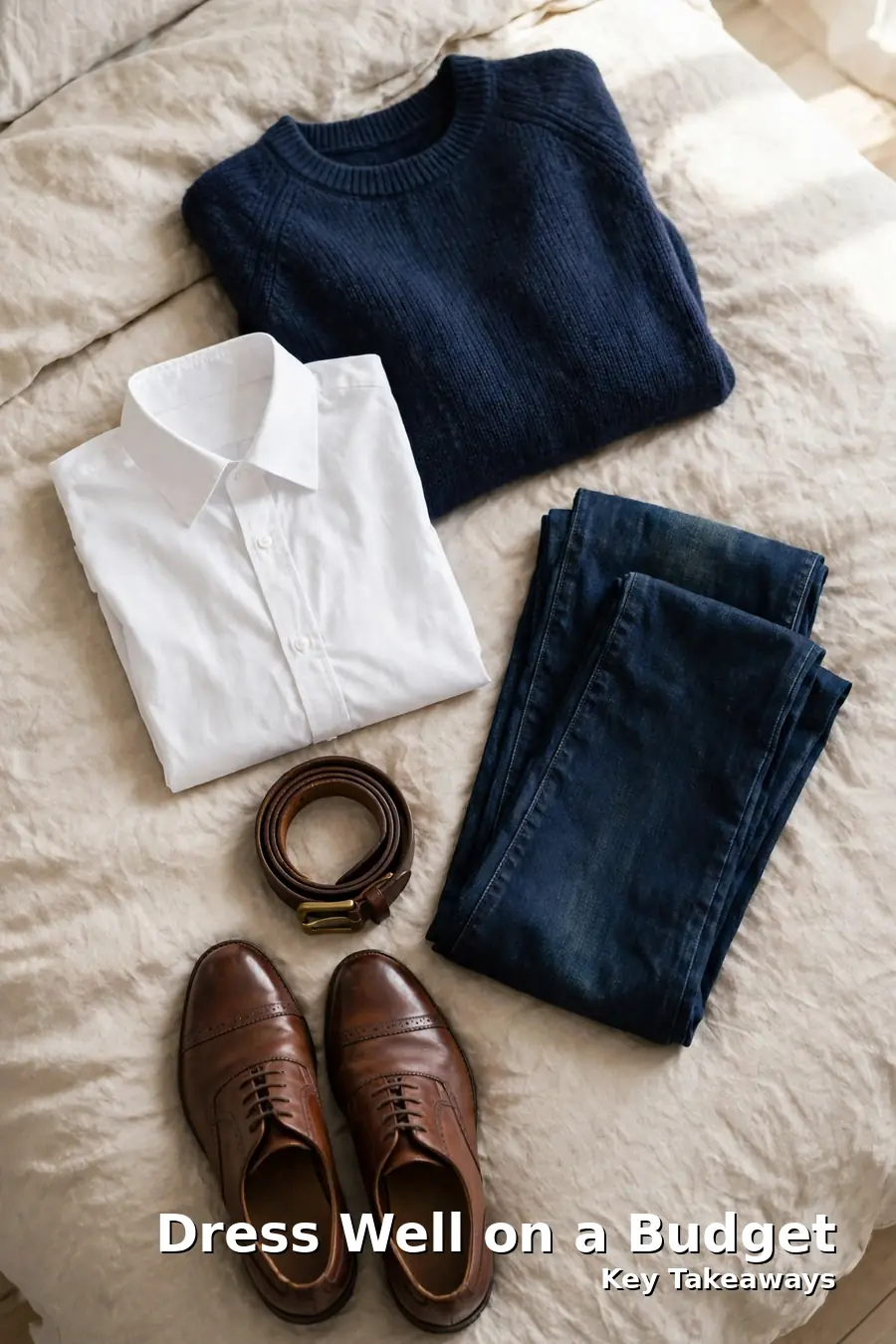
How to dress well on a budget UK
Cost per wear divides price by the number of wears. A £60 coat worn 60 times works out at £1 per wear. A £20 top worn only twice works out at £10 per wear. On that maths, the dearer coat is the cheaper buy.
A low price does not prove poor quality. A high price does not prove good style either. Check seams, fabric and shape before you check the label. If a piece feels thin or pulls at the seams, leave it on the rail.
Three habits drive most of the savings in this guide. Buy less, wear each piece more, and fix small faults fast. That mix keeps your wardrobe small, your outfits fresh and your spend low.
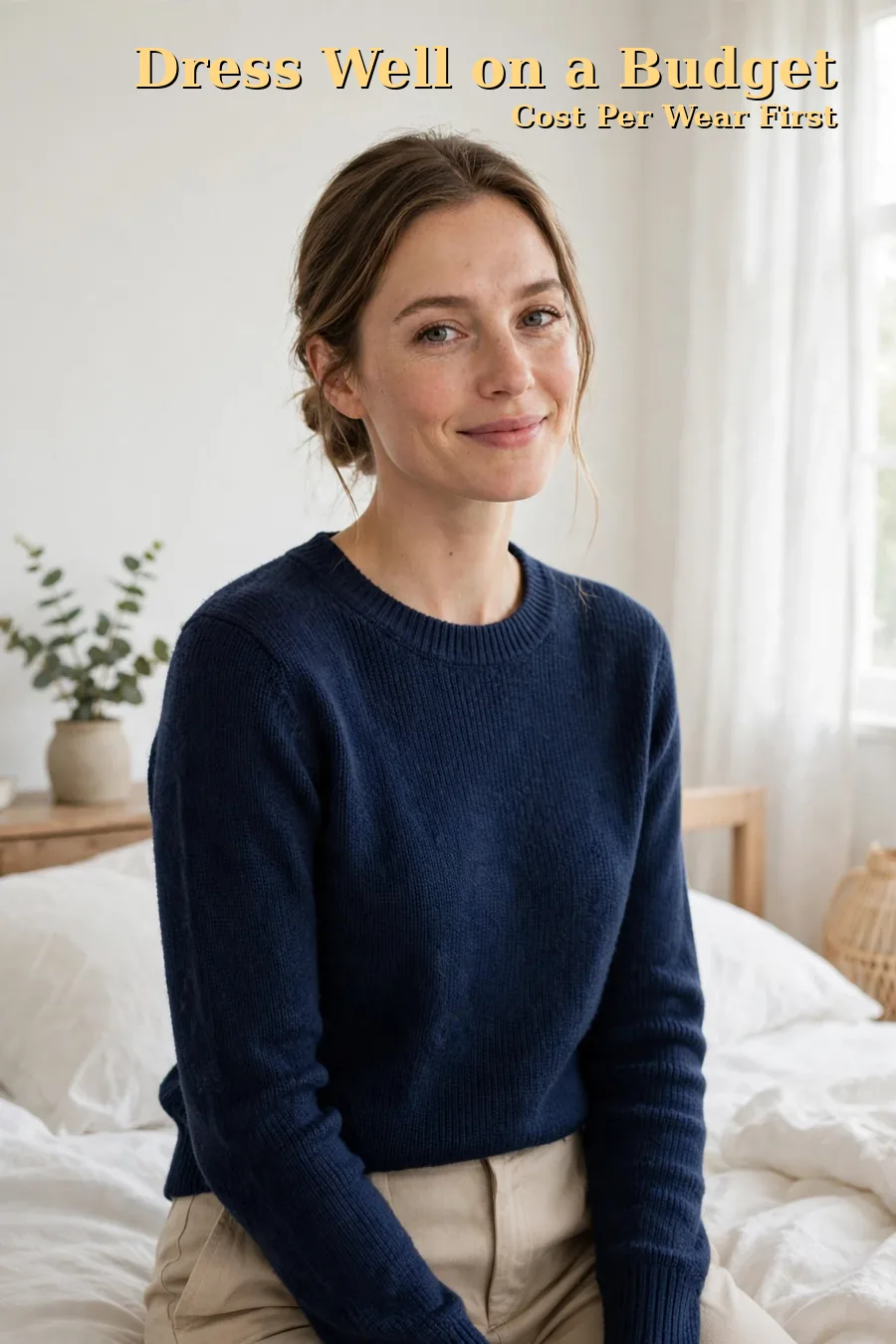
Start with the wardrobe you already own
Pull every item out and try it on in daylight. Keep what fits, suits you and still earns its place. Set the rest aside for sale, swap or donation. You may find outfits you forgot you owned.
A swap with friends costs nothing and refreshes your rail fast. Resale apps and charity shops turn spare pieces into funds for better buys. Donate what no one wants to buy, so it still gets worn. Keep a small fund from sales for one better buy.
- Fits well today, with no pulling or gaping.
- Pairs with at least three items you already own.
- Worn in the past year, or due a clear plan to wear.
- Needs no repair, or only a small fix you will do.
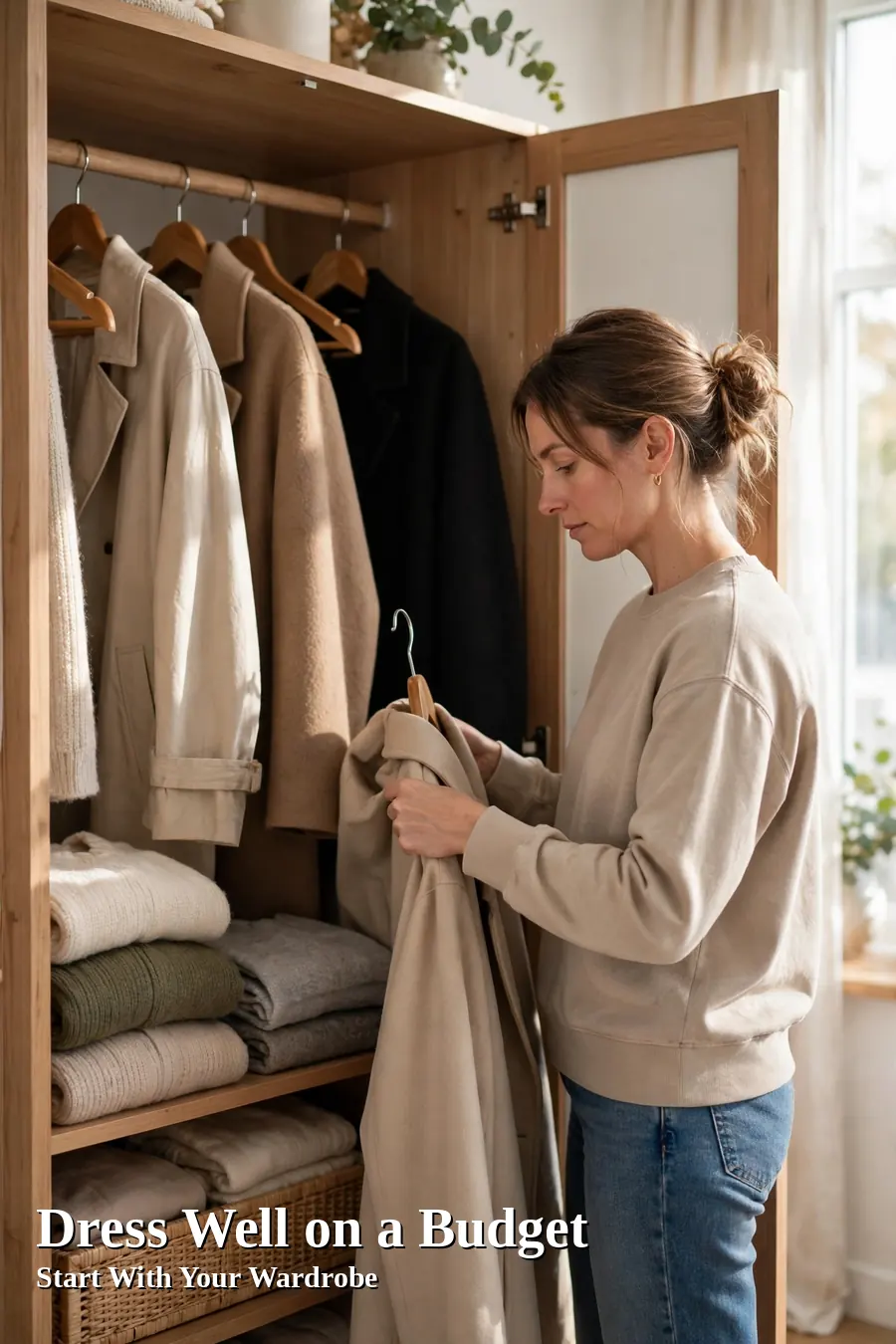
Build a small wardrobe that works hard
A small wardrobe works when each piece pairs with many others. Plain colours and simple shapes mix with ease. That is why a capsule base suits a tight budget so well. Our guide to building a capsule wardrobe shows how to pick that base.
Use the table below as a starting core, then adapt it to your life. Office days, school runs and cold commutes all change the mix. Add colour through scarves and tops, not through dear coats. If a piece fits no part of your life, it fails the test.
| Piece | Why it earns its place | Budget tip |
|---|---|---|
| Coat or trench | Lifts plain outfits and lasts for years | Buy in end of season sales |
| White shirt | Pairs with jeans, skirts and tailoring | Choose cotton that irons well |
| Dark jeans | Work for casual days and smart layers | Pick a straight cut that fits well |
| Knit in navy or grey | Layers under coats and over shirts | Wash cool to slow shrinkage |
| Ankle boots | Suit trousers, jeans and dresses | Look for leather in pre-loved rails |
| Scarf or belt | Adds colour without a dear new coat | Buy plain tones that pair widely |
For office days, shape the same core around smarter pieces. Our work wardrobe guide shows how to adapt it for the office. One blazer and two smart tops can change the whole core. That core shows how to dress well on a budget UK at work too.
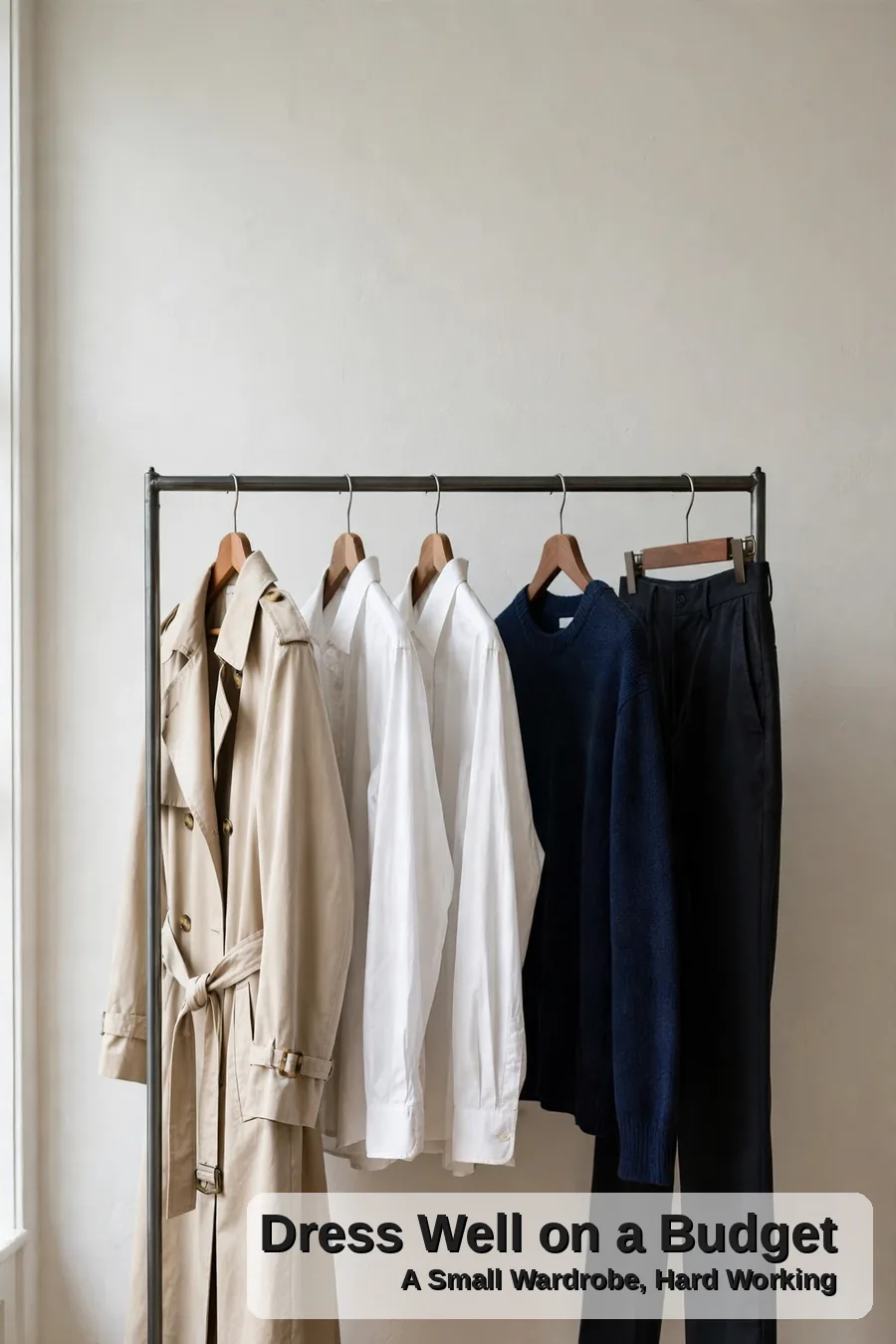
Fit first, then fabric
Fit is the fastest free upgrade in this guide. Shoulders should sit at your own shoulder line, not beyond it. Trousers should break once at the shoe, not pool there. A dress should skim your shape without pulling at seams.
Small fixes can rescue a good piece that fits almost well. A hem, a waist tweak or a button swap can change how it looks. Those fixes often cost less than buying a new piece.
- Jacket shoulders end at your own shoulder edge.
- Shirt cuffs show a small amount past jacket sleeves.
- Waistbands sit flat with no gaping or digging in.
- Hems fall where you planned, not where they land.
Shape also changes which cuts flatter you most. Our body type guide explains how to match cuts to your shape. Use it before you buy, not after you get home. Try cuts on in shops before you order online.

Shop smart across the UK
Sales reward patience more than speed. January and end of season sales cut prices on classic pieces. Sign up for alerts from shops you already trust. Buy from your list, not from the sale rail alone.
Charity shops and pre-loved rails hide strong finds at low prices. Check seams, zips and fabric before you pay. Smell and stains matter too, so inspect each piece in daylight. WRAP’s guide to reusing clothing explains how care and reuse keep clothes in use longer.
- Seams firm, with no loose threads or holes.
- Zips and buttons work first time, every time.
- Fabric feels strong, not thin or pilled.
- Colour even, with no faded patches or stains.
A bargain fails if it clashes with your style. Our personal style guide helps you name the looks you love. Buy only pieces that fit that picture.

Dress for work and occasions without buying new
Work outfits need not mean a new suit each season. Reuse your core with one blazer and smart shoes. Change tops and accessories to shift the same base. A blazer over dark jeans can pass for smart casual in many offices.
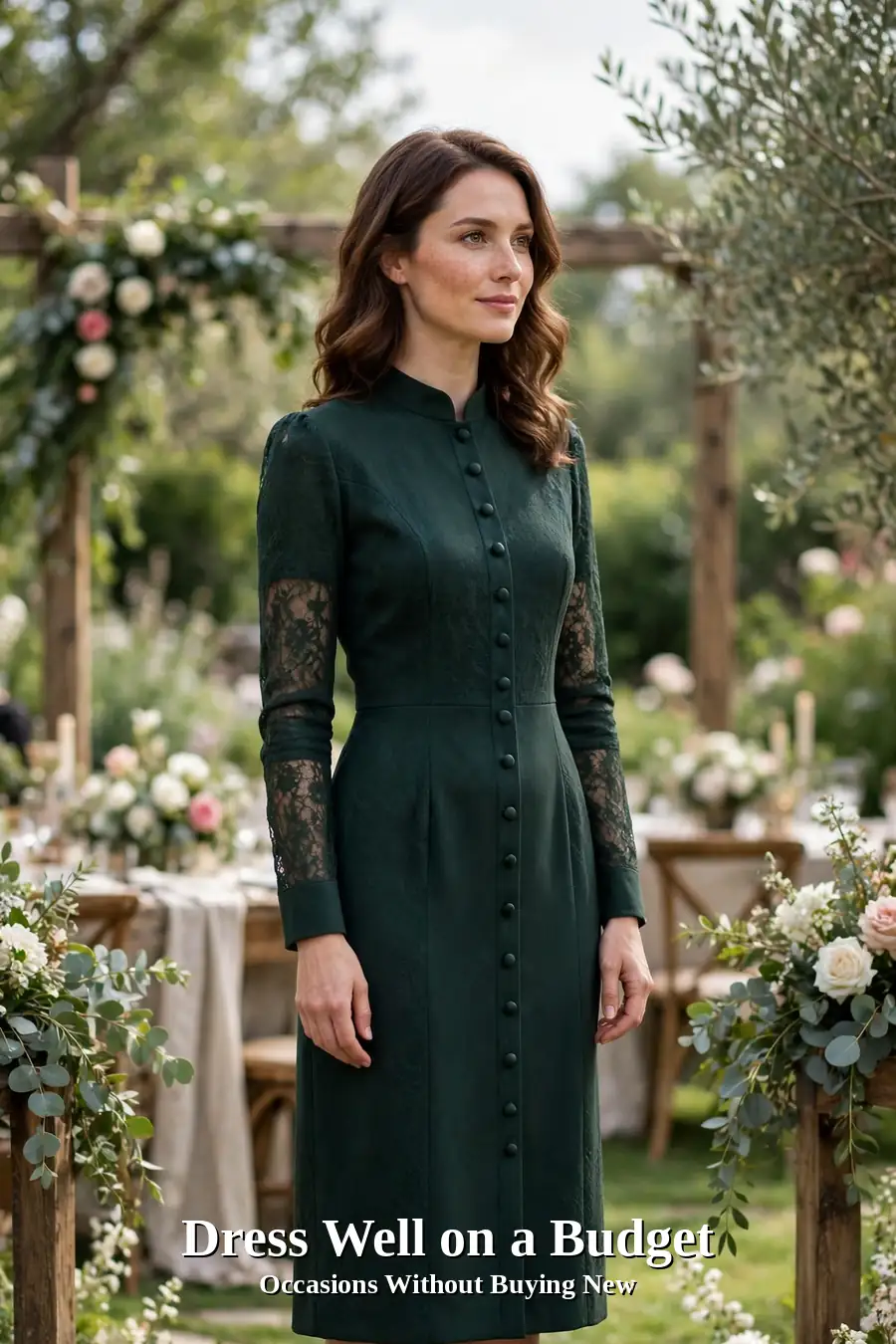
For weddings and parties, rewear a dressy piece with new shoes or jewellery. A trench coat over a simple dress looks polished at once. Wide leg trousers also dress up fast with heels and a satin top. For the strictest dress code, check our black tie wedding guide first.
Borrow from a friend for one night events. If you must buy one thing, make it the piece you will rewear most. A plain dressy top or smart trousers beats a one night outfit. Wear it three ways in the first month to earn its price.
Questions about dressing well on a budget
These answers cover how to dress well on a budget UK in daily life. Readers ask about monthly spend, cheap versus dearer pieces, and where to shop. Each answer gives a short rule you can use at once.

How much should I spend on clothes each month?
Spend only what your budget allows after bills and savings. A fixed monthly cap stops impulse buys and keeps shopping calm. Judge each buy by wears, not by price alone, and skip what fails that test.
Is it better to buy cheap clothes or fewer dearer ones?
Fewer dearer pieces often win when you wear them often. Cost per wear falls with each wear. A coat worn weekly beats a top worn once, even at a higher price.
Where can I find stylish clothes for less in the UK?
Try high street sales, charity shops, pre-loved rails and clothes swaps first. Outlet stores and end of season sales also cut classic pieces. Keep a list, so you buy gaps and not duplicates.
How do I stop buying clothes I never wear?
Use the three outfit rule before you pay. If a piece pairs with fewer than three items, leave it. Wait a day on impulse buys, then check if you still want it.
How can I make cheaper clothes last longer?
Wash cool, follow the care label and skip harsh heat. Fix loose buttons and small tears as soon as you spot them. Rotate pieces, so no one item bears every wash and wear.
Your next sharp outfit may already be in your wardrobe
Start this weekend with a full wardrobe audit. Pick one fix, one swap and one gap to fill. Shop that gap with a list, and judge the buy by wears.
These steps show how to dress well on a budget UK without overspending. Small steps like these build a wardrobe that looks sharp for less. You will spend less, waste less and dress with more ease. Try the audit first, then enjoy outfits that cost less and last longer.