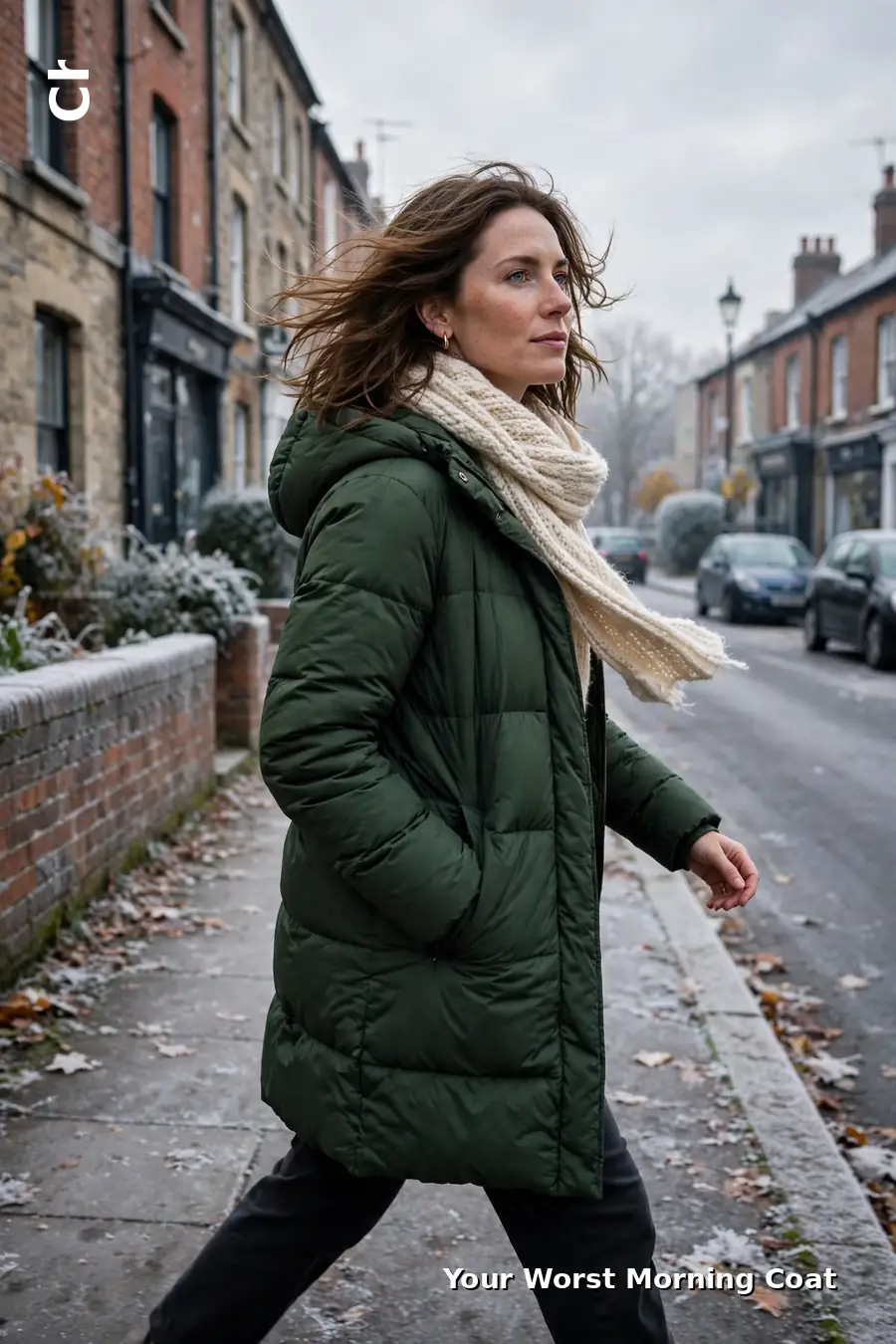
Learning how to choose a winter coat starts with your real winter, not a shop photo. A coat must keep you warm on a wet platform. It must fit over a thick jumper and still let you move with ease. This guide gives you seven plain checks to use before you pay.
You will learn which warmth suits damp UK cold. You will also learn how to read weather labels and test fit in a shop. It also covers length, small details and care, so the coat you buy lasts for years. Browse our Fashion archive for more seasonal guides.
How to choose a winter coat for UK weather
A good UK winter coat handles damp cold, wind and drizzle in one garment. It keeps your core warm while you stand still. The shell should shrug off light rain. The lining and fill hold heat close to your body.
Think of a winter coat as three parts working as one team. The outer shell blocks wind and rain from reaching you. The fill traps warm air around your body through the day. The fit seals gaps at the neck, cuffs and hem, so cold air stays out.
Start with the coldest trip you make each week, not the mildest one. A coat that copes with that trip will cope with easier days too. A coat bought for mild days will let you down on the first harsh morning. Buy for your worst morning, then check that it still feels right on a normal day.
At a Glance
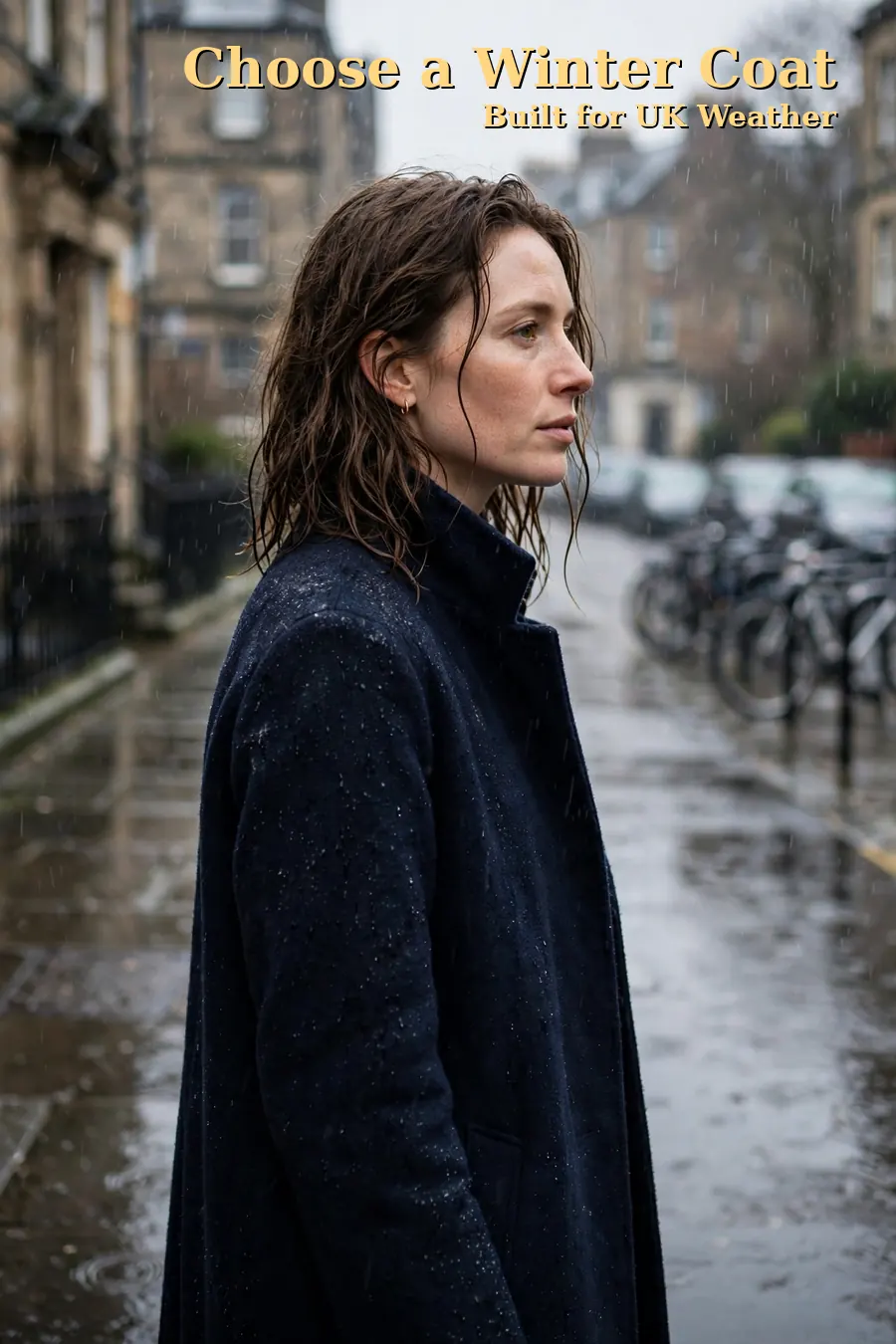
- Match the coat to your coldest weekly trip first.
- Pick warmth that still works when the air turns damp.
- Check weather labels for rain, wind and breathability as separate claims.
- Try the coat over your thickest jumper, then sit and raise your arms.
- Choose a length that suits your commute, your driving and your style.
- Judge value by cost per wear, and keep the care label in mind.
Start with your winter routine
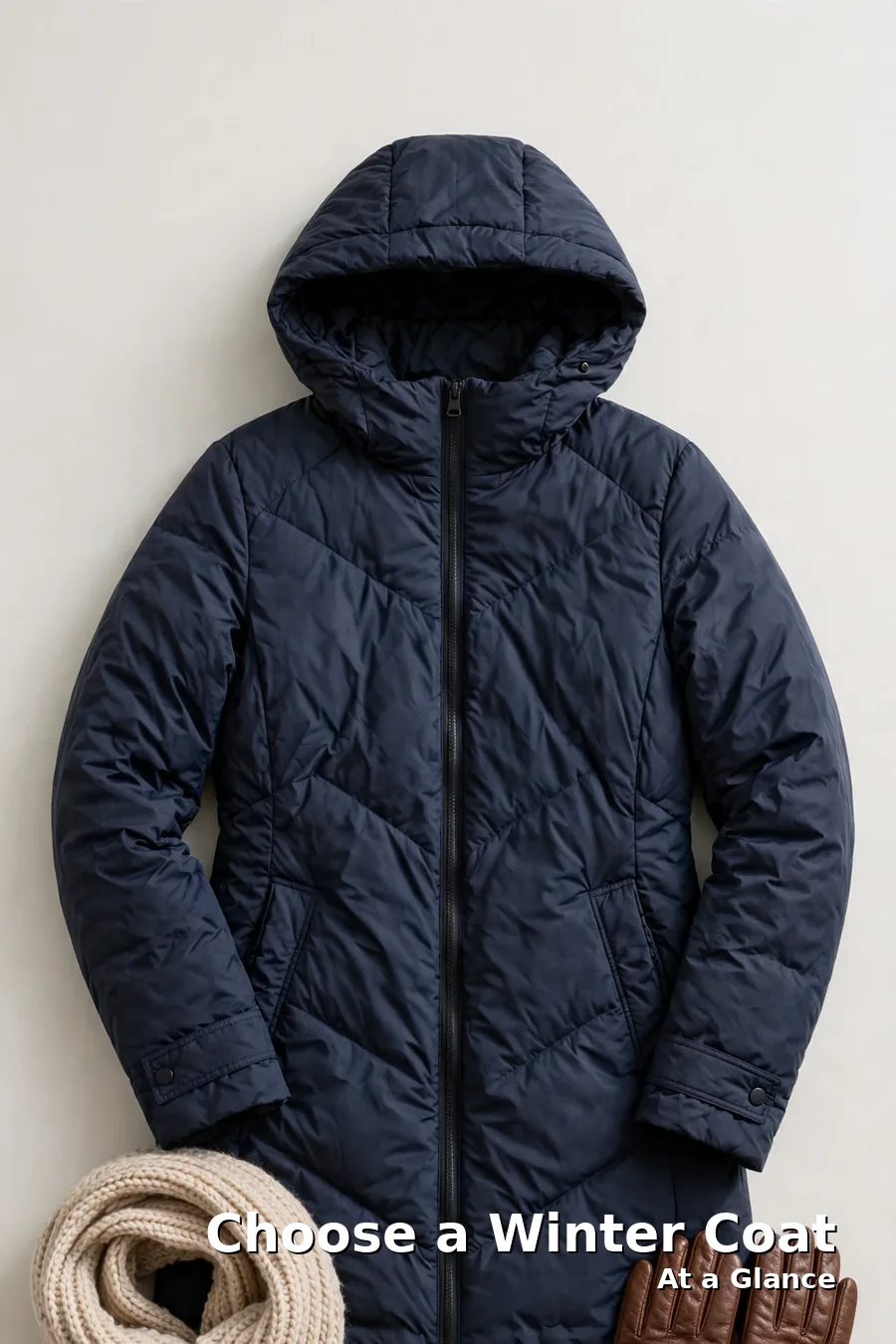
Your routine decides which coat earns its place in your wardrobe. A long walk to work needs more coverage than a short drive to a car park. Standing at a bus stop needs more warmth than a quick dash between shops. Write down your three longest outdoor spells before you start to shop.
Driving changes the choice in a plain, practical way. A very long coat bunches up behind the wheel and feels awkward on a seat belt. A hip length coat moves with ease in a car and still pairs with warm layers. If you drive most days, test the coat while seated, not just while standing.
When you learn how to choose a winter coat for work, dress codes shape the choice. A smart wool coat suits office days and pairs with tailored trousers with ease. A parka suits active days, school runs and muddy paths with far less fuss. Our work wardrobe guide shows how one smart coat can anchor office outfits all week.
- On foot or by bus: favour longer length and a warm hood.
- Drive most days: favour hip length that sits well.
- Work outdoors: favour a tough shell and deep pockets.
- Evenings out: favour a smart wool coat.

Wool, down or synthetic: pick warmth for damp cold
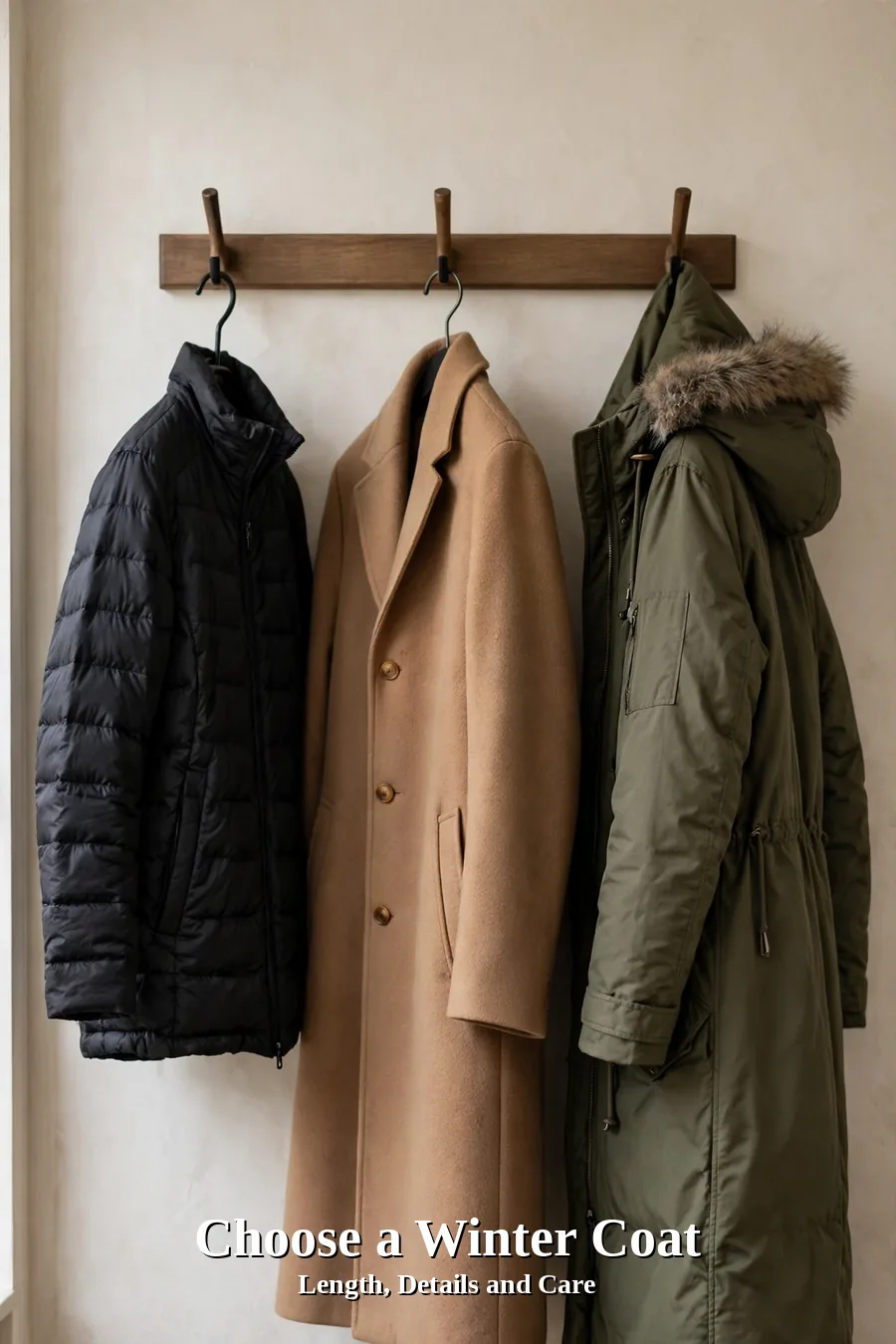
Wool, down and synthetic fills each warm you in a different way. Wool breathes well, drapes smartly and still gives some warmth when damp. Down gives huge warmth for little weight, yet it clumps and cools fast when soaked. Synthetic fill weighs more for the same warmth, yet it keeps warming you in wet weather.
For most UK winters, damp air is the test that matters most. A coat that only works in dry cold will disappoint on a wet February day. That is why many shoppers in Britain favour wool or synthetic fill for daily wear.
| Fill type | Warmth and weight | When it suits UK wear |
|---|---|---|
| Wool | Warm, breathable, heavier drape | Smart daily wear and office days |
| Down | Very warm for little weight | Dry cold days or a waterproof shell |
| Synthetic | Good warmth, bulkier feel | Wet commutes and active outdoor days |
Check the label for exact fill details before you compare two coats. A vague line such as wool blend tells you almost nothing on its own. Look for wool share, down share or synthetic type, then judge warmth from those facts. If a shop cannot give those details, treat its warmth claims with care.

Read the weather labels with care
Warm, waterproof and windproof are three separate claims, not one promise. A coat can feel warm yet soak through in steady rain within minutes. A coat can block rain yet let a cold wind cut straight through its seams. When you learn how to choose a winter coat, read each claim on its own.
Waterproof ratings use millimetres, and higher numbers mean stronger rain resistance. A light shower needs far less protection than hours in steady rain. Sealed seams, a storm flap and a close hood help a rating work in real rain. Without those details, a high number alone means less than it seems.
A loose hem lets wind rush up inside the coat and steal warmth fast. Ribbed cuffs, a drawcord hem and a collar that closes at the neck all cut draughts. Try it near a shop door on a windy day. Feel for draughts at once.
- Rain: check rating, sealed seams and storm flap.
- Wind: check cuffs, hem and collar for gaps.
- Breathability: check vents and lining.
Get the fit right over a real jumper
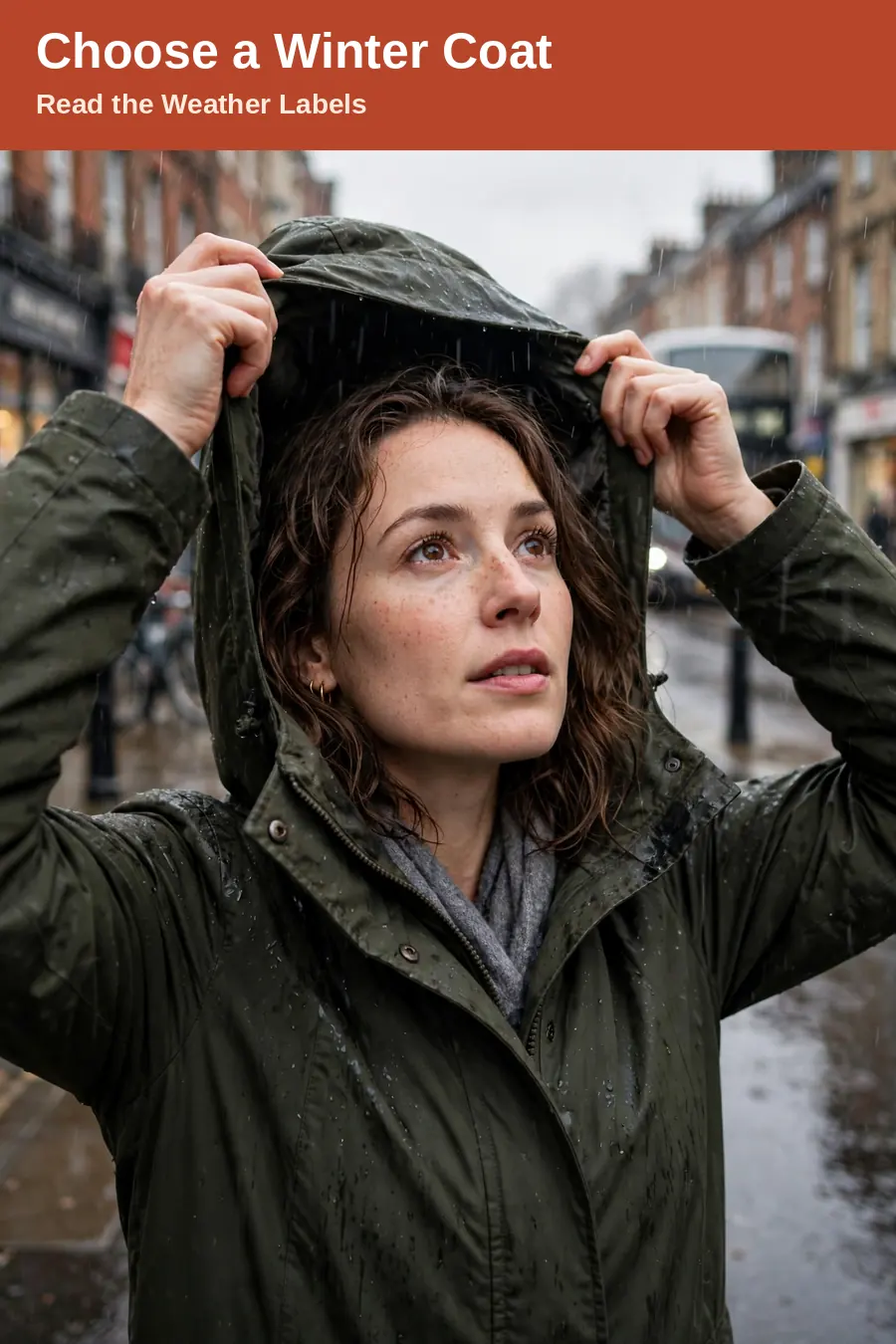
Fit decides warmth more than most shoppers expect at first glance. A coat that is too tight squeezes out warm air and stops layers from working. A coat that is too loose lets cold air swirl inside and steals heat away. The right fit leaves room for a jumper, yet it still seals at the edges.
Always try a coat over the thickest jumper you wear in winter. Button it up fully, then sit down, raise your arms and walk a few steps. Check that the shoulders sit on your own shoulder line, not past it. Check that the sleeves still cover your wrists when your arms reach forward.
Size guides can mislead you when you learn how to choose a winter coat online. Some charts list your body size, while others list the finished coat size instead. Measure a coat you love at home, then compare like with like before you order online. Our guide to finding your personal style helps you judge which shapes suit you best.
- Shoulders: seams sit on your shoulder line.
- Chest: closes with ease over a thick jumper.
- Arms: sleeves cover your wrists when you reach.
- Movement: sit, bend and walk with no pull.

Length, details and care that make a coat last
A hip length coat suits driving, active days and mild spells with ease. A knee length coat covers more of your legs and suits cold commutes best. A very long coat gives the most warmth. It can feel heavy on stairs and in cars.
A hood that stays up in wind beats a hood that slips off at once. Deep pockets hold gloves, keys and a phone with no juggling in rain. A two way zip lets you sit with ease. Sturdy buttons last longer than weak ones.
Dark neutrals hide marks and pair with most outfits through winter. A bold colour lifts plain outfits, yet it shows wear and stains far sooner. Read the care label first, since dry clean only coats cost more to keep fresh. A WRAP guide to reusing clothing shows how care keeps clothes in use longer.
A £150 coat worn 150 times costs £1 per wear, so cost per wear favours it. If you shop secondhand, check seams, zips, lining and smell before you pay. For a smart base, our guide to building a capsule wardrobe shows which pieces work hardest. Our trench coat guide covers a lighter coat for milder days.
- Secondhand: seams firm, zip smooth, lining clean.
- Care: label clear and cleaning cost fair.
- Style: pairs with three outfits you own.
Frequently asked questions about choosing a winter coat
Use these answers when you learn how to choose a winter coat. They sum up the fit, warmth and length checks above. Use them in the shop or when you order online.

How warm should a winter coat be for the UK?
It should keep you warm while standing still in damp cold, not just while walking fast. Choose wool or synthetic fill for wet days. Check that cuffs, hem and collar seal well. A coat that only works in dry cold will feel thin on a wet winter morning.
Is a waterproof winter coat worth it in Britain?
Yes, for most daily commutes, since steady drizzle soaks a warm but unproofed coat fast. Look for a rain rating, sealed seams and a storm flap, not just the word waterproof. A showerproof coat suits short trips, while a rated coat suits long outdoor spells.
How should a winter coat fit over a jumper?
It should close with ease over your thickest jumper, with no pulling at the chest. Shoulder seams should sit on your shoulder line. Sleeves should cover your wrists when you reach forward. Sit and raise your arms in the shop to test movement before you buy.
What length of winter coat is best for everyday wear?
Knee length suits most everyday wear, since it warms your legs yet still moves well. Hip length suits driving and active days, while very long coats suit cold, still commutes best. Match length to your longest outdoor spell, not just to the style you like most.
Should I buy a winter coat secondhand?
Yes, when the coat passes firm checks on seams, zips, lining and smell. A well made secondhand coat often beats a cheap new coat on warmth and value. Check that it pairs with outfits you own, and budget for a clean before first wear.
Pick the coat you will reach for on the worst morning
The best winter coat is the one you trust on a wet, windy morning. It fits over your jumper, seals out draughts and pairs with the outfits you wear most. Our dressing well on a budget UK guide shows how that coat fits a smart wardrobe.
Try your shortlist twice before you pay, once in the shop and once at home. Walk, sit and reach in each coat, then keep only the one that feels right. A coat chosen this way warms you for many winters, not just one season. That is the real test of a good buy.